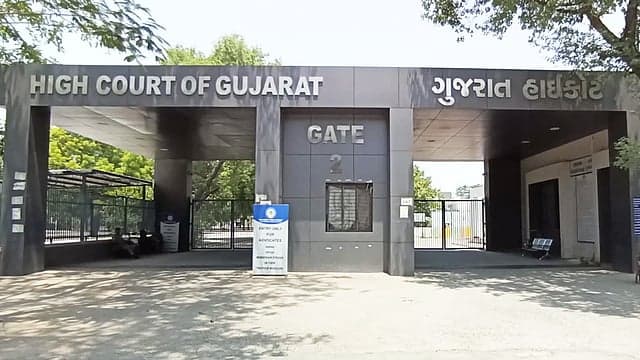
The Gujarat High Court, in a judgment delivered by Justice JC Doshi, has upheld the trial court’s order directing Paschim Gujarat Vij Company Limited (PGVCL) to pay compensation of Rs.3,41,400 with interest at seven percent per annum to the heirs of Rambhai Ramsibhai Lakhatrana, who died after receiving an electric shock from a transformer.
The deceased was walking in the rain when a technical fault in a Gujarat Electricity Board transformer situated near a road caused him to be electrocuted. PGVCL contended that the deceased had attempted to fix the fuse in the transformer and that his own negligence caused the accident. The claimants, however, maintained that the responsibility lay with the electricity company.
Justice Doshi referred to the settled principle of absolute liability applicable to entities engaged in hazardous activities. He observed that the argument advanced by counsel for the appellants, Premal Joshi, that the deceased suffered electrocution due to his own fault while trying to fix the fuse, does not survive in law.
The court emphasized that PGVCL, being in the business of supplying electricity—a hazardous product—is obliged to take all necessary precautions during the installation and maintenance of its lines to minimise the risk of accidents. The notion of strict liability, the judgment noted, assumes a different dimension when the activity is inherently dangerous, placing the burden of safety squarely on the supplier.
Further, the bench remarked that no prudent person would attempt to fix a fuse in a transformer merely to invite electrocution. Consequently, the act of fixing the fuse is itself a duty that falls upon the electricity company, not upon a member of the public.
The judgment also highlighted that the transformer installed on the pole was required to be hermetically sealed to prevent exposure of live parts. In the present case, the transformer was found to be kept open, which directly contributed to the accident. The court held that this omission constituted a failure on the part of PGVCL to fulfil its statutory duty of care.
By dismissing the appeal, the Gujarat High Court reinforced that an electricity supplier cannot escape liability by alleging the victim’s contributory negligence when the hazardous nature of its operations demands a higher standard of safety. The decision underscores the obligation of utility companies to ensure that their infrastructure is properly sealed and maintained, thereby protecting the public from foreseeable risks associated with the transmission of electricity.
The ruling is expected to influence future claims involving electrocution incidents where utility entities attempt to shift blame onto victims, clarifying that the absolute liability doctrine applies irrespective of the deceased’s conduct when the activity in question is inherently dangerous.