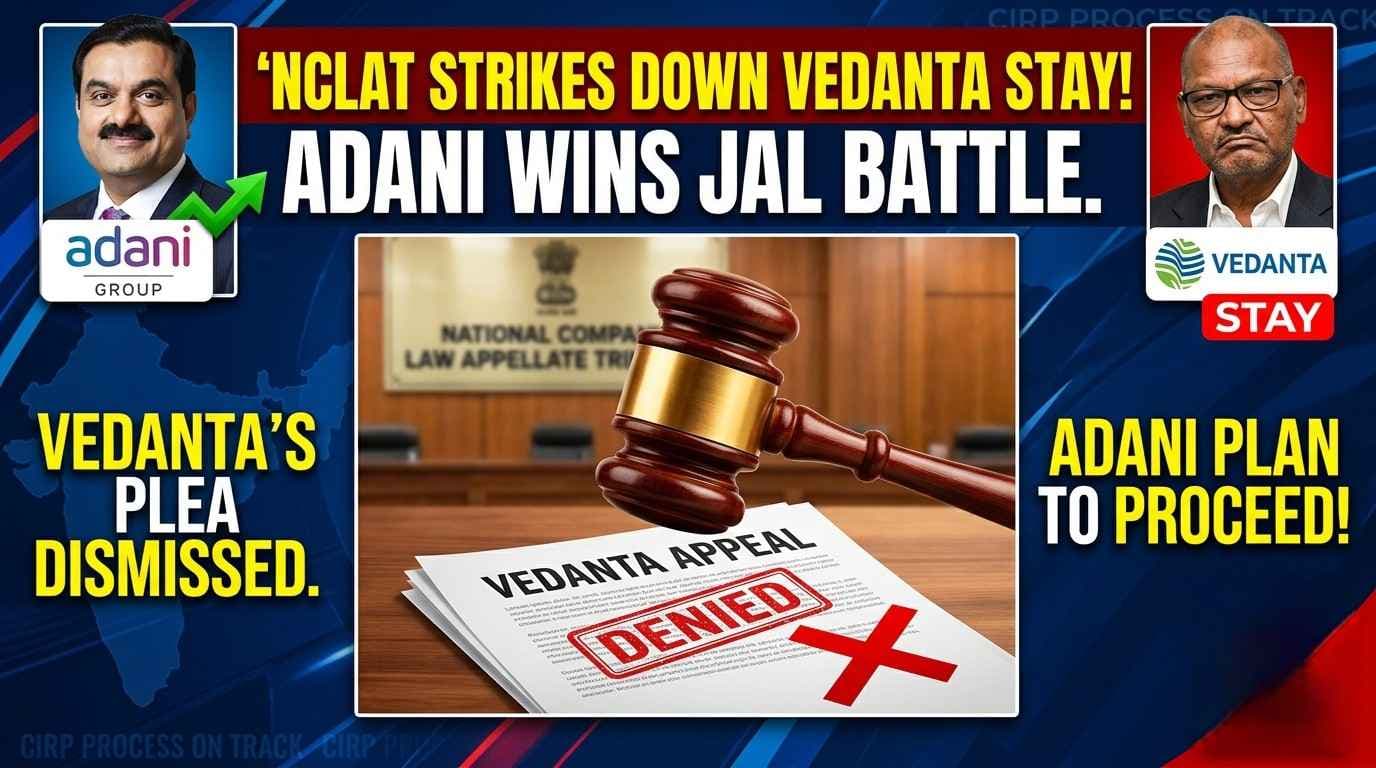
The legal battle over the insolvency of Jaiprakash Associates Limited (JAL) has taken a significant turn as the National Company Law Appellate Tribunal (NCLAT) dismissed an appeal by Vedanta Limited. Vedanta had sought an interim stay on the ongoing Corporate Insolvency Resolution Process (CIRP) and specifically aimed to halt the consideration of the resolution plan submitted by the Adani Group. The NCLAT’s refusal to grant a stay ensures that the time-bound resolution process under the Insolvency and Bankruptcy Code (IBC) remains on track, avoiding further delays in one of the country's most watched corporate restructuring cases.
Vedanta’s intervention in the matter was rooted in its claim as a prospective resolution applicant and its objections to the procedural aspects of how bids were being handled. The mining and natural resources giant argued that the process required a pause to ensure a "level playing field" among the various contenders eyeing the assets of the debt-ridden infrastructure major. However, the appellate tribunal observed that the resolution process is already at an advanced stage and that judicial interference at this juncture would be counterproductive to the IBC’s goal of value maximization.
The focus of the dispute revolves around the massive debt and diverse asset portfolio of Jaiprakash Associates, which spans across cement, power, and real estate sectors. The Adani Group emerged as a frontrunner in the resolution race, submitting a plan that the Committee of Creditors (CoC) is currently evaluating. Vedanta’s plea sought to challenge the exclusivity or preference allegedly being accorded to the current plan, but the NCLAT maintained that the CoC has the supreme commercial wisdom to decide which path leads to the best recovery for the lenders.
A critical aspect of the NCLAT's reasoning was the statutory timeline mandated by the IBC. The tribunal emphasized that the "prolonged suspension" of insolvency proceedings often leads to the erosion of the corporate debtor's asset value. By dismissing the plea for a stay, the court signaled that individual corporate grievances cannot override the collective interest of the creditors and the necessity of completing the resolution process within the 330-day window. This decision reinforces the judiciary’s commitment to preventing the "litigation-led stagnation" of insolvency cases.
The rejection of Vedanta’s plea effectively clears a major legal hurdle for the Adani Group. If the resolution plan is approved by the CoC and subsequently by the National Company Law Tribunal (NCLT), it would mark another significant acquisition for the Adani Group in the infrastructure and building materials space. For JAL’s lenders, who are owed thousands of crores, the NCLAT’s order brings them a step closer to a potential recovery and the revival of the company’s operations.
The case also highlights the complexities of the IBC when multiple industrial behemoths vie for the same stressed assets. Legal experts suggest that such "inter-bidder" litigation is becoming increasingly common as companies use the appellate process to challenge the eligibility or transparency of their rivals. The NCLAT's stance in this matter serves as a precedent that unless there is a glaring jurisdictional error or a breach of fundamental principles of natural justice, the appellate court will be hesitant to stall a functioning CIRP.
Furthermore, the resolution of Jaiprakash Associates is seen as a litmus test for the efficiency of the NCLT Allahabad bench, where the primary proceedings are located. The involvement of the NCLAT ensures that the procedural integrity is maintained while balancing the urgency of the case. The dismissal of Vedanta’s appeal underscores the principle that "speed is of the essence" in insolvency law, and that legal maneuvers should not be used as tools to delay the inevitable restructuring of a failing entity.
In conclusion, the NCLAT’s decision to allow the resolution process for Jaiprakash Associates to proceed is a victory for the creditors and the spirit of the IBC. While Vedanta may still have legal avenues to explore regarding the final approval of the plan, the current path is clear for the Adani Group’s proposal to move forward. As the legal and financial sectors watch the final tallying of votes within the CoC, the focus remains on whether JAL can successfully emerge from insolvency and contribute once again to India's infrastructure landscape.