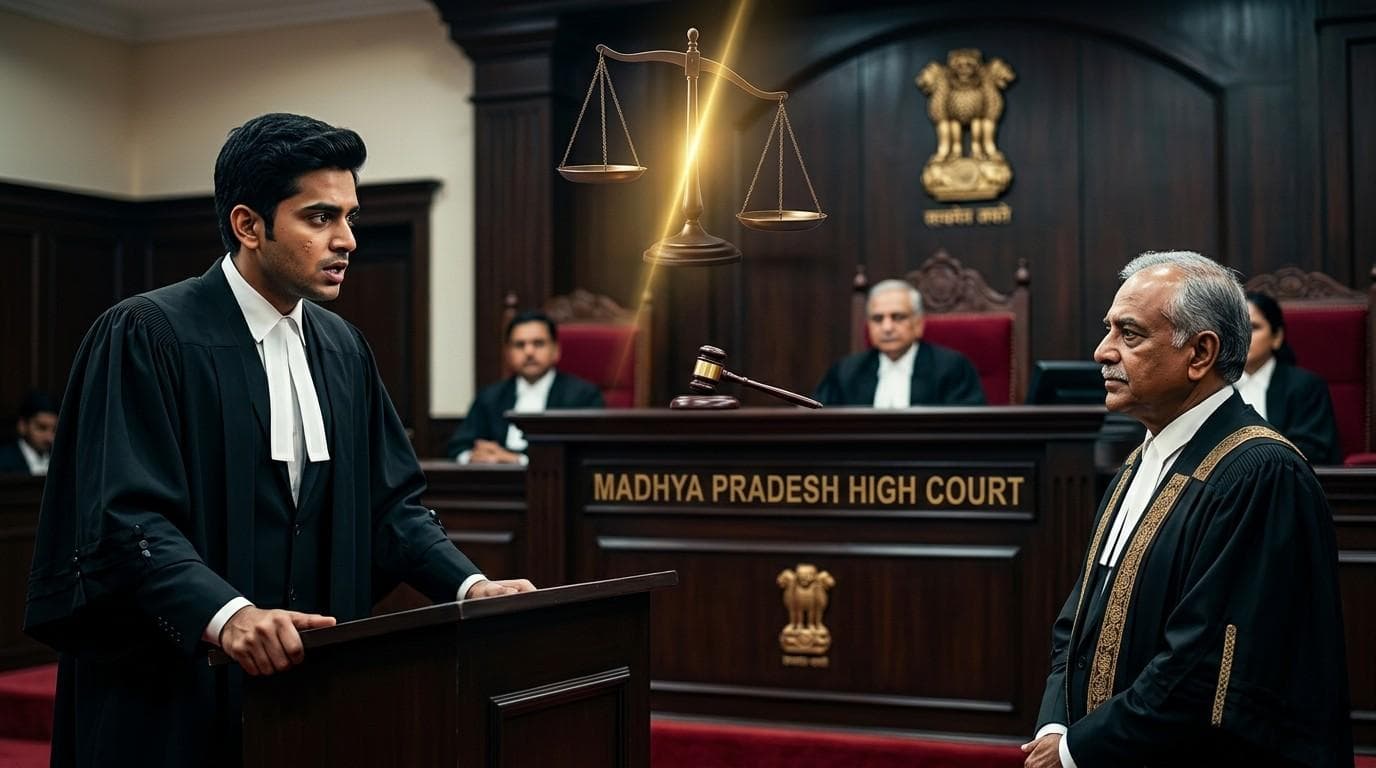
The Madhya Pradesh High Court recently took strong exception to a submission made by a legal practitioner who suggested that the granting of bail is influenced by the seniority of the arguing counsel. During the hearing of a bail application under the Essential Commodities Act, the lawyer allegedly remarked that in similar cases, relief was only granted to those represented by "Senior Advocates." This bold claim sparked a sharp response from the bench, which viewed the statement as a direct challenge to the fairness and neutrality of the judicial system.
Justice Ramkumar Choubey, presiding over the matter, characterized the lawyer’s submission as "prima facie derogatory" and "contemptuous." The court observed that such statements attribute extraneous considerations to judicial functioning, undermining the dignity of the institution. By suggesting that a "junior advocate" is a handicap in the eyes of the law, the counsel inadvertently accused the court of bias—a claim that the judiciary views with extreme seriousness to maintain public trust in the legal process.
In a move to hold the counsel accountable, the High Court directed the lawyer to produce specific orders or evidence to substantiate his claim that bail is routinely reserved for the clients of senior lawyers. This directive highlighted a fundamental legal principle: that allegations against the conduct of the court must be backed by ironclad proof, rather than anecdotal frustration or courtroom rhetoric. The court emphasized that the identity of the lawyer should never overshadow the merits of the case.
When the matter resumed, the lawyer tendered an unconditional apology, clarifying that he was not in possession of any such orders and that his remarks were based on a misunderstanding of a previous order by a coordinate bench. Recognizing the gravity of the potential contempt proceedings, the advocate sought the court’s leniency. The apology served as a moment of professional reflection, illustrating the fine line between zealous advocacy for a client and overstepping the bounds of ethical courtroom conduct.
While the High Court ultimately decided not to initiate formal contempt proceedings, it issued a stern caution to the advocate. Justice Choubey advised the counsel to remain "conscious of the sanctity of judicial proceedings" and to be "circumspect" when making submissions. This warning serves as a broader reminder to the legal fraternity that while a lawyer’s duty is to fight for their client’s liberty, that fight must be conducted within the parameters of respect for the bench.
The incident has reignited a conversation within legal circles about the perceived "seniority bias" in Indian courts. While the judiciary maintains that every case is decided on its legal merits, younger practitioners often voice concerns about the weight a senior designation carries. However, this ruling reinforces that expressing such grievances as a matter of fact during a hearing—without evidence—is a dangerous path that can lead to legal repercussions for the lawyer themselves.
Beyond the individual case, the ruling acts as a guardian of the "Equality before Law" principle enshrined in the Constitution. It reassures the public that bail is a right determined by the facts of the crime and the character of the accused, not the stature of the person standing at the podium. By pulling up the counsel, the court protected its image as a blind arbiter of justice, where the law speaks louder than the reputation of the legal representative.
In conclusion, the Madhya Pradesh High Court’s intervention was a necessary act of institutional self-preservation. It reaffirmed that the courtroom is a temple of justice where the "Junior" or "Senior" status of a lawyer is irrelevant to the truth of the matter. As the lawyer’s apology was accepted, the case remains a significant precedent on the importance of decorum, reminding all officers of the court that the tongue must be as disciplined as the mind when addressing the seat of justice.