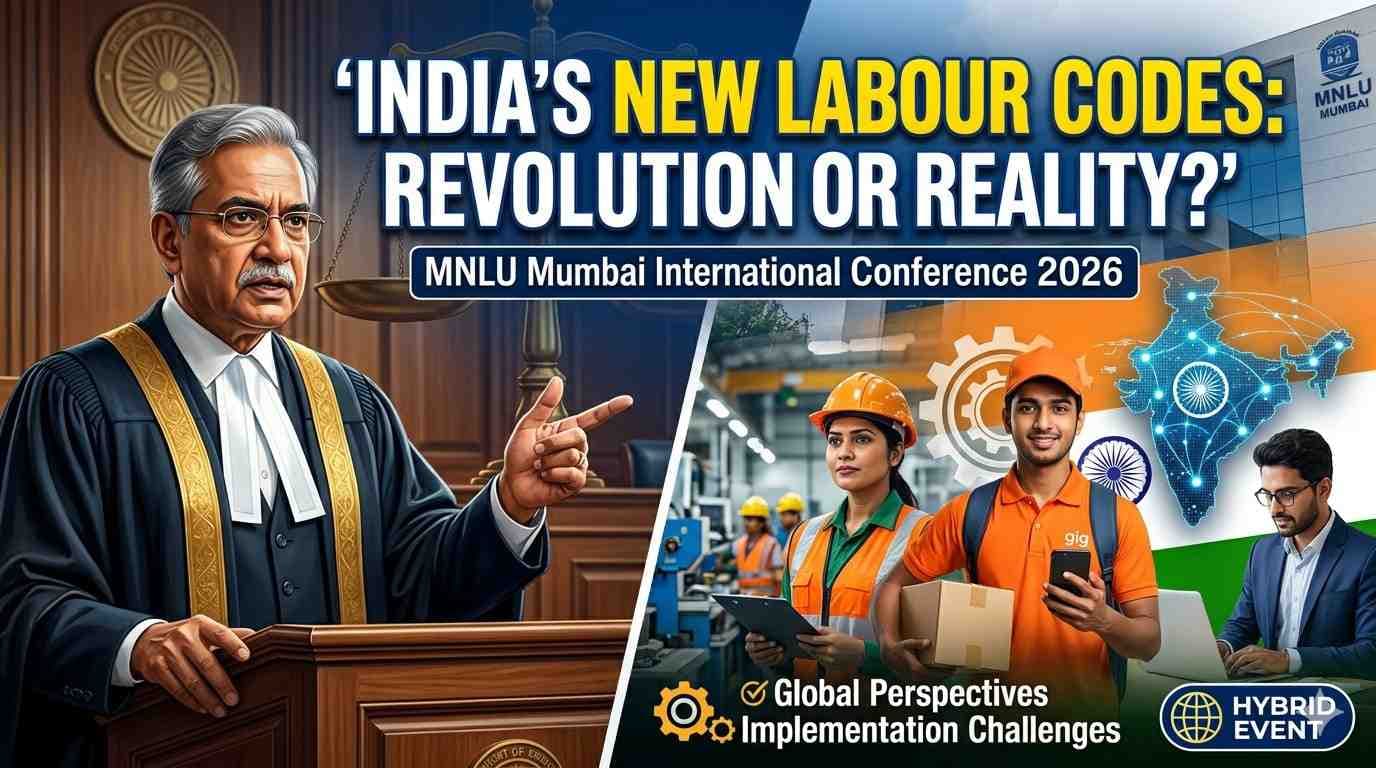
The Maharashtra National Law University (MNLU), Mumbai, recently hosted the inaugural edition of its International Labour Law Conference, centering on the significant shifts introduced by India’s New Labour Codes. Held on April 6, 2026, the hybrid event provided an essential academic and professional platform to dissect the theme of "Contemporary Issues, Implementation Challenges, and Global Perspectives." By gathering a diverse group of judges, legal practitioners, and scholars, the conference aimed to bridge the gap between theoretical legislative changes and the practical realities of the evolving Indian workforce.
The conference featured high-level discourse from distinguished legal figures, including Chief Guest Prof. (Dr.) S. C. Shrivastava and Guest of Honour Justice K. Chandru. A major takeaway from the discussions was the need for a balanced approach to reform; while the four new Labour Codes are designed to consolidate and modernize nearly 29 existing laws, speakers highlighted the necessity of institutional preparedness and effective implementation mechanisms. Vice-Chancellor Prof. (Dr.) Dilip Ukey specifically invoked the legacy of Dr. B.R. Ambedkar, suggesting that MNLU Mumbai take a leading role in formulating policy declarations to guide these monumental transitions.
Academic rigor was a hallmark of the event, which saw around 70 paper presentations spread across 10 parallel technical sessions. Participants explored a wide array of sub-themes, ranging from wage regulation and social security to the burgeoning challenges of the gig economy and platform workers. The hybrid format allowed for a global exchange of ideas, with 25 presentations occurring on-campus and 45 virtually, ensuring that perspectives on occupational safety and industrial relations were viewed through both domestic and international lenses.
One of the more poignant sessions focused on the gendered realities of labour jurisprudence. Experts stressed that modern legal frameworks must move beyond traditional administrative roles to address contemporary issues such as menstrual dignity, workplace safety, and bodily autonomy. By addressing these critical social concerns alongside economic and regulatory shifts, the conference successfully underscored that the true success of India's labour law reforms will depend on their ability to remain sensitive to the diverse and evolving needs of all workers.