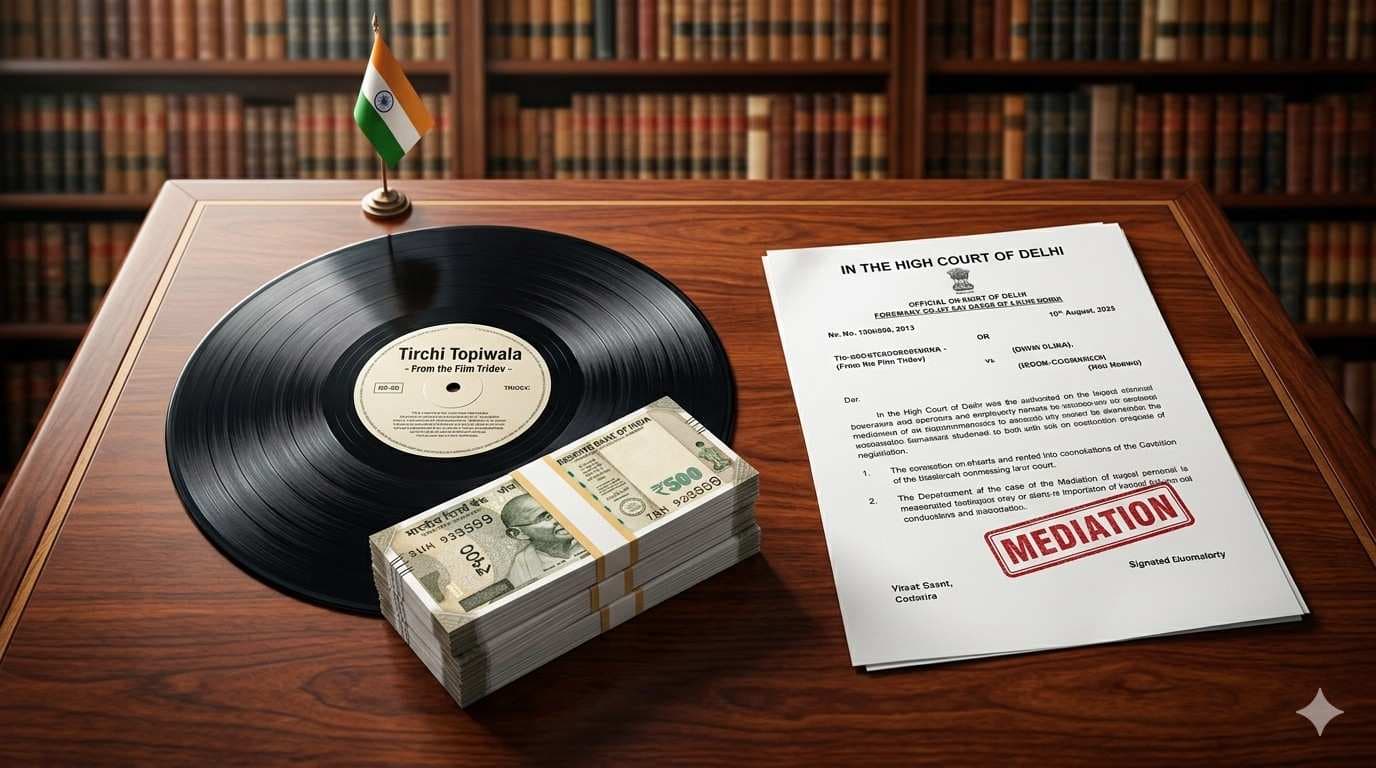
The Delhi High Court has recently referred a copyright dispute involving the iconic "Oye Oye" song to mediation, seeking an amicable resolution between Trimurti Films and Aditya Dhar’s B62 Studios. The legal battle centers on the song "Rang De Lal (Oye Oye)" from the film Dhurandhar 2, which Trimurti Films alleges is an unauthorized remake of the hit track "Tirchi Topiwala" from the 1989 classic Tridev. Justice Tushar Rao Gedela observed that the essence of the controversy appeared to be financial, suggesting that matters of royalties and compensation could be better settled through dialogue rather than adversarial litigation.
During the proceedings, the court declined to grant an immediate interim injunction against the film’s distribution, noting that Dhurandhar 2 has already had its theatrical release. Furthermore, the producers informed the court that there are no plans for an OTT release until at least mid-May 2026. However, to protect the interests of the plaintiff, the court directed the defendants to maintain a strict record of all accounts and earnings generated from the song's exploitation across various platforms until a final decision is reached.
The plaintiff, Trimurti Films, argued that while they had historically granted certain limited rights to T-Series for sound recordings, those rights did not extend to the creation of unauthorized remixes or standalone digital exploitation in new films. On the other hand, the defense contended that the claims were a result of suppressed facts and argued that similar uses had occurred in the past without objection. The court expressed concern over potential non-disclosures in the pleadings, remarking that any suppression of facts is a serious issue that the judiciary intends to address firmly.
By appointing a senior mediator and scheduling the next hearing for May 6, 2026, the Delhi High Court is prioritizing a pragmatic approach to intellectual property disputes in the film industry. The mediation session, set for April 22, will provide both parties an opportunity to negotiate a licensing or royalty agreement that reflects the song's commercial value. This move highlights a growing judicial trend of encouraging alternative dispute resolution in cases where the primary grievance is monetary, ensuring that creative works are protected while allowing modern productions to proceed without undue delay.