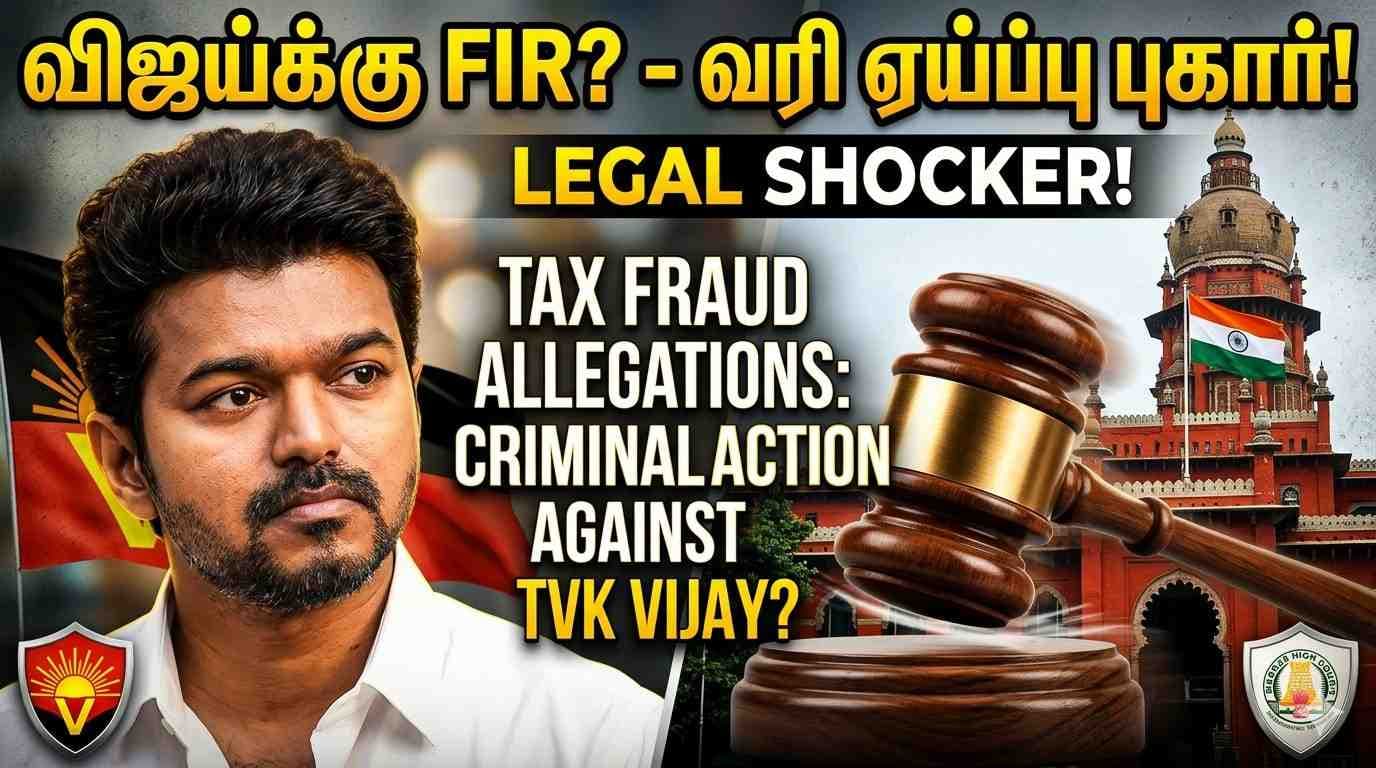
The legal and political landscape in Tamil Nadu is heating up as the Madras High Court prepares to hear a plea for criminal action against Tamilaga Vettri Kazhagam (TVK) leader, Vijay. The petition, which has now been formally directed for listing by the Court Registry, seeks the registration of a First Information Report (FIR) based on allegations that the actor-turned-politician intentionally suppressed significant portions of his income in previous years' tax returns.
The petitioner, a social activist, contends that there are discrepancies between the actor's declared assets and his actual earnings from high-budget film projects and brand endorsements. The plea argues that such "willful suppression" of income is not merely a civil matter of tax assessment but a criminal offense under the Income Tax Act, 1961, and relevant sections of the Bharatiya Nyaya Sanhita (BNS) relating to cheating and the furnishing of false information.
This legal challenge comes at a critical juncture for Vijay, who recently transitioned into active politics with the launch of TVK, aiming to contest the 2026 Tamil Nadu Assembly elections. Opponents have frequently used his past tax-related litigations as political ammunition, while his supporters view these petitions as motivated attempts to derail his nascent political career.
The Madras High Court’s decision to move the plea forward to the hearing stage indicates that the court intends to examine whether there is a prima facie case of criminal intent. In India, tax evasion typically follows a two-pronged path: administrative penalties by the Income Tax Department and criminal prosecution in cases of deliberate fraud or concealment.
Historically, Vijay has faced similar scrutiny. In 2022, the Madras High Court notably quashed a penalty imposed on him for allegedly failing to declare an imported luxury car’s value, while also emphasizing that celebrities have a "social responsibility" to pay taxes diligently. This new petition, however, focuses on a broader "systemic suppression" of professional income over multiple financial years.
Legal experts suggest that for a criminal case to be registered, the petitioner will have to prove 'mens rea' or criminal intent. The Court will likely look into whether the Income Tax department has already conducted its own investigation or if there are ongoing assessments that would preclude a parallel criminal proceeding at this stage.
As the Registry prepares the case for a formal bench hearing, the eyes of both the film industry and the political circles are on the High Court. If the court finds merit in the petition and orders an investigation, it could lead to significant hurdles for the TVK chief’s public image and his party’s "anti-corruption" platform.
In conclusion, the Madras High Court's directive ensures that the allegations against the TVK chief will be scrutinized under the lens of the law. While the actor’s legal team is expected to argue that the petition is politically motivated and lacks factual basis, the case underscores the increasing judicial focus on the financial transparency of public figures in India.