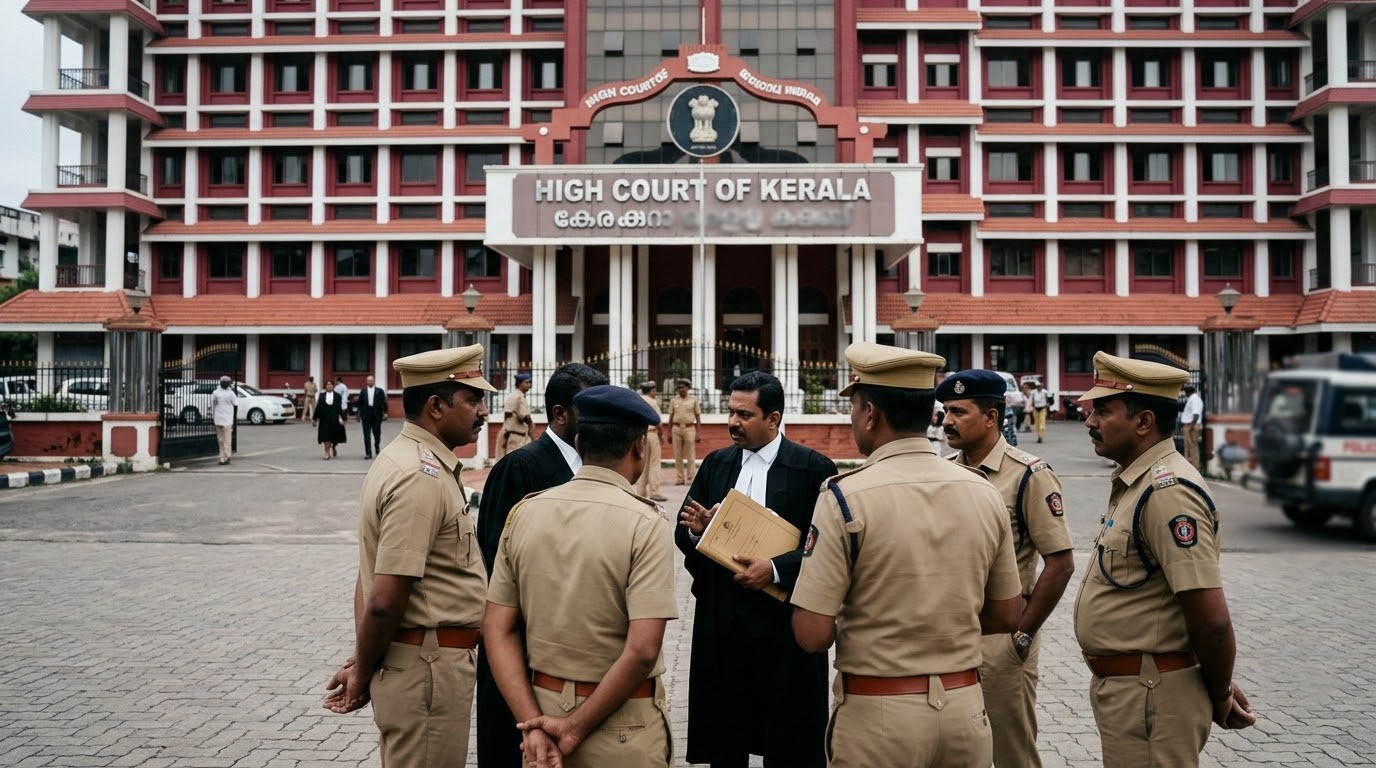
A Division Bench of the Kerala High Court comprising Dr. Justice A.K. Jayasankaran Nambiar and Justice Preeta A.K. on November 12 allowed writ appeals filed by the State government challenging a Single Judge's decision quashing a government order restructuring recognised police associations in the State. The Bench set aside the impugned judgment, thereby validating the government's decision to reorganise the three existing associations into two representative bodies.
What Was The Government Order On Restructuring Police Associations?
The government order sought to abolish the Kerala Police Officers' Association (KPOA) and redistribute its members between the Kerala Police Association (KPA) and the Kerala Police Senior Officers' Association (KPSOA). Under the revised arrangement, Civil Police Officers, Senior Civil Police Officers, Grade Assistant Sub Inspectors, Assistant Sub Inspectors and Grade Sub Inspectors were brought under the KPA. Directly recruited Sub Inspectors and officers in the regular promotional hierarchy, including Inspectors, Deputy Superintendents of Police and Superintendents of Police (Non-IPS), were grouped under the KPSOA.
Why Did The Single Judge Quash The Restructuring Order?
The Kerala Police Association and the Kerala Police Officers' Association had challenged the government order before the Single Judge. The associations contended that they were functioning under government-approved bylaws and that their organisational structure could not be altered in disregard of those rules. They argued that the fundamental right to form associations under Article 19(1)(c) of the Constitution includes the right to continue with a voluntarily chosen membership composition. The Single Judge accepted this contention, holding that the government order was contrary to the approved bylaws governing the associations and was therefore legally invalid.
What Were The State's Grounds Of Appeal Before The Division Bench?
Aggrieved by the Single Judge's decision, the State preferred appeals before the Division Bench. The State contended that the Single Judge had failed to consider the special constitutional and statutory framework governing the associational rights of members of the police force. Relying on Article 33 of the Constitution, the Police Forces (Restriction of Rights) Act, 1966, and the Rules framed thereunder, the State argued that the right of police personnel to form and participate in associations is subject to statutory restrictions applicable to forces responsible for maintaining public order. The State maintained that the restructuring was intended to bring police personnel with broadly similar service conditions, promotional opportunities and welfare concerns under common representative bodies.
Comparison Of Association Structure Before And After Restructuring
Category | Pre-Restructuring (Three Associations) | Post-Restructuring (Two Associations) |
|---|---|---|
Kerala Police Association (KPA) | Represented lower subordinate ranks | Expanded to include Civil Police Officers, Senior Civil Police Officers, Grade ASIs, ASIs, Grade SIs |
Kerala Police Officers' Association (KPOA) | Existed as separate middle-tier body | Abolished; members redistributed |
Kerala Police Senior Officers' Association (KPSOA) | Represented senior officers | Expanded to include directly recruited SIs, Inspectors, DySPs, SPs (Non-IPS) |
What Was The Division Bench's Ruling?
The Division Bench allowed the writ appeals, setting aside the Single Judge's judgment. The Court held that the restructuring fell within the statutory framework governing police associations and that the government possessed the authority to reorganise the bodies to align with service conditions and promotional hierarchies. The detailed judgment is awaited. The State was represented by Additional Advocate General P.A. Mohammed Shah and Nisha George, while the respondents were represented by P.C. Sasidharan, Babu S. Nair and Alex K. John.