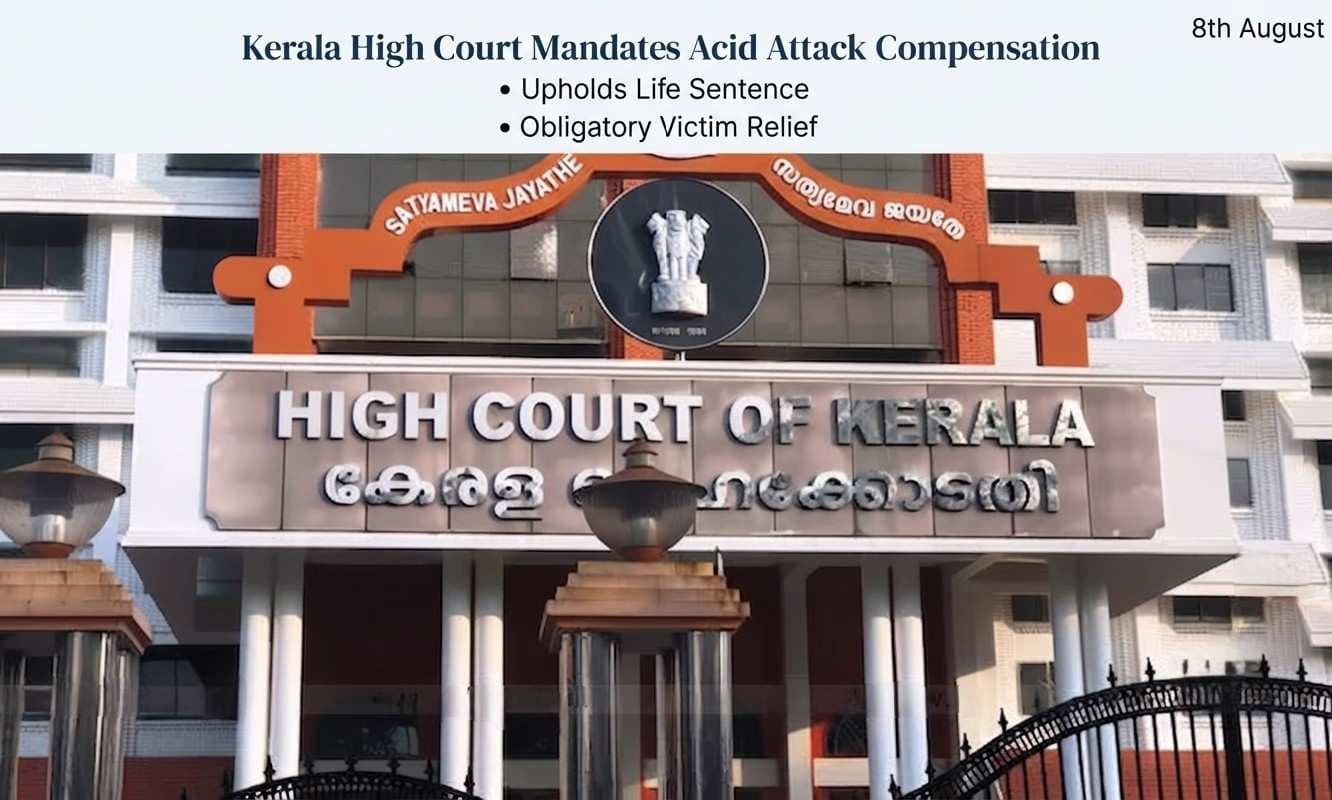
Acid attacks represent one of the most brutal forms of violence, leaving victims with lifelong physical and emotional scars. Recognizing the gravity of these crimes, the Kerala High Court has recently issued significant directives, reinforcing that the responsibility of the justice system extends beyond merely punishing the perpetrators; it is equally vital to ensure that survivors receive the support necessary to rebuild their lives.
In a recent case involving a horrific acid attack against a wife and her four children, the High Court took a firm stand. While the court upheld the life imprisonment sentence for the accused, it identified a critical gap in the initial legal proceedings: the failure of the trial court to provide adequate compensation to the victims. The High Court intervened, noting that justice remains incomplete if the long-term suffering and medical needs of those affected are ignored.
The court emphasized that the legal provisions for victim compensation are not merely discretionary suggestions; they are a mandatory obligation. By interpreting the law strictly, the bench highlighted that in cases of such heinous violence, the state has an imperative duty to ensure that victims are not left to fend for themselves. Consequently, the court ordered the state government to provide a substantial financial relief package to each of the victims involved.
Beyond this specific case, the High Court has consistently reinforced the principle that acid attack survivors require immediate and sustained financial aid for medical treatments, surgeries, and rehabilitation. This includes directives for legal services authorities to expedite interim compensation to help cover the rising costs of urgent care and to support survivors during their long recovery processes.
The court’s stance serves as a powerful reminder of the principles of "victimology," which prioritize the restoration and rehabilitation of those who have suffered at the hands of criminals. By setting these precedents, the judiciary is pushing for a more compassionate legal framework that recognizes the financial burden placed on victims.
These rulings signal a shift toward a more victim-centric approach in India's legal landscape. The court's insistence on timely compensation ensures that survivors are not just treated as witnesses in a criminal trial, but as individuals whose lives and future well-being are a primary concern of the state.
As these directives take hold, the hope is that the system will become more responsive to the needs of those who have survived such trauma. The Kerala High Court’s commitment to ensuring that relief reaches the victims acts as a necessary safeguard, proving that the law is not just a tool for punishment, but a shield for those in desperate need of justice and support.