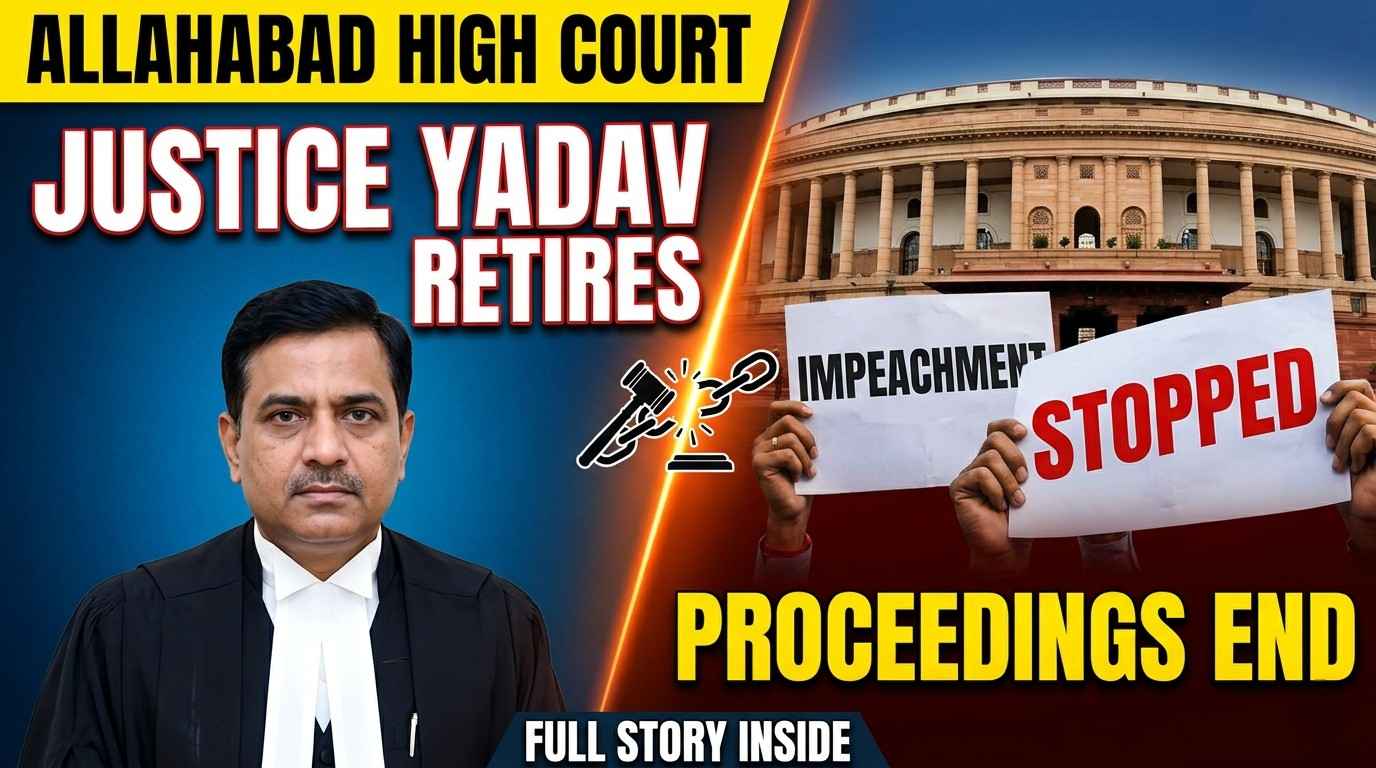
Justice Shekhar Kumar Yadav of the Allahabad High Court is set to retire on April 15, 2026, bringing a conclusion to a judicial tenure marked by significant controversy and a stalled impeachment process. Justice Yadav gained national attention for several oral and written remarks concerning religious and cultural issues, which critics argued stepped beyond the traditional boundaries of judicial restraint. His retirement effectively ends the parliamentary proceedings against him, as the constitutional mechanism for removal applies only to serving judges.
The impeachment motion against Justice Yadav was initiated by a group of over 60 Members of Parliament following a series of judgments where he made strong observations regarding the Muslim community and the cultural status of cows in India. In one notable ruling, he suggested that the cow should be declared the national animal and that "Hindutva" was the fundamental identity of the nation. While his supporters viewed these as expressions of cultural pride, a section of the legal community and civil society groups filed complaints alleging that such remarks undermined the secular fabric of the judiciary and created an "apprehension of bias."
The impeachment process, governed by the Judges (Inquiry) Act, 1968, had reached the stage of a preliminary inquiry committee. However, the proceedings faced multiple delays due to procedural challenges and the heavy legislative calendar of the Parliament. With his retirement being a natural constitutional exit, the committee's findings—if any—will likely remain unacted upon. Legal experts point out that this follows a historical pattern in India where judges facing removal often reach the age of superannuation or resign before the complex parliamentary vote can take place.
Beyond the controversies, Justice Yadav's departure leaves a vacancy in the Allahabad High Court, the largest High Court in India by strength, which is already grappling with a high vacancy rate and a massive backlog of cases. His tenure serves as a case study in the debate over the "code of conduct" for judges and the extent to which personal beliefs can be reflected in judicial pronouncements. The Supreme Court has historically cautioned that judges should speak primarily through their judgments and avoid making extraneous remarks that could be perceived as political or communal.