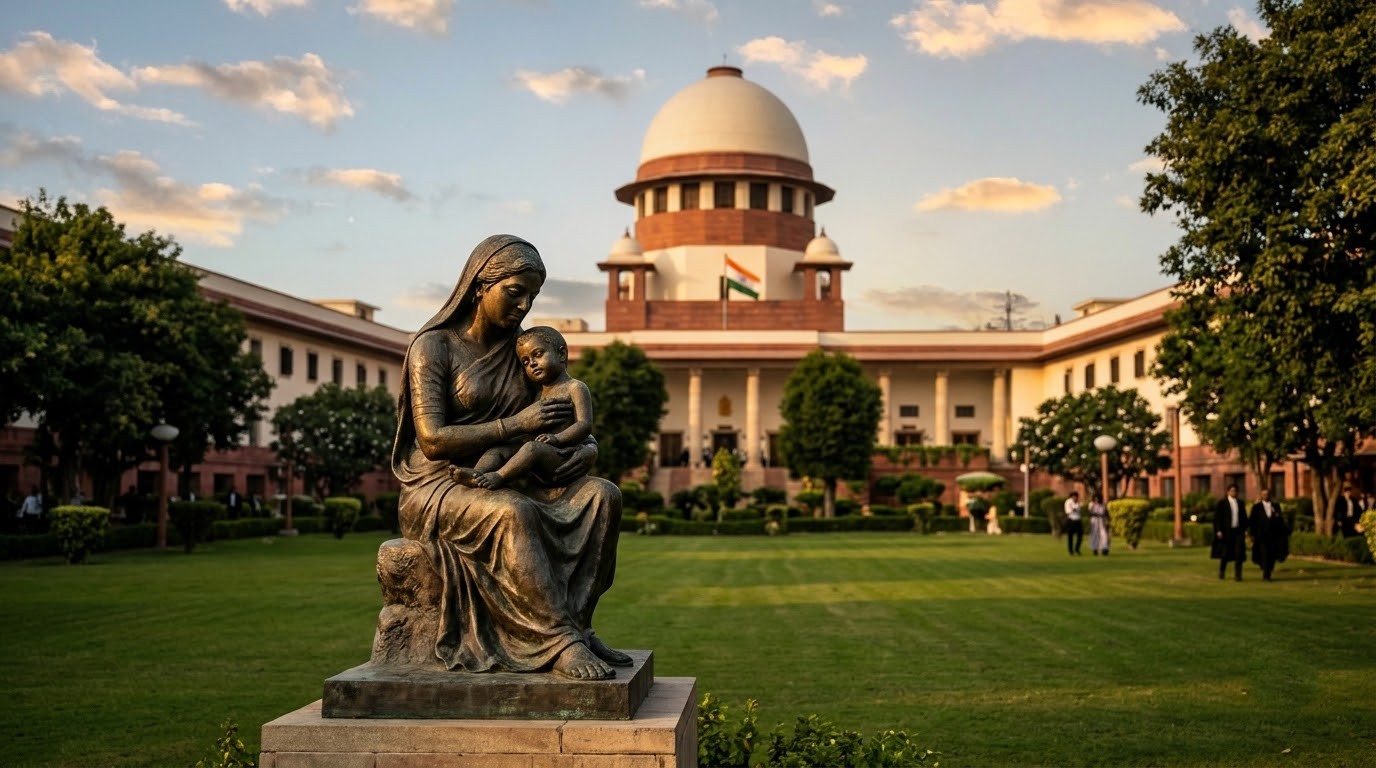
Justice J.B. Pardiwala of the Supreme Court of India has asserted that India should aspire not only to improve upon its inherited child protection framework but to establish one of the finest juvenile justice systems in the world. The observation was made during the National Annual Stakeholders Consultation held to mark ten years of the Juvenile Justice (Care and Protection of Children) Act, 2015.
Addressing the gathering, Justice Pardiwala highlighted the persistent gap between the legislative mandate of the 2015 Act and its operational reality on the ground. He emphasized that the statute, which completed a decade in force, was designed to provide a robust architecture for the care, protection, and rehabilitation of children in conflict with law and children in need of care and protection. However, the judge noted that institutional failures and implementation deficits have prevented the legislation from achieving its full transformative potential.
What Did Justice Pardiwala Identify as the Core Challenge for the JJ Act After Ten Years?
Justice Pardiwala identified the implementation gap as the primary obstacle, stressing that institutional failures have prevented the Juvenile Justice Act, 2015 from realizing its legislative intent for child care, protection, and rehabilitation over the last decade.
The consultation served as a platform to review the trajectory of the Act since its enactment. Justice Pardiwala pointed out that while the legal framework is progressive, the systemic machinery—comprising Juvenile Justice Boards, Child Welfare Committees, District Child Protection Units, and special juvenile police units—often suffers from resource constraints, vacancies, and inadequate training. He underscored that these structural weaknesses directly impact the rights and welfare of children, leading to delays in inquiries, prolonged institutionalisation, and insufficient rehabilitation measures.
The judge called for a rigorous introspection by all stakeholders, including the judiciary, executive agencies, and civil society, to diagnose the reasons for the divergence between the law on the statute book and the law in action. He stressed that the objective must shift from incremental improvement to a radical overhaul of the delivery mechanisms. Justice Pardiwala articulated that the benchmark for success should be global excellence, urging the system to adopt best practices in child psychology, restorative justice, and community-based rehabilitation.
Furthermore, the address touched upon the specific challenges concerning children in conflict with law. Justice Pardiwala noted that the rehabilitative philosophy of the Act is frequently undermined by procedural delays and the lack of adequate observation homes and places of safety. He warned that failure to provide a nurturing environment for these children contravenes the fundamental principles of the Act and the Constitution.
The consultation underscored the need for enhanced accountability of functionaries under the Act. Justice Pardiwala suggested that regular monitoring, capacity building, and the allocation of sufficient financial resources are non-negotiable prerequisites for a functional juvenile justice system. He concluded by reiterating that the vision for the next decade must be to construct a system that serves as a model for other jurisdictions, ensuring that every child in India receives the protection and opportunity the 2015 legislation promises.
Aspect | Legislative Intent (JJ Act, 2015) | Ground Reality (After 10 Years) |
|---|---|---|
Objective | Robust architecture for care, protection, rehabilitation | Implementation gap; institutional failures persist |
Institutional Machinery | JJBs, CWCs, DCPUs, Special Juvenile Police Units | Resource constraints, vacancies, inadequate training |
Impact on Children | Timely inquiries, rehabilitation, reintegration | Delays, prolonged institutionalisation, insufficient rehab |
Vision Forward | Progressive child-centric framework | Build one of the world's finest systems |
Justice Pardiwala's remarks signal a judicial push for systemic accountability as the Juvenile Justice (Care and Protection of Children) Act, 2015 enters its second decade. The emphasis remains on translating statutory guarantees into measurable outcomes for the most vulnerable children in the country.