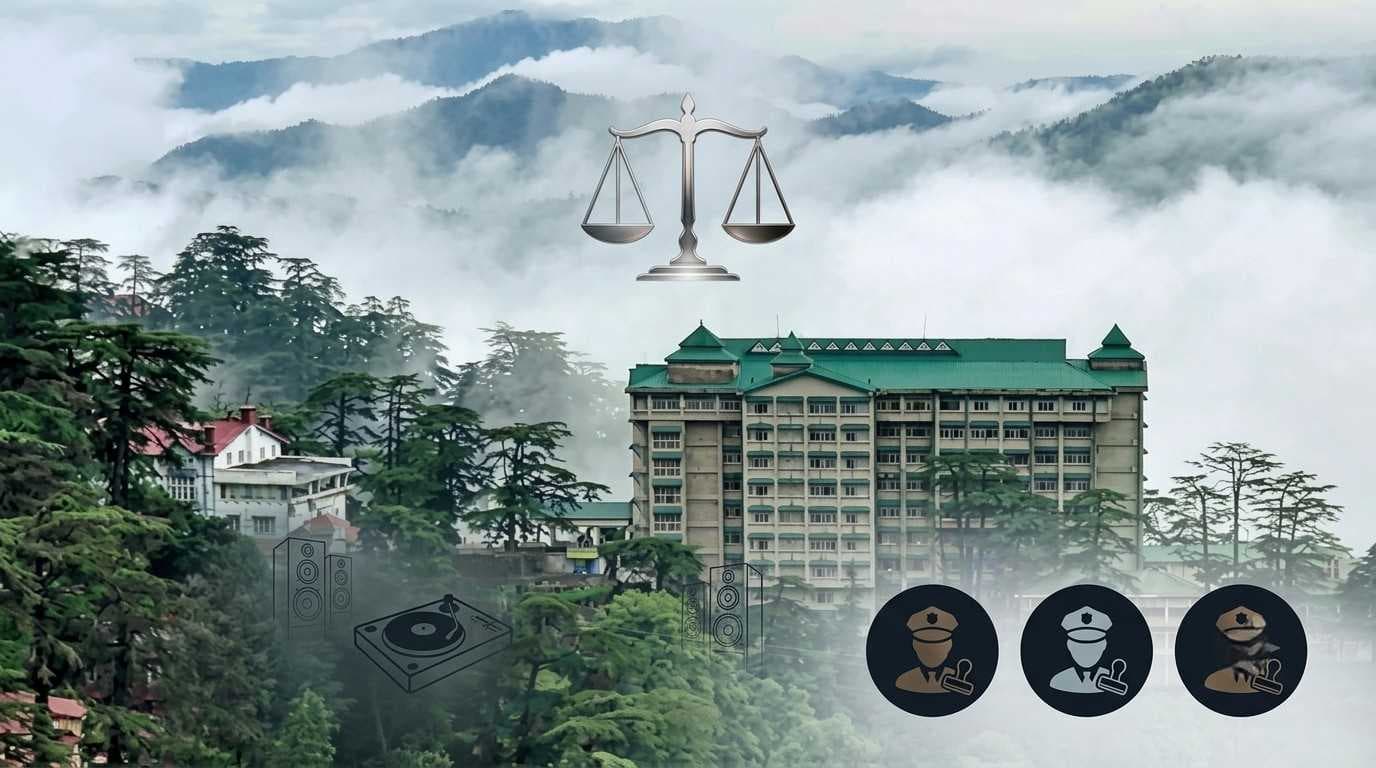
The High Court took notice of media reports and public complaints concerning a series of rave parties held in Kasol, a hill‑station in Kullu district that attracts a substantial number of domestic and foreign tourists. The gatherings were alleged to have been conducted without the mandatory permissions required under the statutes governing public assemblies and the consumption of intoxicating substances. The Court observed that the scale and repetition of the events raised questions about the vigilance of the district administration.
Court's Observations
A Division Bench presided over by Chief Justice G.S. Sandhawalia and Justice Bipin C. Negi examined the material placed before it. The Bench noted that the prima facie picture indicated that the parties appeared to have proceeded with the tacit acquiescence of certain officials. The Court expressed concern that such conduct, if true, would constitute a breach of the statutory duty to maintain public order and could facilitate activities that are detrimental to the health and safety of participants and the local community.
Legal Reasoning
The Bench relied on the principle that public officials are bound to follow the procedural requirements laid down in the Himachal Pradesh Police Act, the rules for granting permissions for public events and the provisions of the Indian Penal Code that deal with public nuisance and unlawful assembly. By allowing the events to continue without the prescribed clearances, the officials concerned acted in a manner that was contrary to their legal obligations. The Court held that this omission amounted to dereliction of duty and created a reasonable suspicion of possible collusion, thereby justifying interim protective measures to safeguard the integrity of any subsequent inquiry.
Operative Outcome
In exercise of its supervisory jurisdiction under Article 226 of the Constitution, the Court directed the immediate transfer of the Kullu Deputy Commissioner, the Superintendent of Police and the Sub‑Divisional Magistrate Kasol from their present assignments. The order further mandated the constitution of a Special Investigation Team headed by an officer of the rank of Inspector General of Police. The SIT is required to investigate the allegations of tacit permission, possible collusion and any related offences, and to submit its report within a period stipulated by the Court.
Implications
The decision reinforces the judiciary’s role in checking administrative lapses that may enable unlawful activities. By removing the implicated officers from their posts, the Court sought to eliminate any potential interference with the SIT’s investigation. The ruling also serves as a directive to district administrations throughout the State that silent approval or wilful ignorance of unlawful gatherings will attract both disciplinary action and criminal scrutiny, thereby affirming the expectation that public officials uphold the rule of law in letter and spirit.