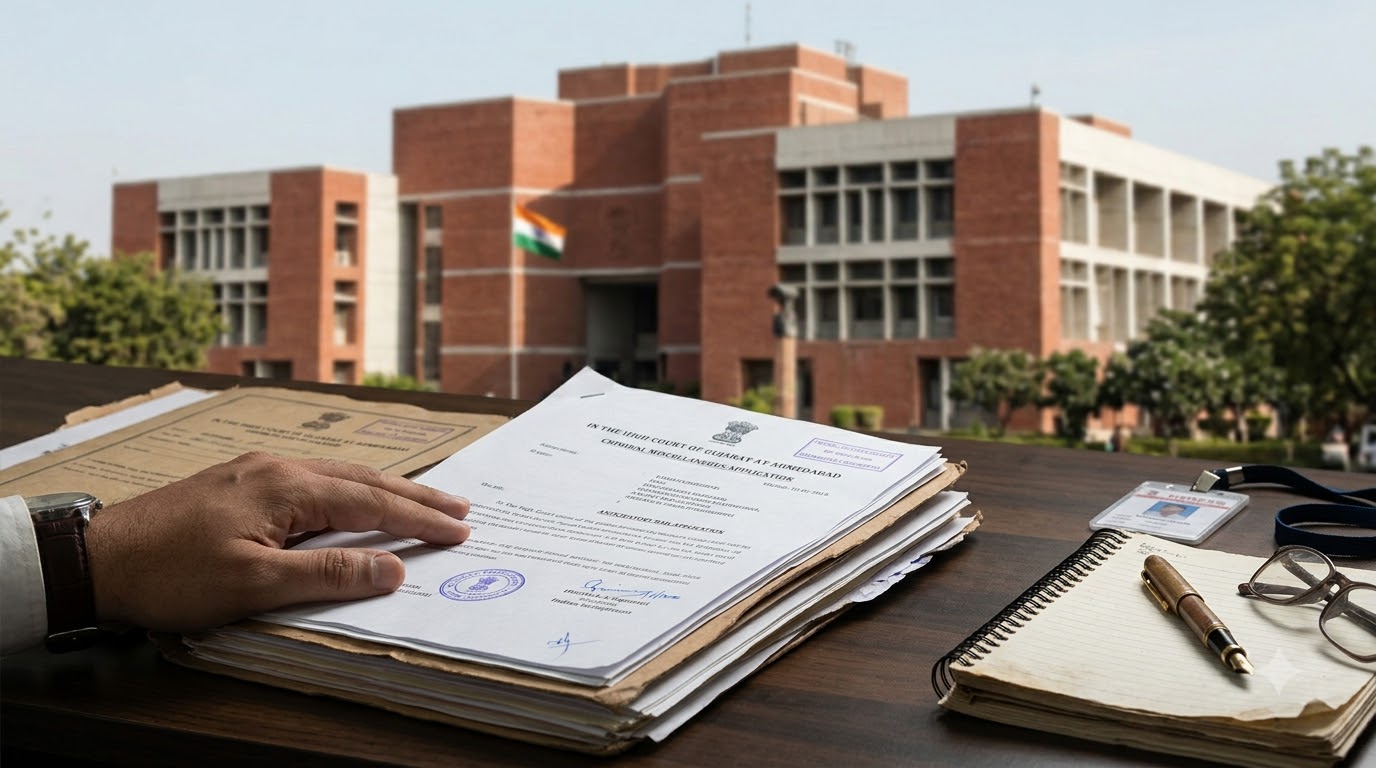
Justice Sanjeev J Thaker of the Gujarat High Court recused himself on Friday, November 6, from hearing the anticipatory bail application filed by journalist Ravi Nair in connection with a First Information Report (FIR) registered under various provisions of the Bharatiya Nyaya Sanhita, 2023 (BNS). The FIR pertains to allegations of forgery and cheating arising from an investigative article published by The Washington Post concerning the Life Insurance Corporation of India (LIC) and the Adani Group.
Why Did Justice Thaker Recuse From Hearing Ravi Nair's Bail Plea?
When the matter was taken up, Justice Thaker orally enquired whether the case involved elements of defamation. Upon receiving an affirmative response from the respondent's counsel, the judge stated, Not before me, and recused from the proceedings. The recusal effectively transfers the bail application to another bench of the High Court for adjudication.
Background Of The Forgery FIR And Washington Post Article
The FIR was registered by the D.C.B. Police Station, Crime Branch, Ahmedabad City, under Sections 318(4) (cheating and dishonest inducement), 336(2) (general forgery), 336(4) (forgery to harm reputation), and 340(2) (using a forged document as genuine) of the BNS. The case originates from an article co-authored by Nair and published by The Washington Post titled India's $3.9 billion plan to help Modi's mogul ally after U.S. charges. The report alleged that in May 2025, Government of India officials drafted a proposal for LIC investments of approximately USD 3.9 billion in Adani Group companies.
In November 2025, an employee of Adani Ports and Special Economic Zone Limited (APSEZ) lodged a complaint on behalf of the company pursuant to a Board resolution dated November 5, 2025. The complaint alleged that after LIC issued a clarification on its social media handle denying the report, Nair responded by uploading screenshots of certain documents. The prosecution contends these documents were false and fabricated. LIC subsequently issued a further clarification stating it had neither received nor issued the documents in question and had received no government instructions regarding such investments.
Procedural History: Quashing Plea Rejected, Supreme Court SLP Withdrawn
A preliminary inquiry was initiated by the Gandhinagar Police and later transferred to the Crime Branch, Ahmedabad. Concurrently, Adani Enterprises Limited filed a criminal defamation case before a Magistrate Court in Gandhinagar, where Nair was convicted and sentenced to one year of simple imprisonment with a fine.
The Gujarat High Court had previously rejected Nair's plea to quash the FIR, observing that the mere pendency of a private defamation complaint on the same facts did not render the FIR an abuse of process of law. Nair challenged this order before the Supreme Court through a Special Leave Petition (SLP) but subsequently withdrew it with liberty to raise grievances at the appropriate stage before the appropriate forum.
BNS Provisions Invoked In The FIR
BNS Section | Offence |
|---|---|
Section 318(4) | Cheating and dishonestly inducing delivery of property |
Section 336(2) | Forgery |
Section 336(4) | Forgery for purpose of harming reputation |
Section 340(2) | Using as genuine a forged document or electronic record |
Previous Bail And Arrest Developments
In July, Nair appeared before the Investigating Officer at the D.C.B. Police Station and cooperated with the investigation. On September 24, the Gandhinagar Sessions Court granted regular bail to Nair following his arrest on a non-bailable warrant issued in the defamation case filed by Adani Enterprises. On September 30, the Gujarat High Court closed Nair's plea challenging that arrest after noting the grant of bail by the Sessions Court.
The anticipatory bail application in the forgery FIR will now be listed before a different bench of the Gujarat High Court for fresh hearing.