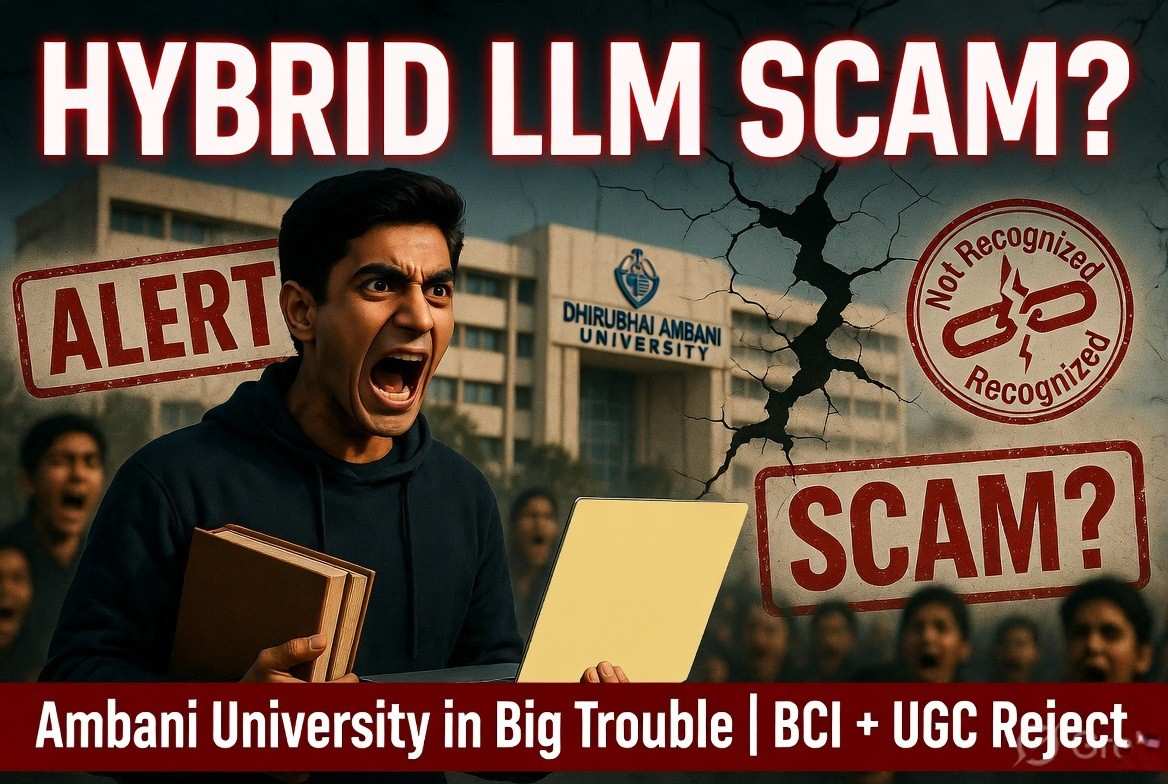
The School of Law (SOL) at Dhirubhai Ambani University is currently facing significant backlash from students and legal experts following allegations that it misleadingly claimed to offer its Master of Laws (LLM) programme in a "hybrid" mode. The controversy erupted after several enrolled students discovered that the Bar Council of India (BCI) and the University Grants Commission (UGC) do not currently recognize or permit a one-year LLM degree to be conducted in a hybrid or distance-learning format for professional legal qualification purposes.
Students have expressed frustration, claiming that the university’s marketing materials and admission brochures explicitly highlighted the flexibility of hybrid learning—combining online lectures with occasional on-campus sessions. Many professionals and out-of-station candidates chose the program specifically for this advertised feature. However, critics point out that existing regulatory frameworks in India mandate that post-graduate legal education remain a full-time, regular course to maintain academic rigor and professional standards.
The backlash intensified on social media and legal forums, where stakeholders questioned the university's transparency. Legal academics have noted that "hybrid" models in law are still in a grey area in India, often leading to situations where students complete their degrees only to find them invalid for teaching positions or judicial service exams. The situation has prompted calls for a formal clarification from the university administration regarding the actual status of the course's delivery and its compliance with BCI and UGC norms.
Dhirubhai Ambani University’s SOL has reportedly responded by stating that the hybrid elements were intended as "supplementary digital resources" rather than a replacement for regular classroom hours. However, students counter that the internal schedules and attendance policies initially shared with them told a different story. This discrepancy has led to fears regarding the future utility of their degrees, with some students reportedly considering legal recourse or seeking a full refund of their tuition fees.
This incident highlights a broader tension within the Indian higher education sector as institutions attempt to modernize and adopt "EdTech" solutions faster than regulatory bodies can update their guidelines. For a prestigious institution carrying the Ambani name, the controversy is seen as a significant reputational risk. It serves as a cautionary tale for prospective law students to verify the "regular" status of programs, regardless of the technological conveniences promised during the admission cycle.
The university is expected to hold a town hall meeting with the affected batch to address these grievances. Meanwhile, regulatory observers suggest that this case might push the UGC to provide more explicit directives on the limits of "blended learning" for professional degrees like the LLM. Until a clear resolution is reached, the academic standing of the current cohort remains in a state of uncertainty.