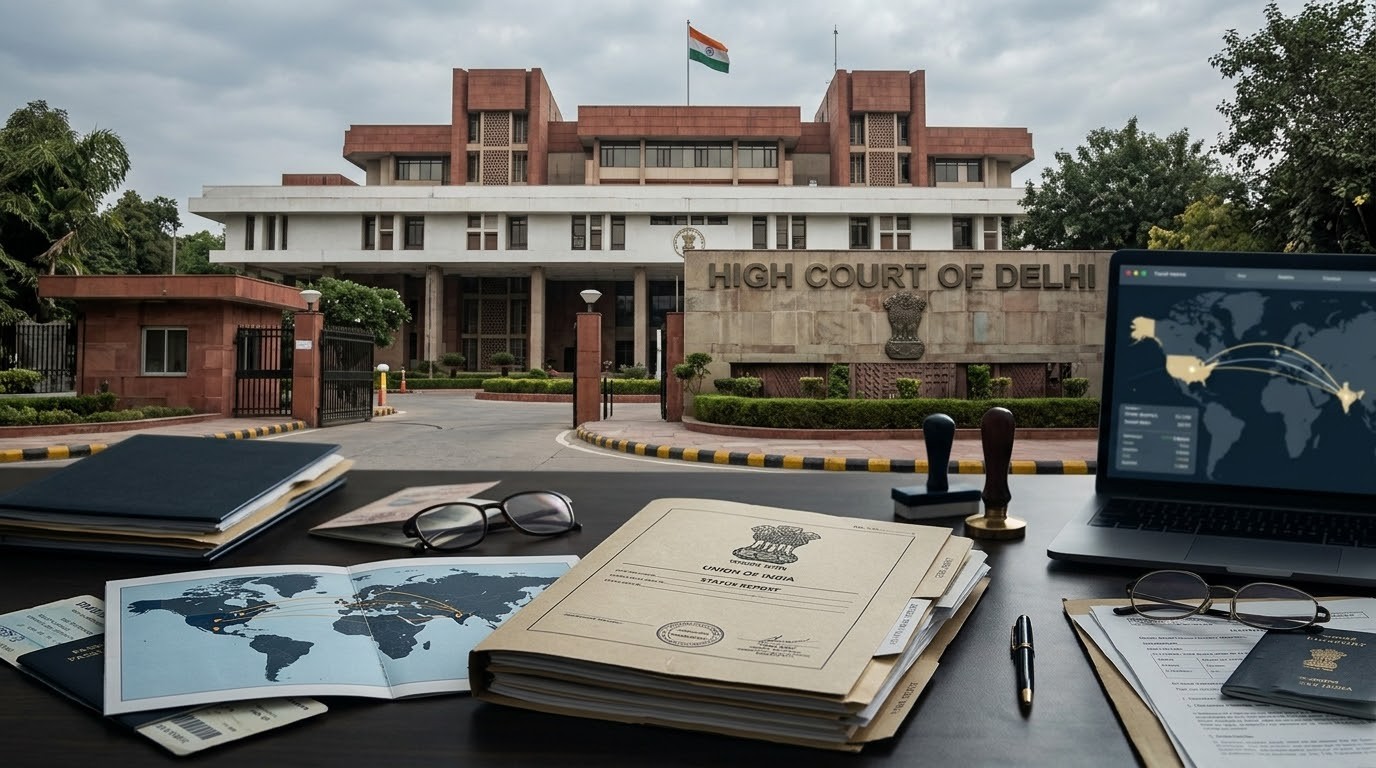
The Delhi High Court has delivered a significant ruling affirming the authority of the state to bar individuals convicted of heinous foreign crimes from entering the country. The matter came before a single bench comprising Justice Amit Mahajan, who addressed a legal challenge brought by an Overseas Citizen of India cardholder. The petitioner, a person of Indian origin holding a foreign passport, sought judicial intervention against an official directive that refused him landing rights upon his arrival at the Indira Gandhi International Airport in New Delhi. The central legal question involved the extent of executive discretion and sovereign authority in regulating the entry of foreign nationals and Overseas Citizens of India into national territory.
Can state authorities deny entry to an Overseas Citizen of India cardholder based on foreign criminal records?
Yes, the Delhi High Court held that state authorities possess the complete legal right to prevent an individual involved in a child sex offense in a foreign jurisdiction from entering India, noting that the refusal of entry is an inherent sovereign function grounded in national security, foreign policy, and administrative discretion.
The factual background of the dispute indicates that the petitioner arrived at the international airport in New Delhi and was promptly served with an order issued under Paragraph 6 of the Foreigners Order, 1948. The directive denied him entry into the country and instructed him to depart on the earliest available flight. Challenging this measure, the petitioner argued through counsel that the impugned order failed to disclose adequate reasons or specific grounds for the refusal of entry. Appearing for the respondents, the Central Government Standing Counsel defended the administrative action by revealing that the petitioner had been blacklisted due to his status as a registered child sex offender in the United States of America.
Statutory Framework | Governing Authority | Scope of Power |
|---|---|---|
Foreigners Order, 1948 | Central Government / Immigration | Enables issuance of landing refusal orders at ports of entry |
Foreigners Act, 1946 (Repealed) | Central Government | Historically authorized restrictions on entry and presence |
Immigration and Foreigners Act, 2025 | Central Government | Current statutory provision regulating entry and departure |
Examining the statutory framework, Justice Amit Mahajan observed that the refusal of entry into national borders constitutes a fundamental sovereign function of the state. The court noted that relevant statutory provisions, including the repealed provisions of the Foreigners Act, 1946 and the current Immigration and Foreigners Act, 2025, empower the Central Government to enact regulations and issue directions prohibiting, regulating, or restricting the entry of foreigners. The bench emphasized that immigration authorities are fully entitled to evaluate all pertinent factors that necessitate rigorous border scrutiny, particularly when foreign criminal history is brought to light.
Addressing the petitioner grievance regarding the lack of detailed disclosures in the impugned order, the court accepted the respondents contention that the underlying material forming the basis of the blacklisting was confidential and classified in nature. The bench ruled that disclosing such classified intelligence would compromise the security and integrity of the country. Consequently, the court concluded that the administrative authorities acted within their legal parameters. Finding no arbitrary exercise of executive power or circumstances warranting the invocation of extraordinary jurisdiction under Article 226 of the Constitution of India, the bench dismissed the petition filed by Charnjit Singh Bains.