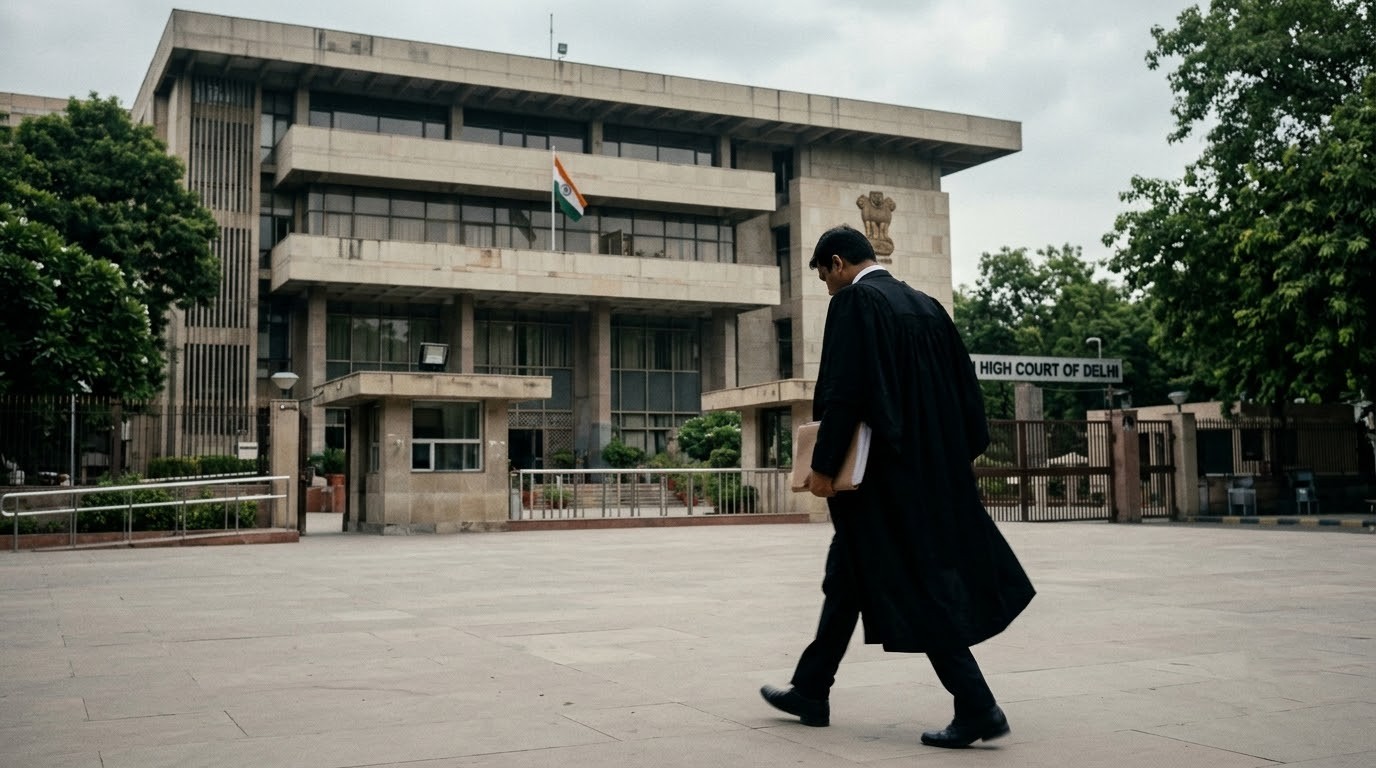
The Delhi High Court on Thursday transferred a domestic violence appeal to another Bench after an advocate repeatedly declared in open court, “I cry my beloved justice system”, and walked out while proceedings were still underway. Justice Manmeet Pritam Singh Arora termed the advocate’s behaviour “reckless” and “reprehensible”, holding that it amounted to professional misconduct. The Court rejected the subsequent apology, observing it was “just lip service” and lacked genuineness.
Case Background and Interim Directions
The petition was filed by 91‑year‑old Arjun Dev Bhatia challenging a trial court order dated October 23 permitting his daughter‑in‑law to enter his Pitampura house as alternate accommodation under the Protection of Women from Domestic Violence Act. During the hearing, the Bench asked whether Bhatia was willing to pay a monthly rent of Rs 27,500 so that the daughter‑in‑law could continue in the rented flat she shared with her husband and two children. Counsel for Bhatia submitted he was willing to pay the rent and deposit six months’ advance. However, counsel for the daughter‑in‑law stated she had already vacated the flat and handed over the keys to the landlord—a stand disputed by the husband’s counsel and later contradicted by the daughter‑in‑law herself, who said she did not wish to return even if rent was paid. The Court directed Bhatia to deposit six months’ rent with the Court, ordered the husband to clear any arrears to the landlord within two days, and issued notice to the landlord to maintain status quo and appear on November 5. The Bench recorded that the daughter‑in‑law’s stand on the handing over of keys had changed repeatedly despite specific judicial queries.
Advocate’s Conduct and Court’s Observations
After the interim order was dictated, the advocate in question repeatedly uttered the remark “I cry my beloved justice system”, waved his hands and began leaving the courtroom while the hearing continued. The Court paused proceedings, called him back and expressed surprise and displeasure. Justice Arora observed that a counsel is expected to maintain the highest regard for the legal process and cannot express loss of faith in the judicial system merely because an order does not favour his client. The Court further noted the advocate appeared to be entirely aligning himself with his client’s interests to secure desirable orders and might attempt to influence the client to level frivolous allegations against the Judge and the institution.
Why did the Court reject the advocate’s apology and transfer the matter?
The Court held the apology was neither heartfelt nor genuine, terming it “just lip service”. To protect the dignity of the Court and the judicial system, the Bench deemed it appropriate to transfer the matter to another Bench, subject to the orders of the Judge‑in‑Charge (Criminal Side). The interim directions issued to the petitioner, the landlord and the Additional Standing Counsel (Criminal) remain operative.
Aspect | Detail |
|---|---|
Judge | Justice Manmeet Pritam Singh Arora |
Petitioner | Arjun Dev Bhatia (91 years) |
Core Dispute | Challenge to trial court order allowing daughter‑in‑law alternate accommodation in petitioner’s Pitampura house under DV Act |
Advocate’s Remark | “I cry my beloved justice system” repeated in open court; walked out during proceedings |
Court’s Characterisation | “Reckless”, “reprehensible”, amounting to misconduct |
Apology | Rejected as not genuine, “just lip service” |
Disposition | Matter transferred to another Bench; interim directions continue |
The order underscores that an advocate’s duty to the Court transcends partisan advocacy and that conduct undermining public confidence in the judiciary will attract immediate remedial action, including transfer of the cause to preserve institutional dignity.