Background
The question of whether private entities can be subjected to writ jurisdiction has been a subject of judicial consideration for several decades. The Supreme Court has, in a series of judgments, held that the availability of writs under Articles 32 and 226 is not confined to the State or its instrumentalities alone. Where a private body discharges a function that is of a public nature or affects public rights, courts have entertained writ petitions against such entities. The doctrine rests on the principle that the Constitution’s remedial provisions are intended to protect citizens from any authority, whether governmental or non‑governmental, that exercises power impacting public interests.
Court’s Observation
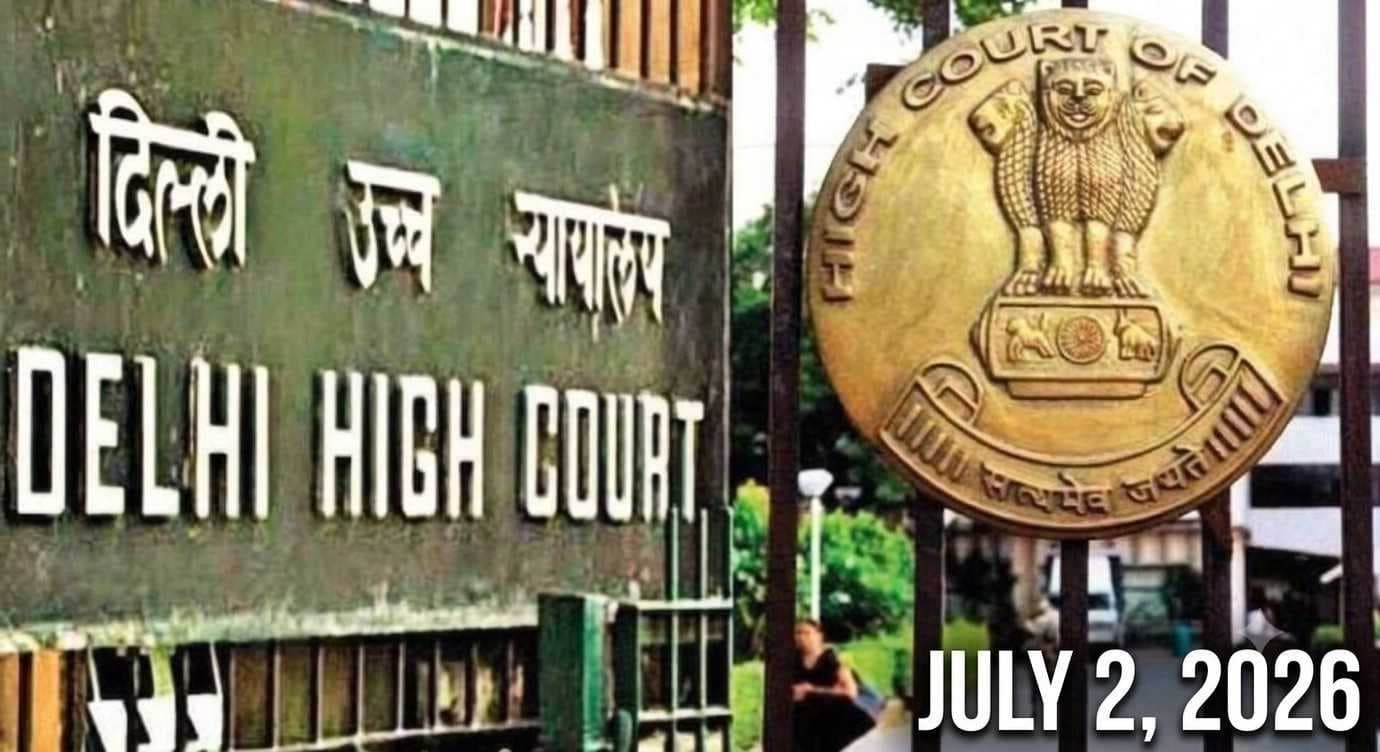
In the present matter, a division bench of the Delhi High Court comprising Justice C Hari Shankar and Justice Om Prakash Shukla examined the maintainability of a writ petition directed against a private media house. The Bench observed that media organisations, although incorporated as private entities, undertake the dissemination of news and information, a function that is intrinsically linked to the public’s right to know and to participate in democratic discourse. The Court noted that by discharging this function, the media house affects public rights and interests, thereby satisfying the criterion for extending writ jurisdiction under Article 226.
The Bench further remarked that the mere fact of private incorporation does not immunise an entity from constitutional accountability when it performs a role that is essential to the functioning of a democratic society. The observation was made in the context of assessing whether the petitioner could seek relief through a writ petition for alleged violation of fundamental rights violations by the media organisation.
Legal Reasoning
The Bench’s reasoning rests on two interlinked propositions. First, Article 226 empowers High Courts to issue writs to any person or authority, including private individuals, for the enforcement of fundamental rights and for any other purpose. The term “authority” has been interpreted judicially to include bodies that, though not part of the State, exercise public functions or discharge public duties. Second, the Court applied the public function test, which looks at the nature of the activity undertaken by the entity rather than its corporate form. By highlighting that the media house’s core activity—news gathering and dissemination—serves the public’s right to information and influences public opinion, the Court concluded that the entity performs a public function.
The Bench emphasized that the public function doctrine is not a rigid formula but a flexible inquiry aimed at determining whether the entity’s actions have a substantial impact on the public sphere. In this instance, the Court found that the media organisation’s role in shaping public discourse and informing citizenry meets that threshold.
Implications
The observation carries significant consequences for both media organisations and litigants. Media houses, despite being privately owned and operated, may now be subject to writ jurisdiction for actions that allegedly infringe upon fundamental rights, such as freedom of speech, right to privacy, or equality before the law. Petitioners aggrieved by such actions can approach the High Court under Article 226 seeking remedies like certiorari, prohibition, or mandamus, provided they can demonstrate that the media entity’s conduct pertains to a public function.
For media organisations, the decision underscores the need to exercise editorial discretion in a manner that respects constitutional guarantees, given that their activities are now amenable to judicial scrutiny through writ proceedings. The ruling also reinforces the broader constitutional principle that any entity, irrespective of its private character, which discharges a duty affecting public rights, may be held accountable under the writ jurisdiction of the High Courts.
The Bench did not pass any final order in the matter at this stage, limiting itself to the observation regarding the maintainability of the writ petition. The observation, however, sets a precedent for future cases where the applicability of writ jurisdiction to private media entities is contested.