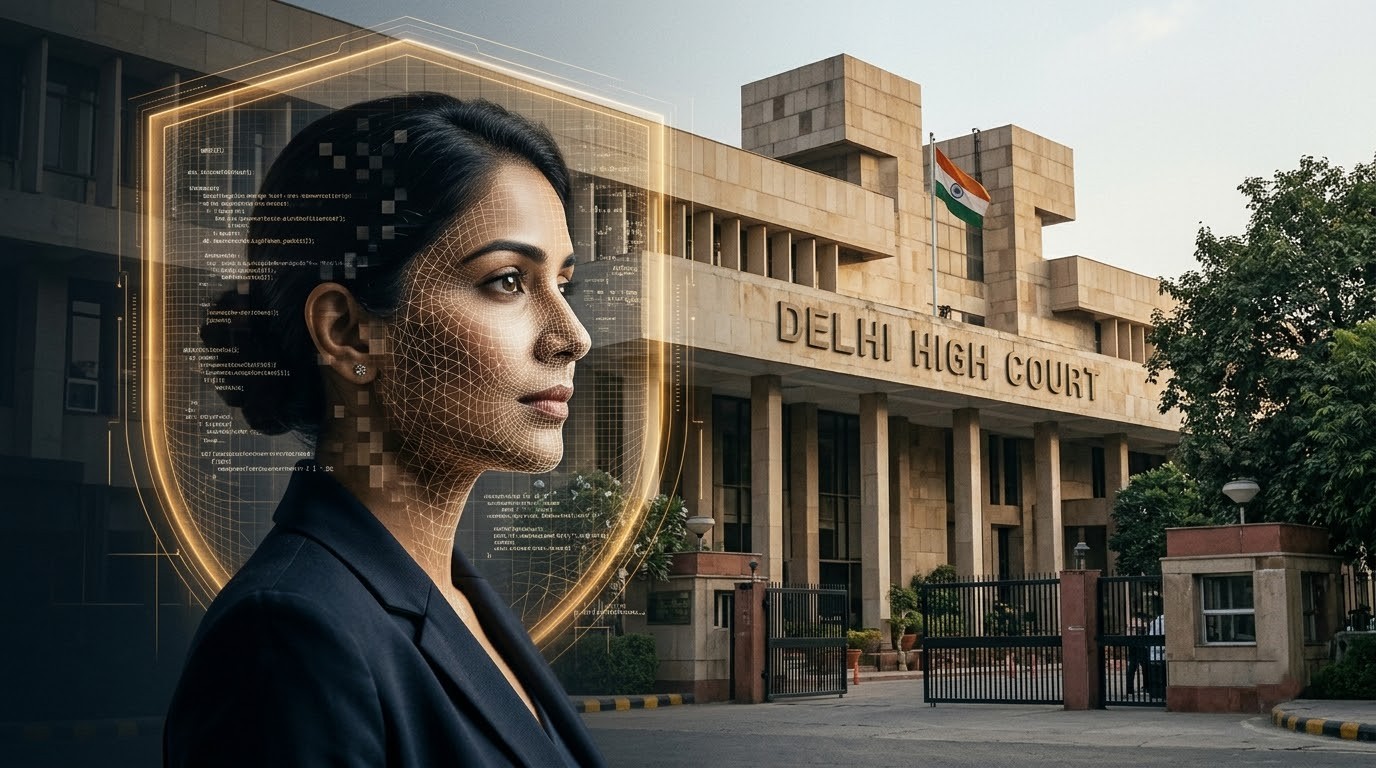
Justice Purushaindra Kumar Kaurav of the Delhi High Court has passed an interim order protecting actor Kriti Sanon against the unauthorised exploitation of her personality rights through artificial intelligence. The suit alleged the misuse of the plaintiff's name, image, likeness, and voice via AI-generated content, sexually explicit deepfakes, and impersonating social media accounts. The court recognised the prima facie urgency of the matter, given the irreversible nature of digital dissemination.
What specific categories of content did the Delhi High Court restrain in the Kriti Sanon personality rights case?
The court restrained defendants from uploading, hosting, or generating material that impersonates the actor, falsely suggests an association with her, or comprises sexually explicit, obscene, or morphed images, videos, and audio. The injunction extends to AI-generated content, chatbots, voice models presented as the actor, and unauthorised merchandise identified in the suit.
Scope of the Interim Injunction
The bench directed the defendant intermediaries to take down or disable access to the specific URLs identified in the plaint within the timelines prescribed under the Information Technology (Intermediary Guidelines and Digital Media Ethics Code) Rules, 2021. Additionally, the court instructed the concerned authorities to issue blocking directions for websites hosting pornographic deepfakes featuring the plaintiff. The restraint order explicitly covers the creation and distribution of further material of a similar nature, including synthetic media generated through AI tools.
Exclusions Safeguarding Free Expression
Justice Kaurav delineated clear boundaries for the injunction to prevent overreach into protected speech. The court clarified that the interim arrangement does not extend to news reporting, reviews, criticism, commentary, satire, parody, caricature, or fan expression, provided such content does not fall within the specifically prohibited categories. This carve-out ensures that legitimate public discourse and creative engagement with the public figure remain unaffected by the order.
Prima Facie Nature and Complex Legal Questions
The court emphasised that its findings are prima facie and confined strictly to the interim arrangement. Justice Kaurav observed that the questions concerning personality rights in the context of emerging AI technologies raise complex legal issues. These substantive questions, including the precise scope and enforceability of publicity rights against synthetic media, have been reserved for adjudication after hearing the contesting defendants. The matter has been listed for further hearing on December 10.
Procedural Compliance and Enforcement
The order mandates strict compliance by intermediaries and authorities within the statutory framework of the IT Rules, 2021. By directing the takedown of identified URLs and the blocking of websites hosting explicit deepfakes, the court operationalised the relief at the infrastructure level. The directive restraining future uploads of similar impersonation material or unauthorised merchandise places a continuing obligation on the defendants to desist from further infringement.
Significance for Personality Rights Jurisprudence
This interim order marks a significant judicial intervention addressing the intersection of personality rights and generative AI. While Indian courts have previously recognised publicity rights as emanating from the right to privacy and Article 21 of the Constitution, the proliferation of accessible deepfake technology presents novel enforcement challenges. The Delhi High Court's calibrated approach—granting robust protection against explicit misuse and impersonation while explicitly preserving satirical and critical expression—provides a working template for balancing individual dignity against digital free speech in the synthetic media era.