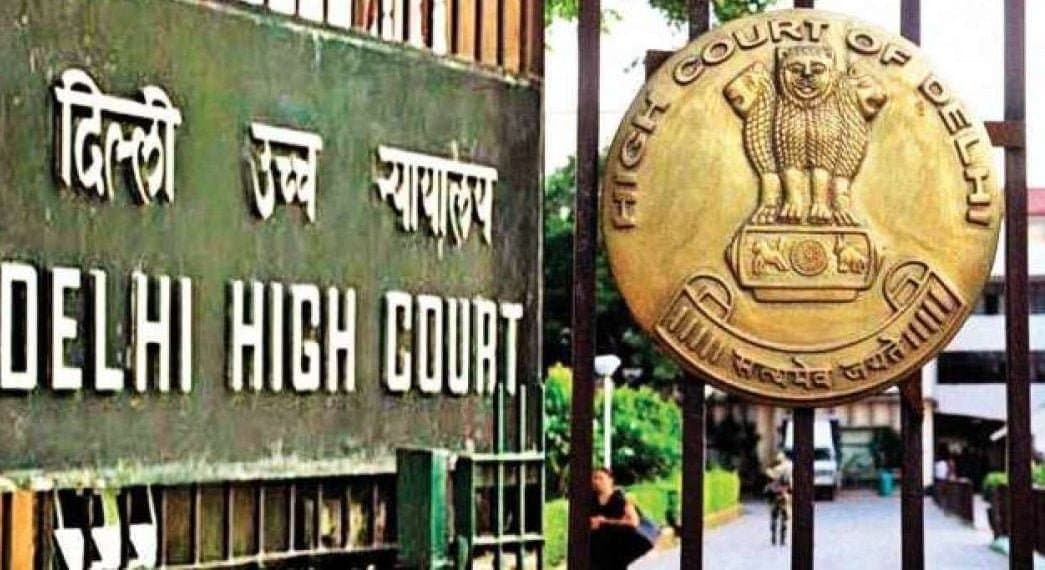
Background of the Dispute
The petitioners, an OCI couple living in Australia, sought to adopt a minor relative under the Hindu Adoptions and Maintenance Act 1956. After completing the adoption proceedings in India, they approached the Central Adoption Resource Authority (CARA) for a No Objection Certificate (NOC) and a Conformity Certificate, which are required for the child’s immigration to Australia. CARA declined to issue the certificates, stating that the couple had not complied with Regulation 68 of the Adoption Regulations 2022, which governs the procedure for inter‑country adoptions. Specifically, CARA pointed out that the applicants could not produce a sponsorship letter from the Australian authorities, a prerequisite under Regulation 68.
Petitioners’ Contentions
The petitioners argued that compliance with Regulation 68 was impossible in their case. They submitted that the Australian Department of Home Affairs does not entertain sponsorship letters for adoptions that have been finalised under the Hindu Adoptions and Maintenance Act. Instead, such adoptions are classified by the Australian authorities as “expatriate adoptions”. Consequently, the petitioners contended that insisting on a sponsorship letter would defeat the purpose of the adoption and leave the child stateless. They further asserted that the appropriate procedural route was Regulation 69, which deals with adoptions already concluded under personal laws such as HAMA.
Court’s Examination of Precedent
Justice Sachin Datta, presiding over the matter, referred to a recent decision of the Bombay High Court in Mangesh Bhaskarrao Manwatkar & Ors. v. Union of India & Ors. (2025). In that judgment, the Bombay High Court held that while Regulation 68 ordinarily applies to inter‑country adoptions, certain exceptional circumstances—such as adoptions within close relatives under HAMA or adoptions recognised as expatriate adoptions by the foreign jurisdiction—necessitate recourse to Regulation 69. The Bombay Court observed that Regulation 69 provides the mechanism for processing adoptions that have already been solemnised under personal laws.
The Delhi High Court found the reasoning of the Bombay High Court persuasive and applicable to the present facts. It noted that the Australian authorities had explicitly categorised the adoption as an expatriate adoption and therefore would not issue a sponsorship letter. The Court concluded that insisting on compliance with Regulation 68 would impose an impossible condition on the petitioners.
Observations on the Australian Requirement
The Court took judicial notice of the correspondence between the petitioners and the Australian Department of Home Affairs, which indicated that a support letter or NOC from CARA was required to facilitate the child’s immigration visa. Without such a document, the child’s entry into Australia would be jeopardised. The Court emphasized that the purpose of the NOC under the Adoption Regulations is to ensure that the adoption conforms with the laws of the receiving country, and that CARA’s refusal defeated this objective.
Operative Direction
Accordingly, the Delhi High Court directed CARA to issue the requisite No Objection Certificate after the concerned District Magistrate conducts the inquiry envisaged under Regulation 69. The Court clarified that the District Magistrate’s inquiry must satisfy the requirements of Regulation 69 before CARA may grant the NOC. The order also implicitly required CARA to issue a Conformity Certificate once the NOC is granted, as both documents are interlinked for the immigration process.
Implications for Future Cases
The decision clarifies that Regulation 69 is not merely a residual provision but a viable pathway for expatriate adoptions completed under HAMA where the foreign jurisdiction does not follow the sponsorship‑letter model of Regulation 68. It provides guidance to CARA and District Magistrates on how to handle similar situations, potentially reducing procedural hurdles for OCI couples seeking to bring adopted children to countries that classify such adoptions differently.
The appearance of counsel was recorded as Ms. Arundhati Katju, Senior Advocate, Mr. Dhanur Dhar Singh, and Ms. Jaispriya Poply for the petitioners; Dr. Monika Arora, Central Government Standing Counsel, Mr. Subhrodeep Saha, Ms. Anamika Thakur, and Mr. Abhinav Verma for CARA.