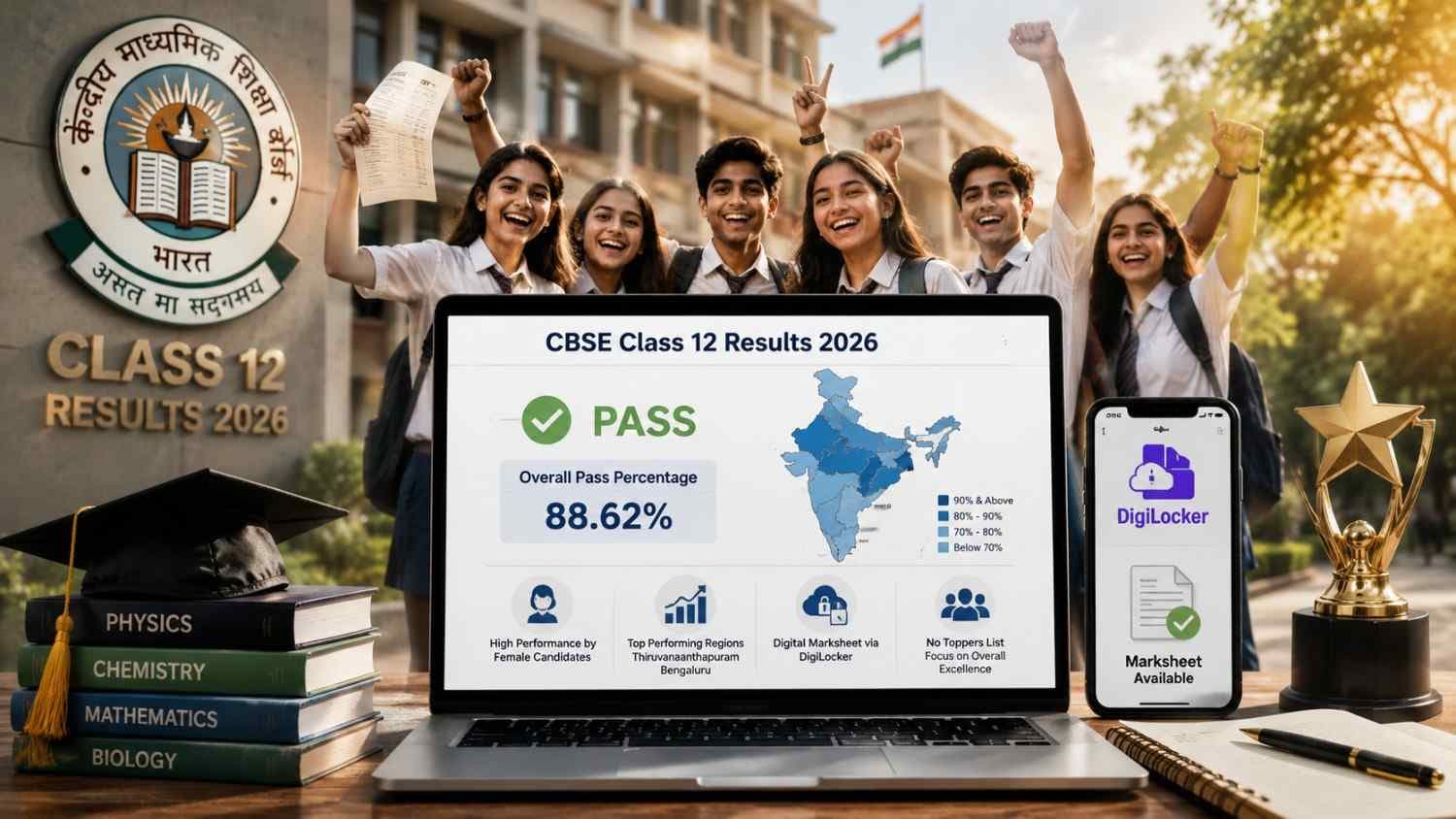
The Central Board of Secondary Education (CBSE) has officially declared the Class 12 results for the year 2026, marking a significant milestone for millions of students nationwide. The results, released ahead of the expected schedule, have once again highlighted the academic resilience and excellence of the country's youth. With a commendable overall pass percentage and a notable performance by female candidates, the 2026 results reflect the evolving standards of secondary education in India.
The declaration of the CBSE Class 12 results has brought a mix of relief and celebration for students across the country. This year’s performance indicates a steady trend in academic achievement, with the overall pass percentage remaining robust despite the rigorous evaluation standards maintained by the Board. The announcement, made through the official CBSE portals and integrated digital platforms, ensures that students have immediate access to their scores, allowing them to proceed with university admissions and career planning without delay.
A standout feature of this year’s result is the continued dominance of female students, who have once again outperformed their male counterparts in terms of pass percentage. This trend, consistent over several years, underscores the success of various educational initiatives aimed at empowering the girl child and ensuring equitable access to quality education. The Board noted that the gap in performance highlights the dedication and hard work that female candidates bring to their academic pursuits.
Region-wise, the results showed varying levels of performance, with some zones consistently leading the charts. Thiruvananthapuram and Bengaluru regions emerged as the top performers, maintaining their legacy of high success rates. The data also indicated significant progress in rural areas, where infrastructure improvements and digital learning tools have begun to level the playing field, allowing students from smaller towns to compete effectively with their urban peers.
In a move toward modernization and transparency, CBSE has ensured that digital marksheets and certificates are available instantly via the DigiLocker platform. This "paperless" approach not only facilitates ease of access for students but also provides a secure, verifiable record for higher education institutions and employers. By leveraging technology, the Board has significantly reduced the administrative hurdles typically associated with the verification of board certificates.
The 2026 results also saw a shift in how student achievement is celebrated. In line with recent policies to reduce academic pressure, CBSE chose not to release an official "Toppers List" or award ranks to avoid unhealthy competition. Instead, the focus was placed on the overall quality of education and the percentage of students scoring above the 90% and 95% thresholds. This change reflects a broader judicial and educational sentiment that individual dignity and mental health should not be compromised for the sake of comparative rankings.
For those who did not meet the passing criteria, the Board has announced a streamlined process for supplementary (compartment) examinations. These exams, scheduled for later in the year, provide a vital second chance for students to clear their subjects and remain on track with their peers. The judiciary has often highlighted that such remedial measures are essential to uphold the Right to Education, ensuring that a single exam cycle does not define a student's entire future.
As universities across India and abroad open their admission portals, the CBSE Class 12 scores remain the primary benchmark for merit-based selections. The Board’s rigorous evaluation process ensures that the results are a true reflection of a student’s competency. The transition from school to higher education is a critical phase, and the timely release of these results provides a stable foundation for students to navigate their professional journeys with confidence.
In conclusion, the CBSE Class 12 results for 2026 stand as a testament to the collective efforts of students, teachers, and the educational administration. While the numbers provide a statistical overview of success, the real victory lies in the resilience shown by the youth in mastering a diverse and demanding curriculum. As the academic year draws to a close, the focus now shifts to the future, where these graduates will contribute their skills and knowledge to the nation’s growth.