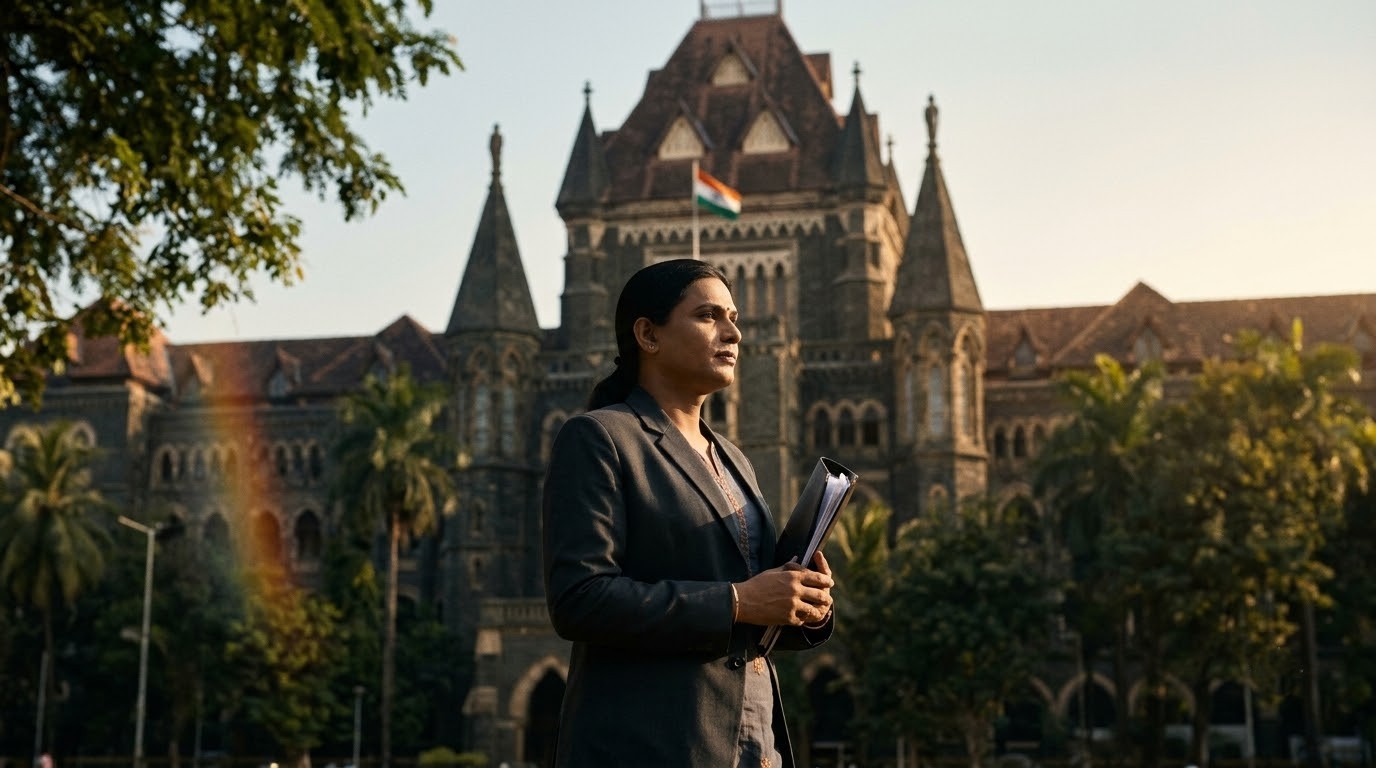
The Bombay High Court has ruled that the offence of outraging the modesty of a woman under Section 75 of the Bharatiya Nyaya Sanhita (BNS) can be sustained even when the victim is a transgender person who identifies as a woman. The decision was delivered by a Single Bench of Justice Mehroz Pathan on November 3, while refusing to discharge one Vishal Ingle, an Agniveer serving in the Indian Army, who was booked for allegedly sexually assaulting a transgender person on the promise of marriage.
Factual Background and Procedural History
The prosecution alleged that the accused, Vishal Ingle, sexually assaulted the complainant, a transgender person, on October 28, 2025, and October 30, 2025. Based on the complaint, the police registered a First Information Report (FIR) invoking Section 75 (outraging modesty of a woman) and Section 296 (obscenity) of the BNS, along with relevant provisions of the Transgender Persons (Protection of Rights) Act, 2019, including Section 18(d) which penalises harming or endangering the mental and physical health of a transgender person.
The accused moved an application seeking discharge, vehemently opposing the invocation of Section 75 BNS. The primary contention advanced on behalf of the applicant was that the complainant was a transgender person and not a woman, and therefore the charge under Section 75 BNS, which specifically protects the modesty of a woman, could not be made out.
Court's Reasoning on Gender Identity and Section 75 BNS
Justice Pathan noted that the complainant identified herself as a woman and had been undergoing hormonal treatment in furtherance of her gender identity. The Court observed that a perusal of the FIR revealed direct allegations against the applicant of outraging the modesty of the complainant, who identifies as a woman following hormone therapy. Consequently, the Court held that an offence under Section 75 BNS appeared to be prima facie made out.
In the considered opinion of the Bench, the allegations of assault and outraging the modesty of a woman can be sustained even where the victim is a transgender person who identifies herself as a woman. The Court thus rejected the narrow interpretation urged by the defence that the statutory protection under Section 75 BNS is restricted to cisgender women.
Can Section 75 BNS Be Invoked When the Victim Is a Transgender Woman?
Yes. The Bombay High Court held that Section 75 of the Bharatiya Nyaya Sanhita applies to a transgender person who identifies as a woman. The Court reasoned that the complainant's self-identification as a woman, supported by hormonal treatment, brings the allegations within the ambit of outraging the modesty of a woman, making the charge prima facie sustainable regardless of the victim's transgender status.
Applicability of the Transgender Persons Act Without Identity Certificate
The accused further argued that Section 18(d) of the Transgender Persons (Protection of Rights) Act, 2019, was not attracted because the complainant had not obtained the mandatory Certificate of Identity under the Act at the time of the alleged offence. The Certificate of Identity was issued to the complainant on February 12, 2026, whereas the alleged assaults occurred in October 2025.
Justice Pathan rejected this submission. The Court referred to Section 2(k) of the Transgender Persons Act, 2019, which defines a transgender person to include a transgender man or a transgender woman, irrespective of the possession of a certificate. Section 5 of the Act provides an enabling mechanism for a transgender person to apply to the District Magistrate for a Certificate of Identity. The Court clarified that the absence of a Certificate of Identity under Section 6 at the time of the alleged commission of the offence does not, by itself, preclude the invocation of the penal provisions of the Transgender Persons Act, 2019.
The Bench held that a perusal of the FIR demonstrated that Section 18(d) of the Transgender Persons Act, 2019, had been rightly invoked, and the allegations therein prima facie attracted the provisions levelled against the applicant.
Disposition
Based on these observations, the Single Bench dismissed the discharge application filed by Vishal Ingle. The Court concluded that both the charge under Section 75 BNS and the provisions of the Transgender Persons (Protection of Rights) Act, 2019, were prima facie sustainable on the basis of the FIR and the material on record. Advocate Anil Thakkar appeared for the applicant, while Additional Public Prosecutor Swati Kolhe represented the State.