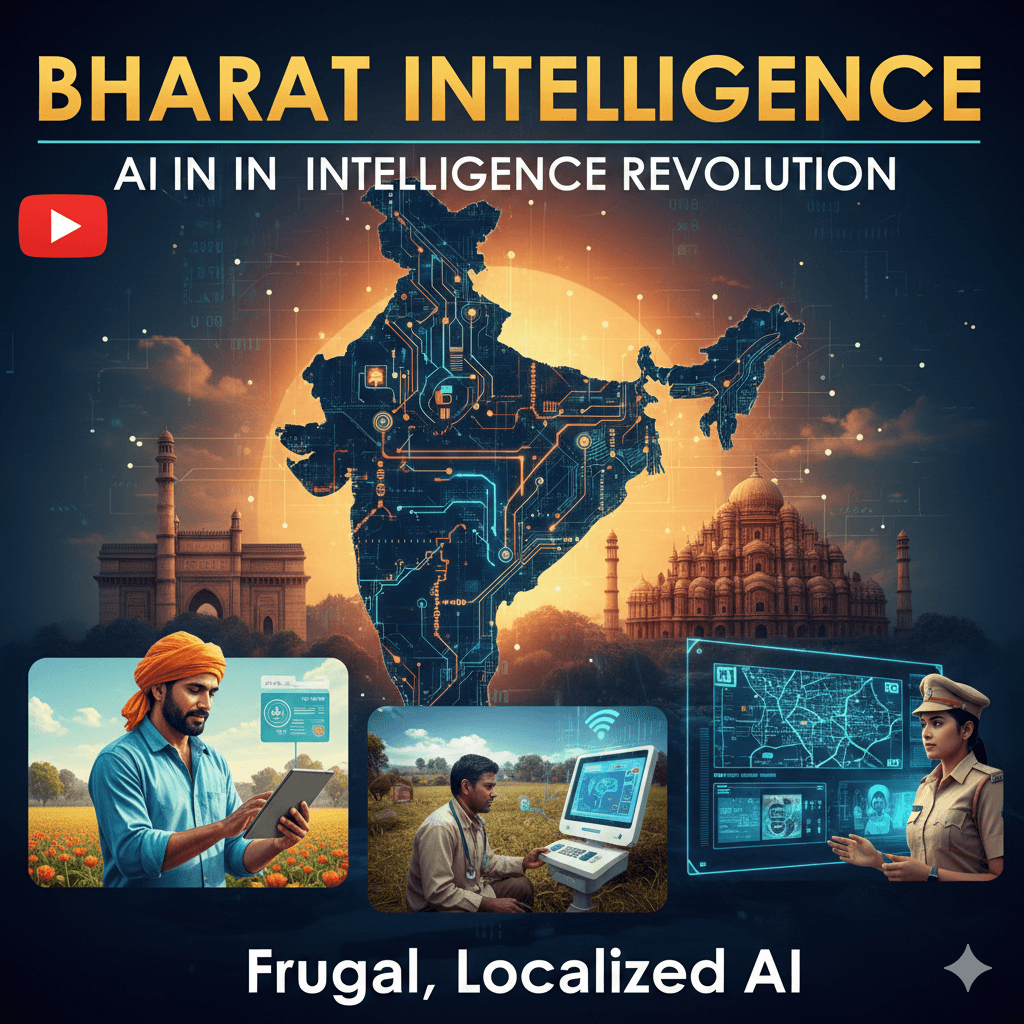
The Growth and Evolution of Bharat Intelligence
India’s journey in artificial intelligence has been accelerated by the IndiaAI Mission, a central government initiative with an investment exceeding 10,300 crore rupees. This mission is built on several pillars, including the development of indigenous foundational models, expanding compute capacity with over 10,000 GPUs, and fostering a robust startup ecosystem. A standout achievement in this journey is the BharatGen initiative. Unlike global models that often prioritize Western data and English-centric logic, BharatGen is India’s first government-backed multimodal sovereign AI. It is designed to understand and generate content in 22 scheduled Indian languages, bridging the digital divide for millions who do not speak English.
The growth is also visible in the sheer scale of talent. Recent data from the Stanford AI Index indicates that India leads the world in AI talent acquisition, with a hiring rate of approximately 33 percent. This concentration of skill is supported by AI Centers of Excellence and the Digital India Bhashini platform, which uses AI to break language barriers in real-time. By moving away from a copy-paste approach of Western tech and focusing on frugal AI that is affordable and scalable, India is building a sovereign stack that ensures data stays within the country while serving local needs.
Impact on Indian Society and the Economy
The societal impact of AI in India is profound, touching sectors that form the backbone of the nation. In agriculture, AI-powered tools are helping farmers make data-driven decisions. Using satellite imagery and machine learning, systems can now predict pest attacks weeks in advance and provide hyper-local weather forecasts. This precision farming approach is vital for a country where a large portion of the population depends on the land. By optimizing resource use, AI is helping to increase yields and reduce the financial risks associated with unpredictable climate patterns.
In the healthcare sector, AI is bridging the gap in medical accessibility. In rural areas where specialist doctors are scarce, AI-driven diagnostic tools are being used to screen for diseases like tuberculosis and diabetic retinopathy from simple scans. These systems act as a force multiplier for healthcare workers, allowing for early intervention and better patient outcomes. Similarly, in education, adaptive learning platforms are personalizing the curriculum for students, catering to individual learning speeds and providing real-time feedback, which is essential for a diverse and massive student population.
Economically, AI is projected to add between 500 billion and 600 billion dollars to India's GDP by 2035. The transformation of the manufacturing sector through automation and predictive maintenance is expected to drive significant output increases. While there are concerns about job displacement, the shift is creating a high demand for new roles in AI development, data curation, and machine learning maintenance, prompting a national-level push for reskilling the workforce.
Government Initiatives for Crime Prevention and Law Enforcement
One of the most critical applications of artificial intelligence in India today is its integration into the justice and law enforcement systems. The government is leveraging AI to modernize police forces and enhance public safety through several strategic initiatives.
Predictive Policing and Surveillance
Law enforcement agencies are now using AI-driven predictive analytics to forecast crime hotspots. By analyzing historical data, geographical trends, and even weather patterns, police can optimize patrol routes and allocate resources more effectively to prevent crimes before they happen. In large-scale gatherings like the Kumbh Mela, AI-powered drones and CCTV systems with facial recognition are deployed for crowd management and to track suspicious activities in real-time.
Enhancing Criminal Investigations
The Crime and Criminal Tracking Network and Systems (CCTNS) has been enhanced with AI to allow for better cross-referencing of criminal databases. AI tools help investigators analyze massive amounts of digital evidence, from scanning through hours of footage to detecting patterns in financial transactions. The Enforcement Directorate uses advanced AI and machine learning tools provided by the Financial Intelligence Unit to detect suspicious monetary patterns and curb cybercrimes such as online money laundering.
AI in the Judiciary
The e-Courts project has introduced AI tools like SUVAS for legal translation and SUPACE for legal research and case summarization. These tools help in clearing the backlog of cases by making the legal process more efficient. Furthermore, AI-based real-time transcription services are being used in courts to assist stenographers, ensuring that legal proceedings are documented accurately and quickly.
Challenges and Ethical Considerations
Despite the rapid progress, the growth of AI in India is not without challenges. Issues of data privacy, algorithmic bias, and the ethical use of facial recognition are at the forefront of public debate. The government is working on the Digital India Act to provide a regulatory framework that balances innovation with the protection of individual rights. Ensuring that AI does not perpetuate existing social biases or lead to mass surveillance without oversight remains a priority for policymakers. There is also a continuous need for investment in infrastructure and high-quality labeled datasets that reflect India’s diverse demographic.
Conclusion
Artificial intelligence in India is no longer a distant futuristic concept but a present-day reality driving a national transformation. Through the growth of Bharat Intelligence and the IndiaAI Mission, the country is crafting a unique technological identity that is inclusive, multilingual, and socially relevant. By applying AI to solve critical problems in agriculture, healthcare, and law enforcement, the government is demonstrating how technology can be used as a tool for public good. As India continues to build its sovereign AI capabilities and modernize its legal and security frameworks, it stands as a model for how emerging economies can harness the power of AI to achieve the vision of a developed and secure nation.