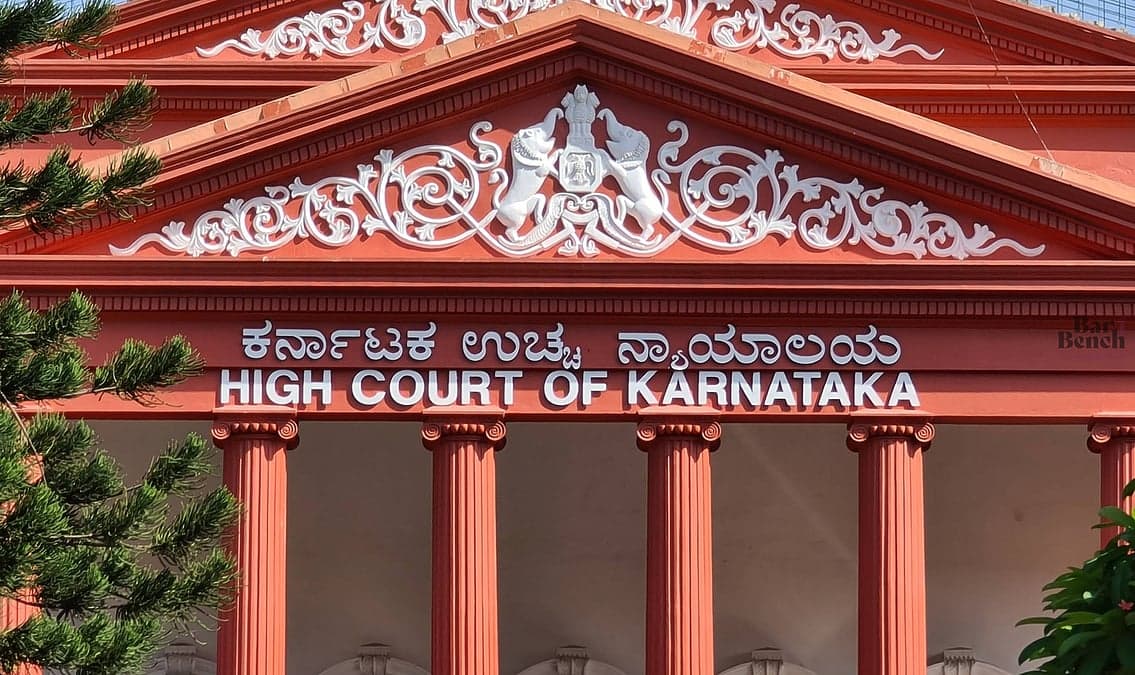
The Karnataka High Court recently dismissed a husband’s petition seeking reduction of an interim maintenance order that directed him to pay twenty thousand rupees per month to his estranged wife and their minor child. The Division Bench comprising Justice Jayant Banerji and Justice T.M. Nadaf examined the challenge on the grounds that the amount was disproportionate to the husband’s financial capacity and that the maintenance award was excessive.
The wife had filed an application under Section 125 of the Code of Criminal Procedure, 1973, seeking maintenance for herself and the child after the marriage deteriorated. The Family Court, after considering the parties’ respective incomes, the standard of living enjoyed during the marriage and the needs of the dependent child, passed an interim order granting twenty thousand rupees per month. The husband contested the order before the High Court, arguing that his income did not justify such a sum and that the award placed an undue burden on him.
In its reasoning, the Bench referred to the well‑settled principle that interim maintenance must be sufficient to meet the reasonable requirements of the claimant while taking into account the paying party’s ability to contribute. The Court observed that the husband owned a Mercedes Benz car, a fact that indicated a lifestyle and financial wherewithal inconsistent with his claim of inability to pay the stipulated amount. The Bench noted that a person capable of sustaining the expenses associated with a luxury vehicle could not legitimately contend that twenty thousand rupees per month was excessive for the support of a spouse and a child.
The Court further examined the husband’s contention that the maintenance award was punitive. It held that maintenance under Section 125 CrPC is not intended to penalise the obligor but to ensure that the claimant and any dependent children are not left destitute. The amount awarded, the Court said, was calibrated to preserve the wife’s and child’s dignity and to approximate the standard of living they had enjoyed during the subsistence of the marriage.
In addition to the maintenance issue, the husband had also sought a divorce on the ground of adultery. The Bench refused to grant the divorce, stating that doing so would amount to ‘rewarding premium to the wrongdoer’ who had engaged in extramarital affairs. The Court emphasized that matrimonial relief cannot be extended to a party whose misconduct contributed to the breakdown of the marriage, and that granting a divorce in such circumstances would be contrary to the principles of justice and equity.
The Bench concluded that the interim maintenance order was neither unjust nor excessive. It affirmed the Family Court’s direction, thereby requiring the husband to continue paying twenty thousand rupees per month until the matter is finally decided or until further orders are passed. The decision underscores the Court’s approach of linking the obligor’s actual lifestyle—evidenced by ownership of high‑value assets—to the assessment of maintenance liability, and it reinforces the view that matrimonial reliefs will not be extended to a party whose conduct has precipitated the marital discord.
The ruling adds to the growing body of jurisprudence that treats maintenance as a protective measure rather than a punitive one, and it signals that courts will scrutinise the financial reality of the parties, including asset holdings, when evaluating claims of excessiveness. The order remains operative unless varied by a higher court or by a subsequent judgment in the same proceedings.