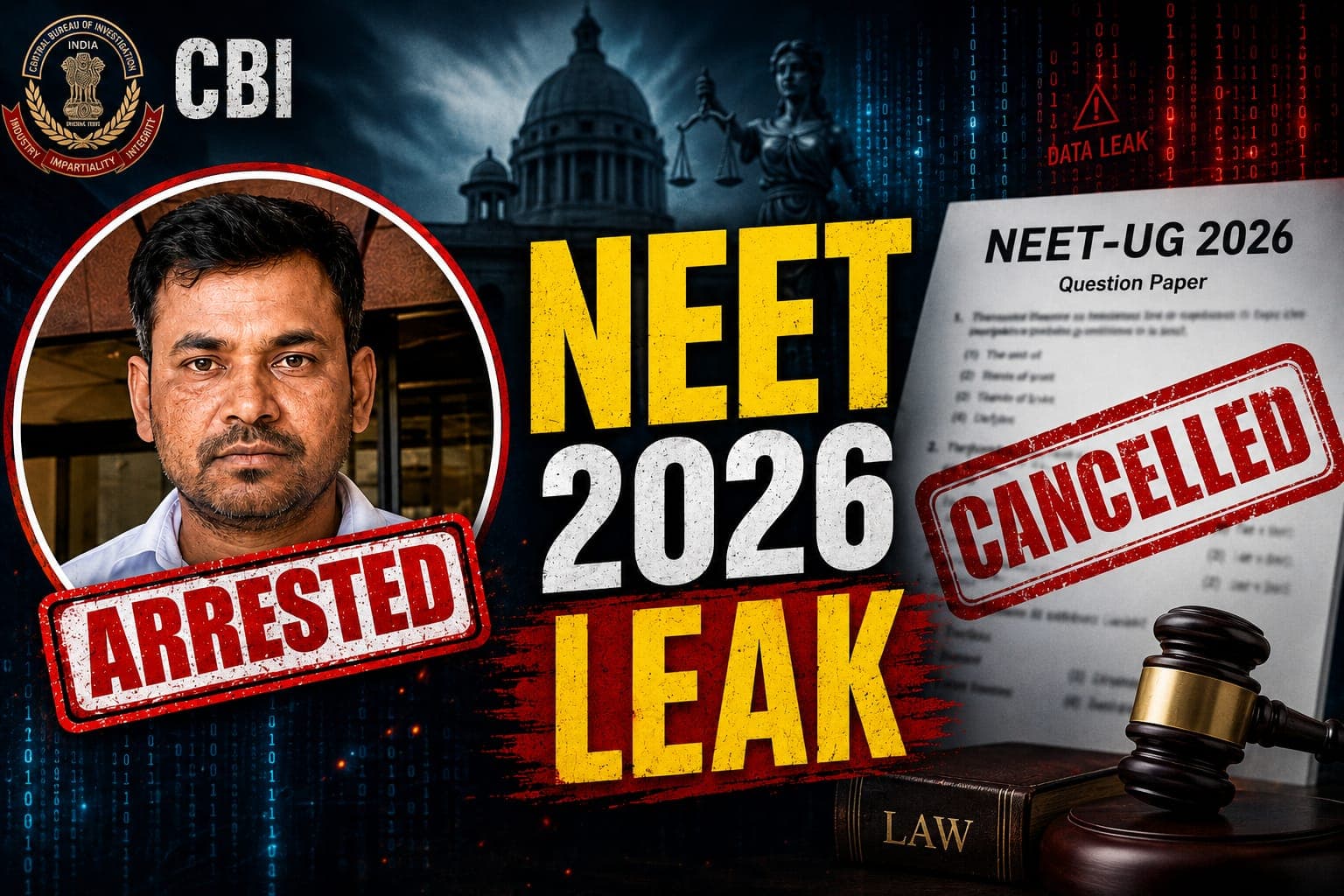
The investigation into the NEET-UG 2026 paper leak has reached a critical turning point following the arrest of two brothers from Rajasthan, Dinesh Biwal and Mangilal Biwal. The Central Bureau of Investigation (CBI), which recently took over the case from the Rajasthan Special Operations Group (SOG), has identified the duo as key intermediaries in a multi-state network that allegedly compromised the sanctity of India’s largest medical entrance examination.
According to the FIR and initial investigation reports, the conspiracy began nearly a week before the exam date. On April 26, 2026, Dinesh Biwal and his brother Mangilal allegedly met with a doctor in Gurugram, Haryana. During this meeting, they reportedly purchased the NEET question paper for a staggering sum of ₹30 lakh.
Investigators believe that the Biwal brothers did not act alone but were part of a "chain network." The paper is suspected to have originated from a printing press in Nashik, Maharashtra, before passing through the Gurugram-based doctor and eventually reaching the Biwal brothers in Jamwa Ramgarh, Rajasthan.
The investigation highlights Sikar, Rajasthan, as the "epicentre" of the distribution. After acquiring the paper, the brothers allegedly shared it first with a family member a son preparing for the exam in Sikar. By April 29, the paper was being sold to other candidates and coaching agents.
One such agent, Rakesh Kumar Mandawariya, allegedly bought the paper from the brothers and distributed it further to over 700 students via encrypted messaging apps like WhatsApp and Telegram. The leak was so widespread that a student in Kerala reportedly received the paper from a contact in Sikar just a day before the exam, with instructions to share it with others in her hostel.
The CBI has invoked several stringent sections of the law against the accused, including:
- Bhartiya Nyaya Sanhita (BNS): Sections related to Criminal Conspiracy (120B), Cheating (420), and Criminal Breach of Trust.
- The Public Examinations (Prevention of Unfair Means) Act, 2024: This new legislation provides for severe penalties, including imprisonment up to 10 years and fines up to ₹1 crore for organized paper leaks.
The invocation of the Prevention of Corruption Act also suggests that the CBI is investigating the possible involvement of government officials or NTA insiders who may have facilitated the leak.
Public interest in the case surged after reports and social media graphics, such as the one identifying Dinesh Biwal as a "BJP Leader," began to circulate. While the CBI is focusing on the criminal aspect of the leak, the political affiliation of the accused has sparked a national debate regarding accountability and the influence of "exam mafias" in Rajasthan and Haryana.
The Federation of All India Medical Association (FAIMA) has already moved the Supreme Court, seeking a court-monitored re-exam. The petition alleges a "systemic failure" by the National Testing Agency (NTA). In response to the overwhelming evidence where at least 135 questions in the "guess paper" matched the original the NTA has officially cancelled the NEET-UG 2026 exam held on May 3. A fresh schedule for the re-examination is expected shortly.
For over 23 lakh students, the cancellation is a bittersweet development. While it ensures that "tainted" candidates do not steal seats from the deserving, it adds months of additional stress. The CBI’s primary goal now is to track the "source" at the Nashik printing press to ensure such a breach never happens again.
As the legal proceedings move to the Special CBI Court, the focus will remain on whether the prosecution can establish a direct link between the money trail and the physical leak of the documents.