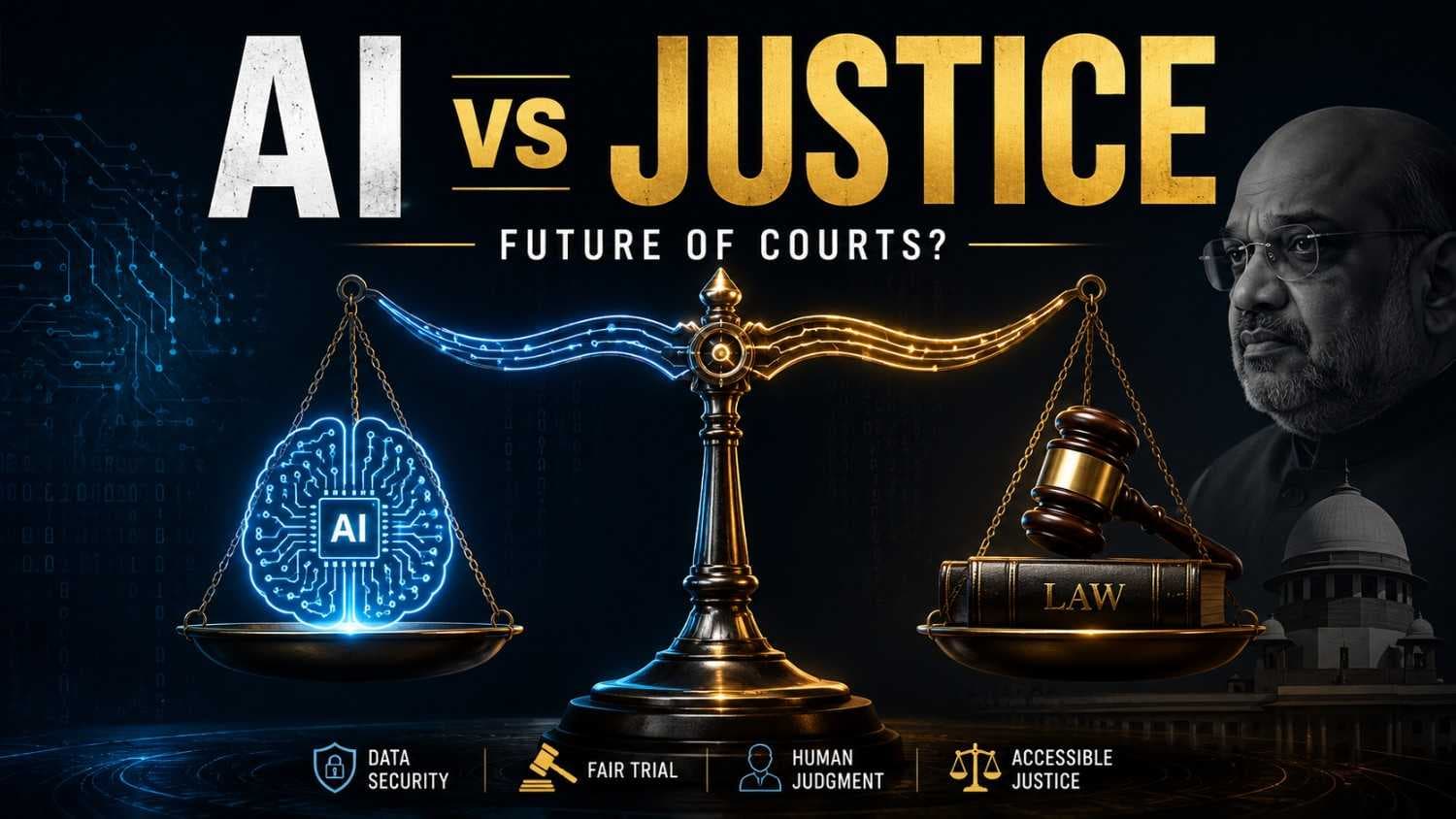
In a significant address at the All India State Legal Services Authorities Meet, Union Home Minister Amit Shah brought to the forefront a conversation that has long been brewing in the corridors of power: the impact of Artificial Intelligence and modern technology on the judiciary. Shah noted that while technology is an indispensable tool for progress, it simultaneously poses unprecedented challenges to the traditional judicial framework. This balanced perspective reflects the government’s cautious optimism as it moves toward a "Digital India" that includes the complete computerization of the legal system.
The Home Minister’s remarks come at a time when the Indian judiciary is undergoing a massive digital overhaul through the e-Courts project. The primary challenge identified is not the technology itself, but the speed at which it evolves compared to the pace of legislative and procedural adaptation. As AI becomes more sophisticated, the risk of "deepfakes" in evidence, the complexity of algorithmic bias, and the potential for automated misinformation threaten the foundational principles of a fair trial. For the judiciary, the hurdle lies in distinguishing between high-tech efficiency and technological manipulation.
One of the most pressing concerns highlighted is the security of judicial data. With the integration of AI into court management systems, the threat of cyber-attacks and data breaches becomes a matter of national security. Shah emphasized that as we move toward paperless courts, the protection of sensitive legal records must be paramount. The transition from physical stacks of files to cloud-based servers requires a robust cybersecurity infrastructure that can withstand the evolving tactics of digital bad actors, ensuring that the sanctity of the judicial record remains uncompromised.
However, the Minister was quick to acknowledge that technology is also the most potent weapon against the "laws of delay." AI has the potential to drastically reduce the pendency of cases—a chronic ailment of the Indian legal system—by automating administrative tasks, managing cause lists, and assisting in legal research. By leveraging "Predictive Analytics," the judiciary can identify bottlenecks before they occur, allowing judges to focus their cognitive energy on complex legal interpretation rather than clerical management.