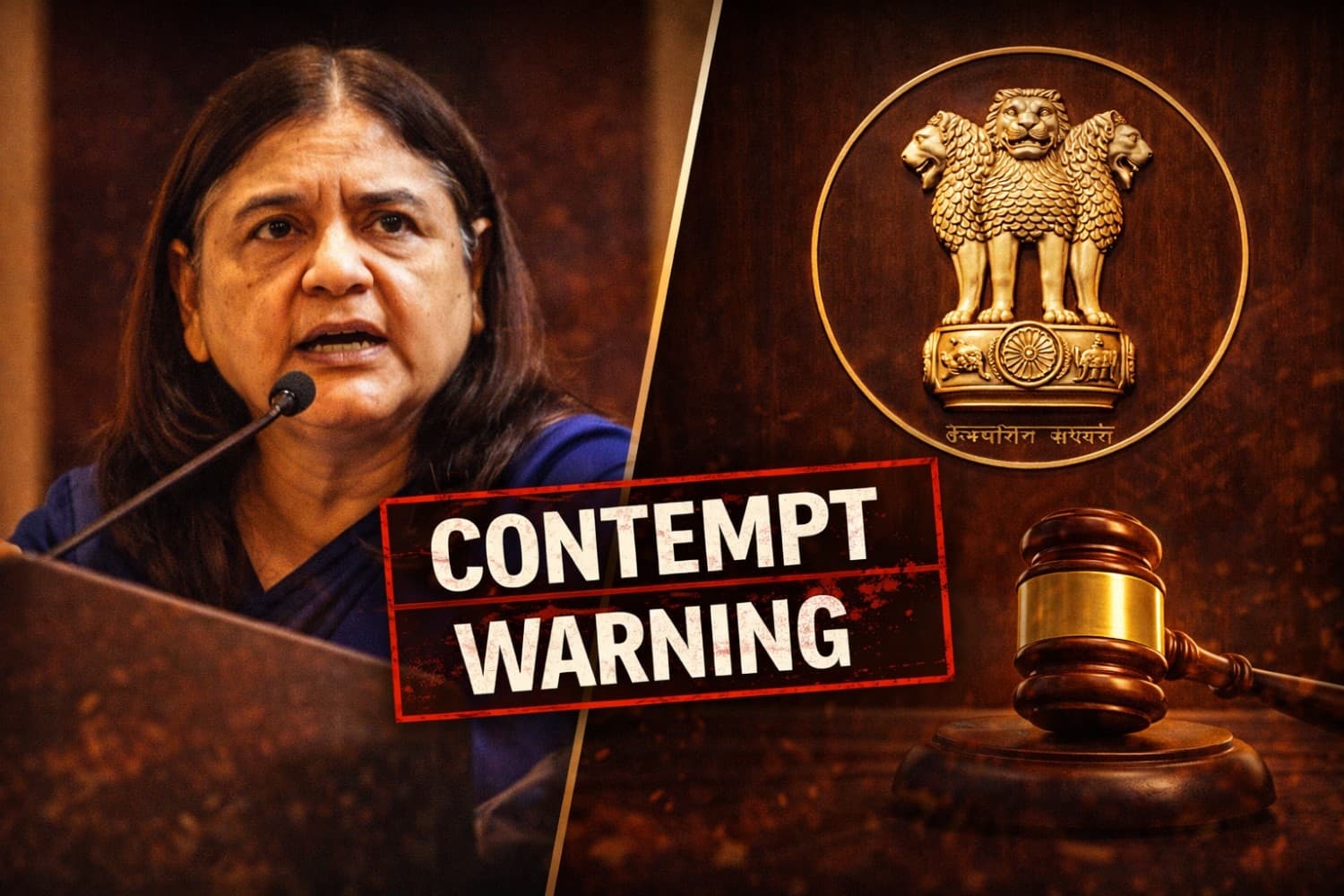
New Delhi: Tensions flared in the Supreme Court on Tuesday during the marathon hearing on the stray dog menace, as the Bench led by Justice Vikram Nath heavily criticized animal rights activist and former Union Minister Maneka Gandhi. The Court observed that Gandhi had effectively committed "contempt of court" through her recent public speeches and body language regarding the ongoing proceedings, but the Bench was showing restraint due to its "magnanimity."
The hearing, which also comprises Justices Sandeep Mehta and N.V. Anjaria, took a dramatic turn when Senior Advocate Raju Ramachandran, appearing for Gandhi, urged the Bench to be "circumspect" in their oral observations, as they were being televised and misinterpreted by the public.
Reacting to Ramachandran's suggestion that judges should be careful with their words, Justice Vikram Nath retorted by drawing attention to Ramachandran’s own client.
"A little while ago you were telling us court should be circumspect, did you find out what kind of statements your client has been making? Your client has committed contempt. We have not taken action, that's our magnanimity. You see what she says, her body language!"
Ramachandran defended his representation, stating, "If I can appear for Ajmal Kasab, I can appear for her," emphasizing his duty as a lawyer. He attempted to pivot the discussion back to the merits of the case, arguing that the solution to the stray dog issue lies in the strict implementation of the Animal Birth Control (ABC) Rules and the National Action Plan for Rabies Elimination (NAPRE), rather than creating permanent shelters.
Earlier in the session, Advocate Prashant Bhushan also raised concerns about the Bench's previous oral remarks, specifically a comment suggesting that "dog feeders should be made responsible" for bites. Bhushan argued that such "sarcastic" remarks were fueling public hostility against dog lovers.
Justice Sandeep Mehta firmly clarified:
"No no, not at all sarcastic. We were serious. We don't know what we will do. But we were serious."
The Court also pressed Ramachandran on the practical contributions of his client. Justice Mehta asked why Gandhi's application was silent on the budgetary allocation for sterilization programs, given her long tenure as a Minister and activist.
"Since your client has been a Minister... tell us what has been the contribution of your client to these?" Ramachandran admitted he could not provide an immediate oral answer to this specific query.
This verbal dressing-down highlights the Supreme Court's growing intolerance for "media trials" and public criticism of sub-judice matters by high-profile activists. While the Court refrained from issuing a formal contempt notice, the "magnanimity" remark serves as a final warning. It draws a clear line: while activists can advocate for their cause, attacking the intent or integrity of the judges in public forums invites the risk of criminal contempt.