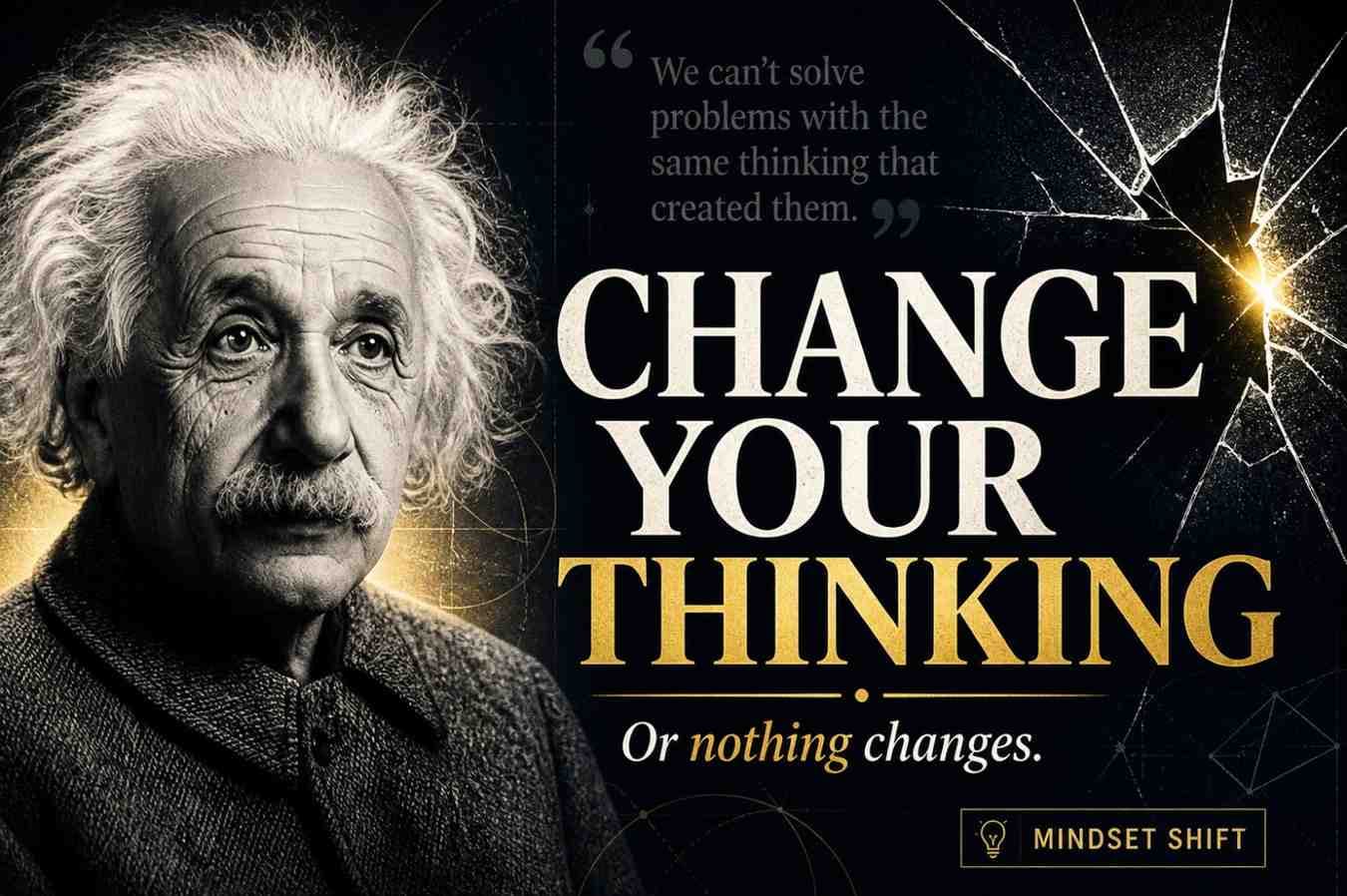
In the tapestry of human history, few voices resonate as clearly as that of Albert Einstein. While he is most famous for his contributions to physics, his insights into the human condition and the mechanics of thought are perhaps his most practical legacy.
The Quote of the day—"We cannot solve our problems with the same thinking we used when we created them"—is not just a clever observation; it is a fundamental law of evolution and progress.
The Trap of Circular Thinking
Most of us approach problems like a moth hitting a glass window. We apply more force, more speed, and more of the same logic, wondering why the barrier won’t break. We try to solve financial stress with the same spending habits that caused it, or relationship friction with the same communication style that sparked the flame.
Einstein’s wisdom suggests that a problem is often a symptom of a specific level of consciousness. To fix the symptom, you must elevate the consciousness.
Stepping Out of the Box
How do we actually "change our thinking"? It requires three deliberate steps:
- Intellectual Humility: Acknowledge that your current knowledge has reached its limit. If your current "operating system" could have solved the problem, it would have done so by now.
- Diverse Inputs: Seek perspectives from outside your bubble. If you are a scientist, talk to an artist. If you are a leader, listen to the newest intern. Innovation lives at the intersection of different disciplines.
- The "Third Way": Often we look for "Plan A" or "Plan B." Changing your thinking means looking for "Plan Z"—a radical departure from the binary choices we usually face.
Applying the Einstein Method Today
In an era of rapid technological change and global challenges, this quote is more relevant than ever. Whether it is climate change, social division, or personal career plateaus, the solution is never "more of the same." It is "something different."
As you move through your week, identify one stubborn problem you’ve been facing. Ask yourself: “What is the underlying logic I’m using here, and what would the opposite logic look like?”
Final Thought
Growth is uncomfortable because it requires us to shed our old selves. To solve the problems of tomorrow, we must be willing to let go of the certainties of yesterday.