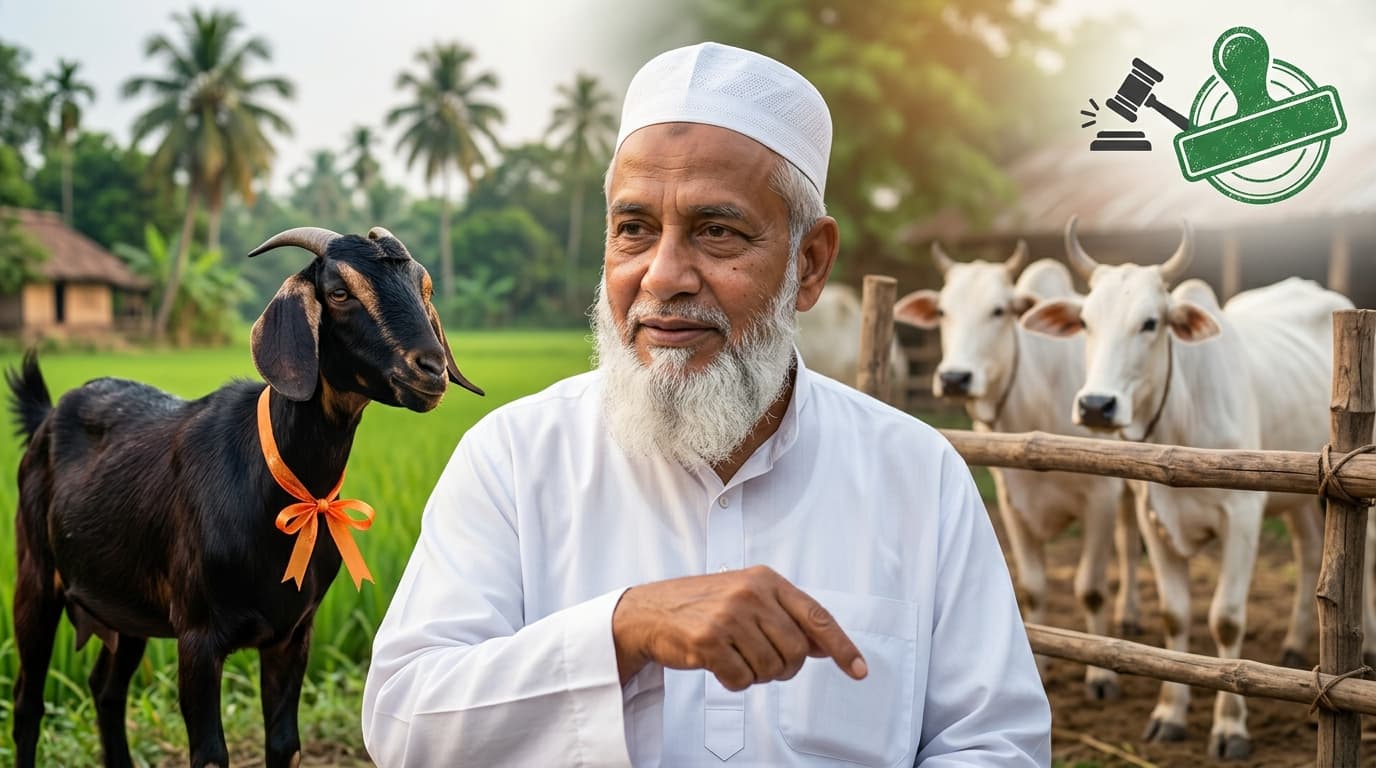
A profound shift is unfolding across West Bengal as the upcoming festival of Eid al-Adha approaches. In a remarkable demonstration of leadership focused on community harmony and legal compliance, prominent Muslim clerics and intellectuals have stepped forward with a historic appeal. Devotees are being urged to refrain from sacrificing cows or cattle during the festivities, a message aimed at steering the community toward alternatives like goats and sheep. This collective stance marks a critical turning point in how religious traditions navigate changing political and legal landscapes.
The catalyst for this widespread appeal is the strict enforcement of long-standing livestock regulations by the state government. A recent public notification has revitalized provisions of the West Bengal Animal Slaughter Control Act of 1950, alongside previous judicial directives. Under these reinforced rules, no cattle can be legally slaughtered without a formal fitness certificate jointly issued by local administrative heads and government veterinary surgeons. The stringent criteria mandate that an animal must be over 14 years old or completely incapacitated to qualify, fundamentally altering traditional festival preparations.
Recognizing the immense logistical challenges posed by these strict requirements, religious leaders chose cooperation over confrontation. Prominent figures, including the Imam of Kolkata's historic Nakhoda Mosque, publicly stated that the lack of localized infrastructure makes adhering to the new verification process nearly impossible for everyday citizens. By advising the community to avoid cattle sacrifice, these leaders are actively working to protect ordinary citizens from inadvertent legal complications while ensuring the sacred spirit of the festival remains intact.
Beyond the immediate legalities, the clerical appeal carries a deeper message of mutual respect and social cohesion in a diverse society. Leaders have openly emphasized the importance of honoring the sentiments of neighboring communities who view cattle as sacred. This proactive approach aims to defuse potential friction points and foster an atmosphere of peace, reminding believers that Islamic tradition explicitly provides a wide and flexible list of animals permissible for sacrifice, ensuring religious obligations can be fully met without causing social unease.
However, the rapid tightening of transport and sales restrictions has sent unexpected shockwaves through the delicate fabric of Bengal’s rural economy. The livestock trade ahead of Eid is traditionally a multi-million-rupee ecosystem built on cross-community interdependence. Backyard dairies and agricultural families invest substantial capital into rearing livestock specifically for this seasonal market. With buyers pulling back out of caution and fear of regulatory scrutiny, many farmers find themselves in an incredibly vulnerable position, holding onto cattle they can no longer sell.
Interestingly, this economic gridlock has triggered a unique dynamic in rural markets, where the financial burden of the crackdown is felt heavily by livestock breeders from various backgrounds. Observers note that the sudden disruption threatens the livelihoods of thousands of small-scale farmers who rely on festive sales to clear debts and sustain their households. The unfolding situation highlights just how deeply intertwined religious practices and agrarian survival are in the region, where a policy shift in one area instantly reshapes the fortunes of another.
As the state moves closer to the festival, digital campaigns and community-led initiatives are rapidly gaining traction across urban and rural areas alike. Online platforms are buzzing with advocacy for alternative sacrifices, echoing the guidance of the clergy and helping families adapt smoothly to the current realities. This ground-level shift demonstrates a resilient capacity for adaptation, as the community actively prioritizes peace and legal adherence over rigid adherence to past customs.
Ultimately, the evolving situation in West Bengal serves as a powerful case study in community resilience and thoughtful leadership. By choosing a path of pragmatic adaptation, the regional leadership has shown that ancient traditions can successfully harmonize with modern legal frameworks. As neighborhoods prepare for a quieter, more reflective holiday, the overriding focus remains firmly placed on maintaining the social fabric, ensuring that the core values of charity, faith, and unity take center stage.