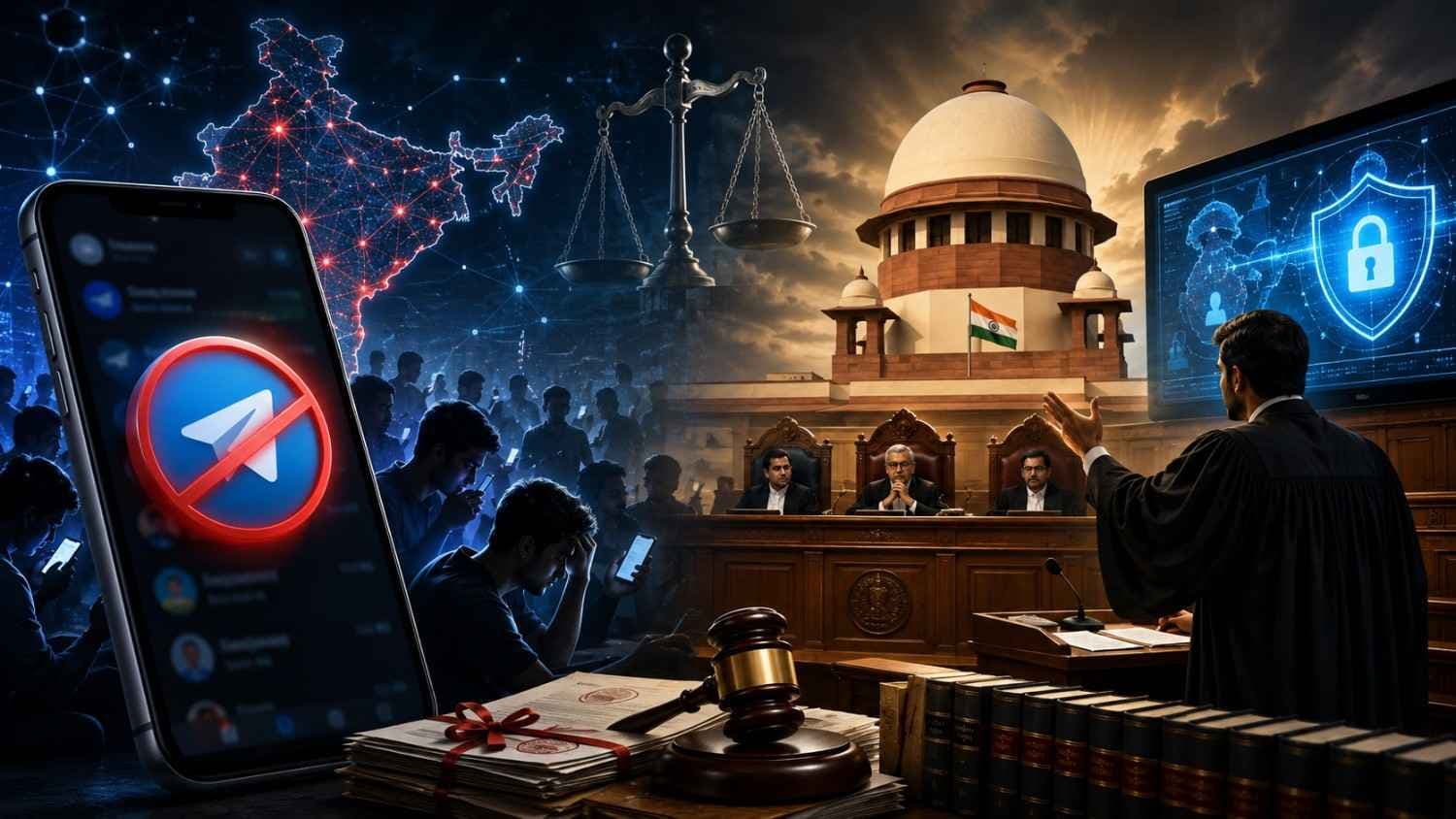
Imagine waking up to find your primary messaging app completely inaccessible. That is the reality for millions of people across India right now. In a massive legal showdown, Telegram has officially moved the Delhi High Court to challenge a sudden government order that has temporarily halted its operations across the country.
The abrupt ban is tied directly to the highly sensitive National Eligibility cum Entrance Test (NEET-UG) re-examinations. Following intense controversies, cancellations, and allegations of widespread paper leaks during the initial exam cycle, authorities are taking no chances this time around. The government decided that pulling the plug on the platform was a necessary step to secure the integrity of the upcoming tests.
Unwilling to accept the blackout, legal representatives for the messaging platform rushed to a vacation bench of the High Court, requesting an emergency hearing. The court acknowledged the gravity of the situation and agreed to take up the matter urgently. The central argument hinges on the sheer scale of the disruption, pointing out that over 150 million users in India have suddenly been cut off from their networks.
The government's strategy relied on Section 69A of the Information Technology Act, which grants the Ministry of Electronics and Information Technology (MEITY) the power to restrict access to digital platforms. Under this directive, the app is slated to remain blocked until June 22, just a day after the scheduled re-examination. To add to the restrictions, another order demands that the platform's message-editing feature be disabled until the end of the month.
From the regulatory perspective, the platform's specific features make it a primary target during high-stakes exams. Officials argue that organized cheating networks heavily utilize anonymous channels to distribute leaked or fake question papers. Furthermore, the ability to edit messages after they are sent allows bad actors to manipulate timestamps and deceive students or coordinate fraud with a digital paper trail that is incredibly hard to track.
This situation highlights a massive, recurring conflict in the modern digital age: balancing national security and academic integrity against the digital freedoms of everyday citizens. While the intent to prevent cheating and protect honest students is clear, a blanket ban penalizes millions of professionals, students, and businesses who rely on the platform for completely legitimate daily communication.
As the vacation bench reviews the emergency plea, the outcome of this case will set a critical precedent. It forces a tough question about whether shutting down an entire communication infrastructure is a fair and proportionate response to curbing localized criminal activity. For now, millions of users are left waiting to see if their screens will light up again before the exam weekend arrives.