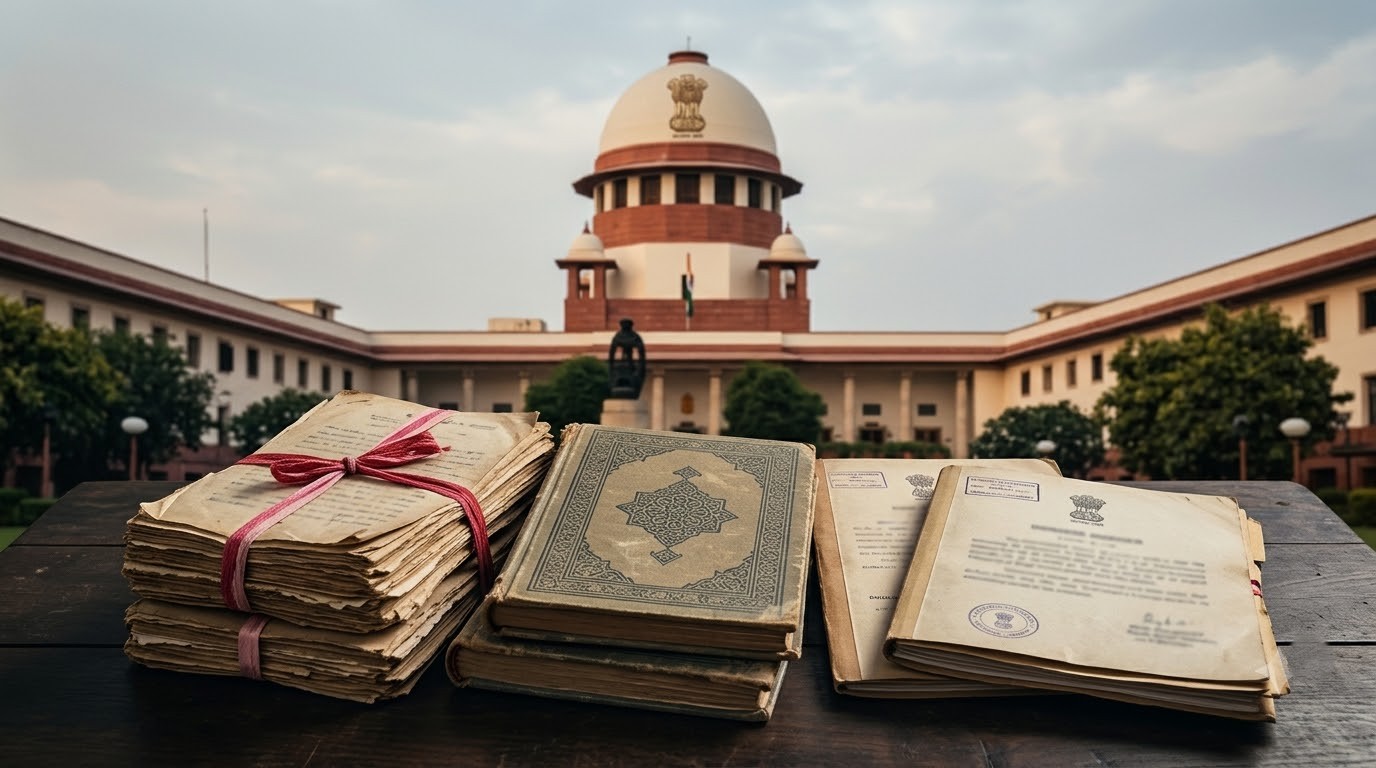
The Supreme Court on Tuesday fixed January 21 for the hearing of petitions challenging the constitutional validity of the Waqf (Amendment) Act, 2025. A bench comprising Justices MM Sundresh and PB Varale issued a series of procedural directions aimed at streamlining the extensive litigation, which has seen a proliferation of filings since the legislation received Presidential assent.
The bench directed all parties to complete their pleadings by December 31, 2026. It further permitted applicants who had filed interlocutory applications during the proceedings to submit independent writ petitions within a period of two weeks. The court mandated that copies of these petitions be served on nodal counsel, who has been entrusted with the responsibility of compiling the filings and including the judgments relied upon by the petitioners. The Additional Solicitor General was directed to respond to the written submissions made by the petitioners.
Supreme Court streamlines 135 applications into lead petition framework
During the hearing, nodal counsel informed the bench that five lead petitions had been identified at an earlier stage, while 135 separate petitions had subsequently been converted into interlocutory applications. Counsel proposed that all parties file written arguments to facilitate compilation. Solicitor General Tushar Mehta, appearing for the Centre, referred to the court's order dated April 17, 2025, under which only five lead petitions were entertained to prevent the docket from becoming unmanageable. He submitted that the existing arrangement should not be disturbed.
The bench's direction allowing the 135 applicants to file fresh writ petitions within two weeks effectively regularises their standing while maintaining the structural discipline imposed by the April order. The compilation of relied-upon judgments by nodal counsel is expected to assist the court in identifying common grounds of challenge and avoiding repetitive arguments during the final hearing.
Previous interim order suspended key amended provisions
The legislative amendments, assented to by President Droupadi Murmu after passage by both Houses of Parliament, have been the subject of significant judicial scrutiny. On September 15 of the previous year, the Supreme Court declined to stay the Act in its entirety but suspended the operation of specific provisions pending the framing of requisite rules.
Among the provisions kept in abeyance was the requirement under clause (r) of Section 3 of the Amended Act that a person must demonstrate the profession of Islam for at least five years to create a Waqf. The court ruled that this condition would remain stayed until state governments frame rules providing a mechanism to determine whether an individual has been practising Islam for the stipulated period.
The court also suspended the powers conferred on a Collector to decide the status of Waqf properties. Additionally, it suspended a provision stipulating that a property shall not be treated as Waqf property until a designated officer submits a report to that effect.
Representation norms for Waqf bodies modified by court
The September 15 order further prescribed the composition of statutory Waqf bodies with respect to non-Muslim membership. The court directed that the 20-member Central Waqf Council shall not comprise more than four non-Muslim members. Similarly, the 11-member State Waqf Boards were restricted to a maximum of three non-Muslim members.
These interim directions were passed to protect the interests of the parties and to balance competing claims pending a full adjudication on the constitutional challenges. The court had observed that the temporary suspension of the identified provisions was necessary to maintain equilibrium until the matters are finally determined.
What is the current status of the Waqf Amendment Act litigation?
The Supreme Court has fixed January 21 for the final hearing of constitutional challenges to the Waqf (Amendment) Act, 2025. Parties must complete pleadings by December 31, 2026, while 135 interlocutory applicants have been granted two weeks to file independent writ petitions. Key amended provisions regarding Waqf creation, Collector powers, and Waqf body composition remain suspended under the court's September 2025 interim order.
| Provision / Aspect | Status Under Interim Order (Sept 2025) |
|---|---|
| Five-year Islam practice requirement for Waqf creation (Section 3(r)) | Stayed until State rules framed for verification mechanism |
| Collector's power to decide Waqf property status | Suspended |
| Property not treated as Waqf without designated officer's report | Suspended |
| Non-Muslim members in Central Waqf Council (20 members) | Capped at four |
| Non-Muslim members in State Waqf Boards (11 members) | Capped at three |
The matter is now listed for January 21, when the bench is expected to hear arguments on the constitutional validity of the amended statute in light of the completed pleadings and compiled precedents.