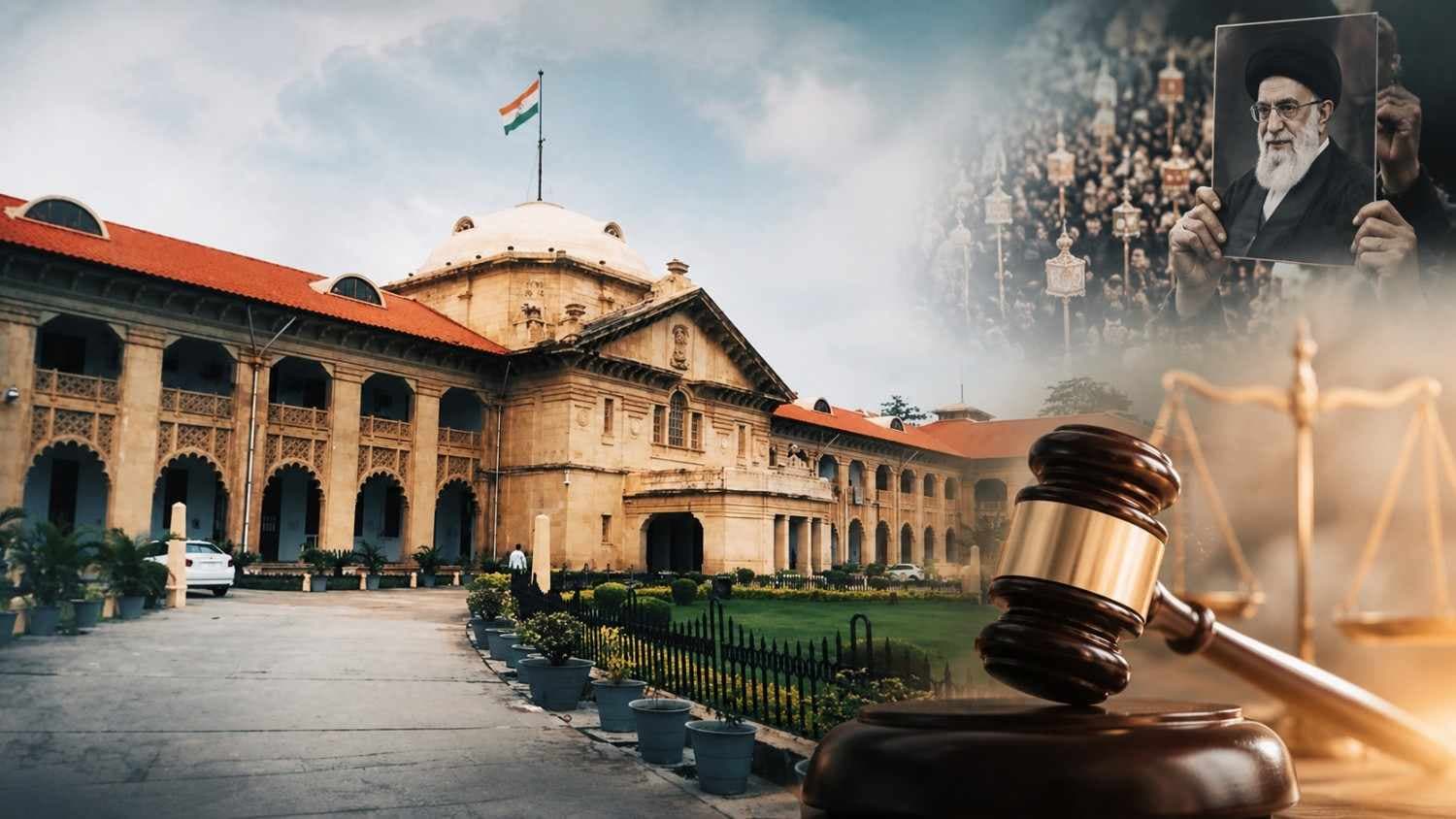
The petition was moved by Majlis Ulema-e-Hind through its General Secretary, Maulana Syed Kalbe Jawad Naqvi. The pleading asserts that after the official confirmation of the demise of Ayatollah Seyyed Ali Khamenei on March 1, 2026, members of the Shia community across India, including in Uttar Pradesh, organised peaceful mourning assemblies and displayed his portraits as an expression of religious grief and solidarity.
The petitioner contends that the local police administration responded with disproportionate action. It cites two specific incidents. First, on March 3, 2026, in Saharanpur, the police lodged a first information report under the provisions of the Bharatiya Nagarik Suraksha Sanhita (BNSS) against twenty‑six named persons and more than one hundred and fifty unidentified individuals. The FIR was allegedly registered solely for holding a peaceful nighttime mourning procession, known locally as a Shok Julus, without prior administrative permission and in the absence of any demonstrable threat to law and order.
Second, on May 29, 2026, in Unnao, police personnel reportedly visited a private residence and compelled the homeowners to remove a religious poster of Ayatollah Khamenei bearing the caption ‘Our Leader, Our Pride’ from the outer wall of the dwelling. According to the plea, officials publicly stated that the removal was undertaken ahead of the forthcoming Muharram to manage public sentiment, even though no written order under Section 163 of the BNSS was in place at the time.
The petitioner argues that these actions infringe upon several constitutional guarantees. It maintains that the inner or outer wall of a citizen’s private residence constitutes a sacrosanct zone of personal liberty and private property protected under Articles 21 and 300A of the Constitution of India. Consequently, forcing residents to take down non‑violent, symbolic portraits amounts to an unconstitutional intrusion and an arbitrary exercise of executive power.
Furthermore, the plea asserts that the freedom to express grief, sympathy and spiritual solidarity through peaceful assembly falls within the ambit of Articles 19(1)(a) and 19(1)(b). The executive may not curtail these rights unless there is an imminent and verified threat to public order, a condition which, according to the petitioner, was absent in the cited incidents.
The petition also invokes the religious freedom safeguarded by Articles 25 and 26. It draws a parallel between the status of a Marja‑e‑Taqlid in Twelver Shia theology and that of the Pope in Christianity, contending that equating the peaceful commemoration of the deceased leader with a security threat constitutes a direct intrusion upon the religious conscience of the community.
To substantiate the claim that the community’s practice of Azadari, including the carrying of banners and portraits, is longstanding, the pleading notes that such observances have been carried out by Shia Muslims in Uttar Pradesh for generations. It further points out that the Union of India, through the Ministry of External Affairs, formally acknowledged the international stature of the late leader by extending official condolences and participating in diplomatic mourning protocols, thereby underscoring that the sentiment expressed by the community is not antithetical to national interests.
The petitioner states that a detailed representation was submitted to the state’s highest home and police authorities on June 12, 2026. Receiving no response or remedial action, the body approached the High Court to prevent a reasonably apprehended chilling effect on the community’s forthcoming Muharram‑ul‑Haram observances.
The relief sought in the public interest litigation includes a direction to the District Police Heads, Superintendents of Police and Station House Officers across Uttar Pradesh to desist from taking any coercive action or effecting detentions against individuals who are peacefully participating in religious mourning or displaying portraits of spiritual leaders. The plea also seeks an order restraining the police from registering first information reports solely on the basis of such peaceful expressions of grief.
As of the date of filing, the matter is pending before the Lucknow Bench of the Allahabad High Court, which has yet to pronounce any order or observation on the substantive prayers of the petition.