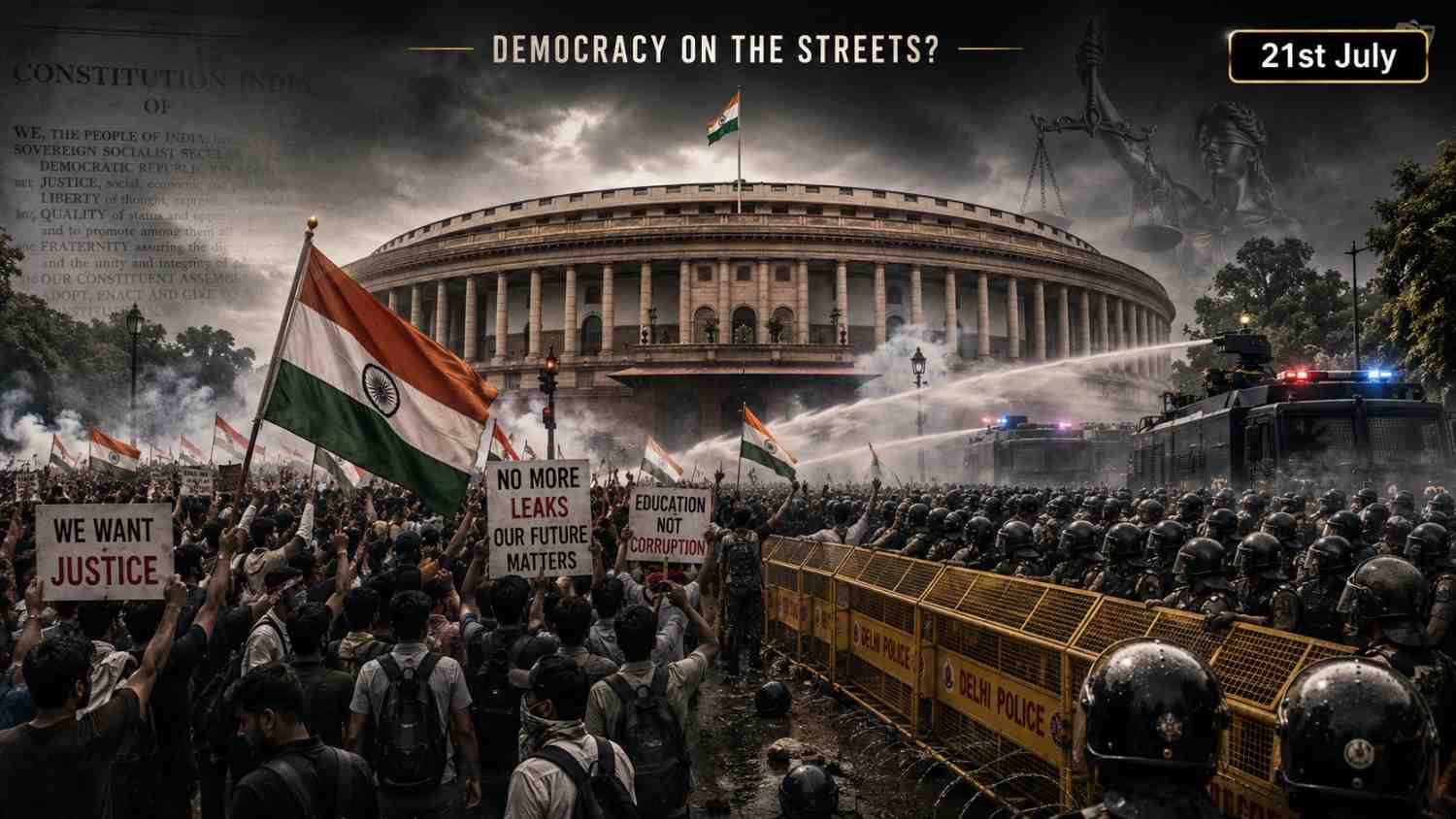
The heart of New Delhi witnessed a day of intense friction and raw public emotion as thousands of young students, activists, and citizens attempted to exercise what they termed their fundamental right to march. Billed as the "Sansad Chalo" movement, the plan was simple on paper: a brief two-kilometer walk from Jantar Mantar to the Parliament of India on the opening day of the Monsoon Session. In reality, it turned into a high-stakes standoff with the state.
The atmosphere in the capital was charged long before the protesters began moving. Security forces had already cordoned off vital sectors of Lutyens’ Delhi, deploying heavy barricades, water cannons, and thousands of personnel. With prohibitory orders tightly enforced and multiple metro stations shuttered, the stage was set for a collision between relentless civic grief and unyielding administrative control.
At the core of this mobilization is a deep-seated fury over recurring examination crises, including devastating question paper leaks that have shattered the futures of millions of competitive exam aspirants. Coupled with the forced hospitalisation of climate activist Sonam Wangchuk who had been on a prolonged hunger strike the protesters felt driven to the streets to demand direct accountability and the resignation of the Union Education Minister.
As the crowds pushed forward toward Raisina Road and Sansad Marg, the situation escalated rapidly. Security personnel resorted to tear gas, water jets, and batons to halt the march, leaving dozens injured on both sides and sparking widespread outrage over the use of heavy-handed crowd-control tactics. Visuals of bleeding demonstrators and detained students quickly flooded digital platforms, turning a localized street confrontation into a national talking point.
Despite the heavy clampdown, the spirit of the gathering remained unbroken. Protesters carried the national flag and portraits of freedom fighters, framing their struggle not as a riotous outburst, but as a peaceful fight for systemic justice. For many young participants, this march symbolized a crucial pushback against administrative apathy and a demand for a transparent, corruption-free academic system.
The events in New Delhi have sent shockwaves through the country's political landscape, drawing sharp criticism from opposition leaders and human rights bodies alike. As Parliament faces continuous disruptions over the handling of these demonstrations, the fundamental questions raised by the youth remain starkly unanswered.
Ultimately, the events surrounding the march to Parliament reflect a turning point in contemporary Indian public discourse. When the aspirations of an entire generation are compromised by systemic failure, the desire to make their voices heard outweighs the fear of barricades. Whether through dialogue or continued dissent, the message delivered on the streets of Delhi has made it clear that accountability can no longer be ignored.