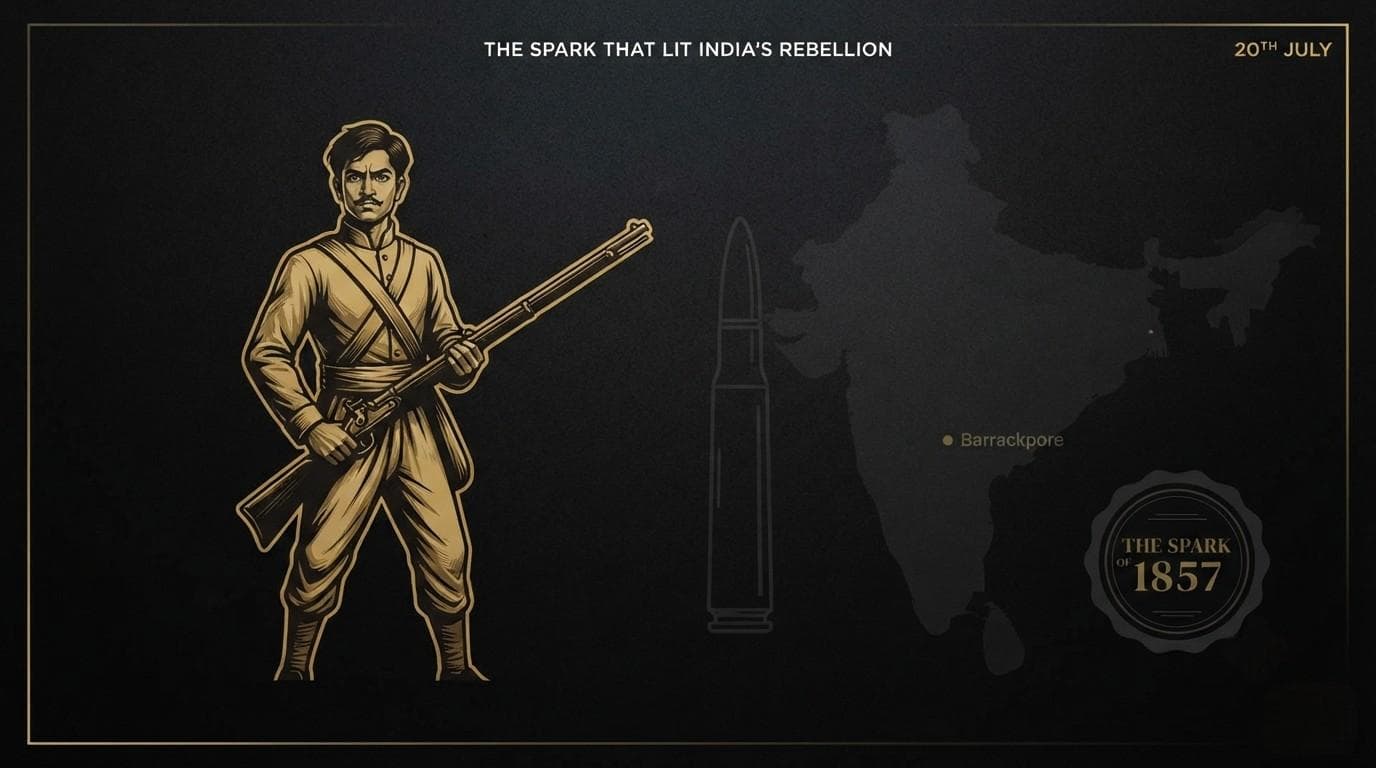
History is often shaped by single moments of profound courage. For India, one such turning point came from the parade grounds of Barrackpore in the spring of 1857. Mangal Pandey, a young sepoy in the British East India Company's army, stepped forward to challenge an empire, transforming a personal act of defiance into the ultimate catalyst for the Indian Rebellion of 1857.
Born in a small village in Uttar Pradesh, Pandey joined the Bengal Native Infantry with hopes of a soldier's life, but he soon found himself confronting a deep moral and cultural conflict. When the British introduced the new Enfield rifle rumored to use cartridges greased with animal fat that violated the religious beliefs of Hindu and Muslim soldiers alike it became the tipping point for widespread resentment against colonial rule.
On March 29, 1857, Pandey chose resistance over compliance. Armed and standing before the guard room, he openly called upon his fellow soldiers to rebel against foreign oppression. His actions were not merely about a contaminated cartridge; they represented a fundamental rejection of subjugation, cultural disrespect, and the exploitative nature of the Company Raj. He believed that self-respect and sovereignty were worth more than life itself.
Though he was quickly overpowered, arrested, and sentenced to death by a hasty court-martial, his execution on April 8, 1857, could not extinguish the fire he started. Instead of serving as a deterrent, his martyrdom acted as a clarion call. Across the subcontinent, sepoys and common citizens alike rallied around the memory of his sacrifice, turning a localized mutiny into a massive, nation-wide uprising for independence.
Pandey’s revolutionary ideas centered on the simple yet powerful notion that foreign domination must be resisted by collective unity. At a time when India was fragmented into various princely states and administrative zones, his defiance highlighted the urgent need for a unified front against colonial exploitation. He proved that ordinary individuals, through extraordinary bravery, could shake the foundations of seemingly invincible powers.
Today, we remember Mangal Pandey not just for how he died, but for the unbreakable spirit he embodied. His legacy serves as a permanent reminder of the high cost of freedom and the courage required to stand up against injustice. As generations look back on his life, his story remains an enduring inspiration, honoring those who dared to dream of a free and independent nation.