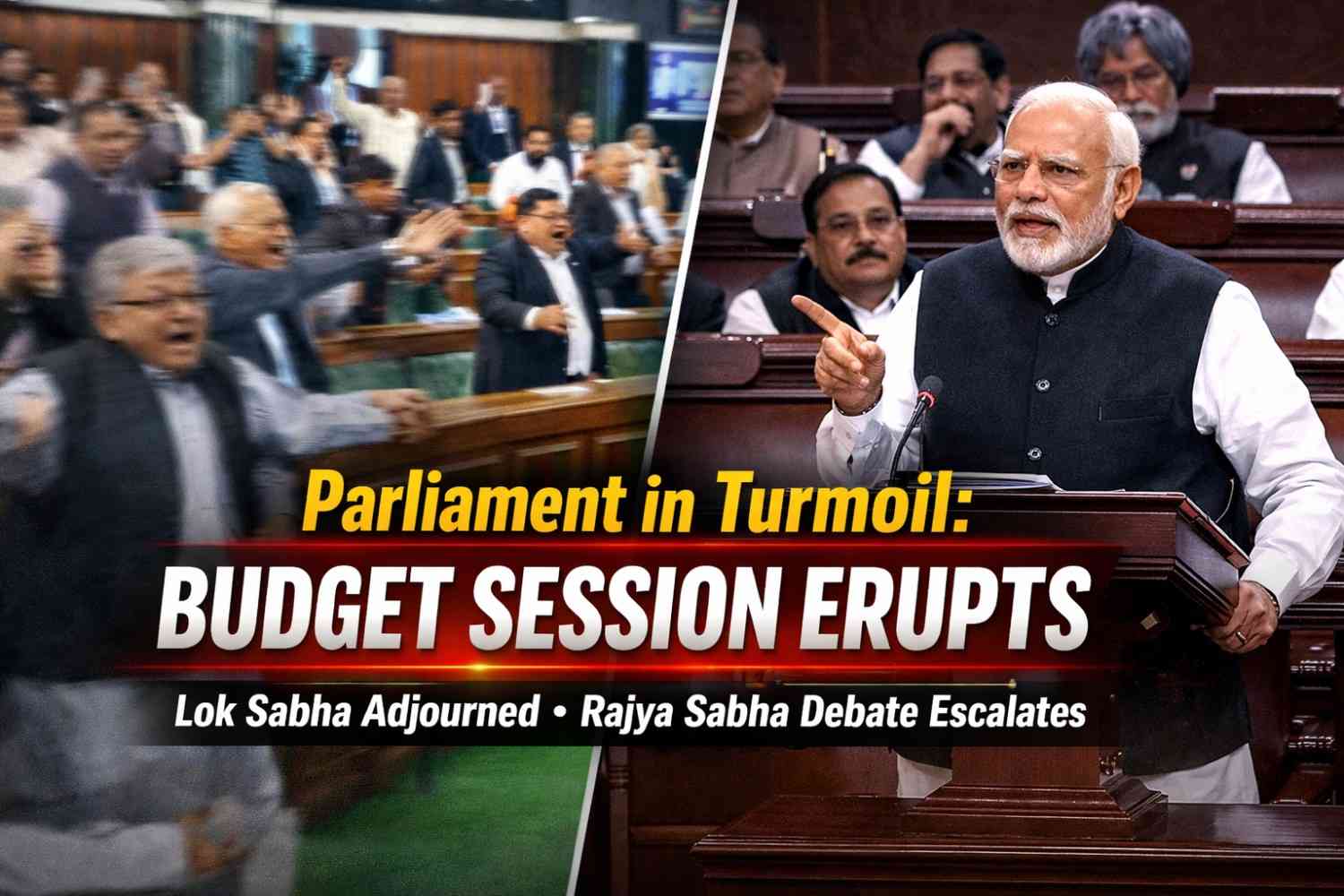
The eighth day of the Parliament of India’s Budget Session on February 6, 2026, was marked by sharp confrontation between the ruling coalition and the opposition, leading to the abrupt adjournment of the Lok Sabha and an unusually strident debate in the Rajya Sabha. The session — crucial for progressing the Union Budget for 2026-27 and legislative business — has been overshadowed by disruptions and political acrimony.
The Lok Sabha convened at its scheduled time but was plunged into chaos within minutes. Opposition MPs from the Indian National Congress and allied parties erupted into protests and sloganeering, focusing on internal parliamentary disputes, including the exclusion of Leader of Opposition Rahul Gandhi from speaking on certain matters, and clashing with the Speaker over procedural conduct.
Speaker Om Birla, visibly frustrated, invoked parliamentary decorum and suspended proceedings, first for a short recess and ultimately adjourned the House until Monday morning due to persistent disruptions.
The repeated derailment of Lok Sabha business has prevented crucial budget discussions and votes on the Motion of Thanks to the President’s Address, a foundational early step in parliamentary budget debate. These setbacks come against the backdrop of the recently presented Union Budget 2026-27, which aims for robust capital expenditure and economic growth targets but requires structured discussion and legislative scrutiny.
In contrast, the Rajya Sabha witnessed relatively orderly proceedings. Here, Prime Minister Narendra Modi addressed members on the Motion of Thanks, turning his speech into an extended political critique of the opposition. While defending his administration’s economic agenda, he accused rival parties of lacking vision and reiterated the government’s developmental achievements.
"You may raise any number of slogans, but you will never be able to dig my grave," the Prime Minister said, underscoring the combative tenor of his remarks in the Upper House.
Notably, this Budget Session period has seen inter-house tensions as well, with Rajya Sabha members critiquing happenings in the Lok Sabha. Leader of Opposition in Rajya Sabha Mallikarjun Kharge drew sharp reactions after highlighting issues from the Lower House, illustrating the escalating partisan fault lines across both chambers.
The Budget Session (scheduled through April 2) is constitutionally central to the government’s legislative and fiscal agenda. Frequent disruptions in the Lok Sabha not only stall critical debates on tax proposals and national spending priorities but also spotlight the growing crisis of parliamentary decorum. With the budgetary calendar tight and opposition grievances rising, the conduct of business in the coming days remains a legal and political flashpoint. The nature of these proceedings could shape legislative outcomes and public perceptions of parliamentary efficacy well beyond Budget 2026-27.