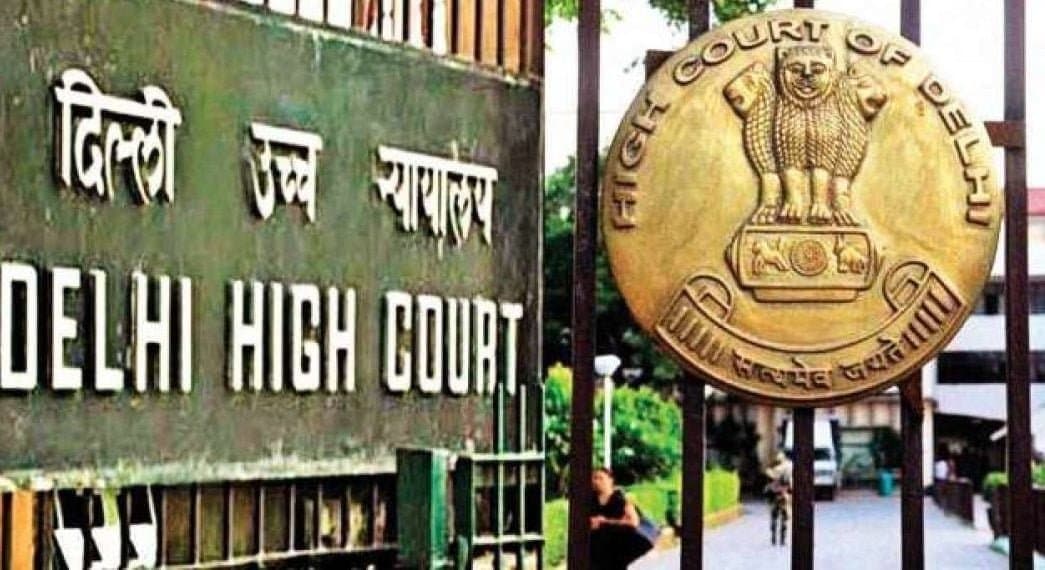
The matter originated from a petition filed by Vaibhav Singh against Arvind Kejriwal and several leaders of the Aam Aadmi Party. Singh alleged that on 13 April 2026, while Kejriwal was appearing in person before Justice Swarana Kanta Sharma to seek her recusal in the Central Bureau of Investigation liquor policy case, the respondents recorded the proceedings without authorization and subsequently circulated the footage on social media platforms. The petitioner contended that the act amounted to a deliberate attempt to malign the judiciary and to create a perception that the court was functioning under political or governmental pressure. He sought the removal of the offending videos, a detailed inquiry into the alleged conspiracy, and appropriate action against those responsible.
On 23 April 2026, the Delhi High Court issued an interim direction requiring the removal of the social media posts containing the impugned videos. The order was passed while the case was pending before a division bench comprising Justice V Kameswar Rao and Justice Manmeet Pritam Singh Arora. The bench subsequently observed that several respondents had not yet been served with notice and adjourned the hearing to a later date.
Submissions by Meta and Google
In response to the court’s direction, Meta Platforms filed an affidavit stating that it does not possess a legal obligation to proactively identify, monitor or remove content relating to the unauthorized recording of court hearings. The company relied on Section 79 of the Information Technology Act, 2000, which grants intermediaries immunity from liability for third‑party content, provided they observe due diligence requirements. Meta argued that granting the petitioner’s request to compel proactive identification and removal of future, unspecified content would contravene the statutory scheme and the Supreme Court’s precedent that intermediaries cannot be forced to undertake pre‑emptive monitoring of user‑generated material.
Meta further submitted that the determination of whether a particular video constitutes an unauthorized recording or rebroadcast of judicial proceedings necessitates a case‑by‑case assessment of the source, context, nature and legality of the content. Such an evaluation cannot be performed in the abstract and would require the platform to make legal judgments prior to any judicial determination, a function that falls outside the scope of the reasonable efforts contemplated under Rule 3(1)(b)(xi) of the Information Technology (Intermediary Guidelines and Digital Media Ethics Code) Rules, 2021, and the limited technology‑based measures envisaged under Rule 4(4) of the same rules. Consequently, Meta expressed willingness to act on specific URLs identified by the petitioner in compliance with the April 23 order or as directed by the court, but declined to undertake a broader, pre‑emptive monitoring obligation.
Google LLC filed a parallel affidavit concerning its YouTube service. The company stated that it neither owns, controls nor possesses specific knowledge about the content uploaded by users. Google emphasized that the uploader alone holds the requisite information to ascertain whether a video is infringing or unlawful. As a mere intermediary that provides the platform on an “as is” basis, Google submitted that any liability arising from the impugned content must be fastened upon the publisher or uploader, not upon the service provider. The affidavit reiterated that Google is not involved in the creation, endorsement or control of the contested videos and therefore cannot be compelled to monitor or remove them proactively.
Court’s Observations and Procedural Outcome
The division bench, after hearing the submissions, noted that several respondents in the underlying petition had not yet been served with notice. Consequently, the matter was adjourned to a later date to allow for completion of service and further proceedings. The bench did not issue any substantive ruling on the merits of the petitioner’s request for proactive monitoring at this stage, limiting its observation to the procedural defect of non‑service.
Implications
The exchange highlights the tension between judicial efforts to safeguard the integrity of court proceedings and the statutory framework governing intermediary liability. The positions taken by Meta and Google reinforce the principle that, under the existing IT Act and allied rules, intermediaries are not obligated to engage in pre‑emptive content screening absent a specific judicial order or notice. The outcome underscores that any enforcement action against allegedly unlawful user‑generated content must follow the notice‑and‑takedown mechanism, with the onus of establishing illegality resting on the party seeking removal. The adjournment permits the parties to address the procedural shortcomings while the substantive question of whether courts can compel platforms to undertake proactive monitoring remains pending for future consideration.