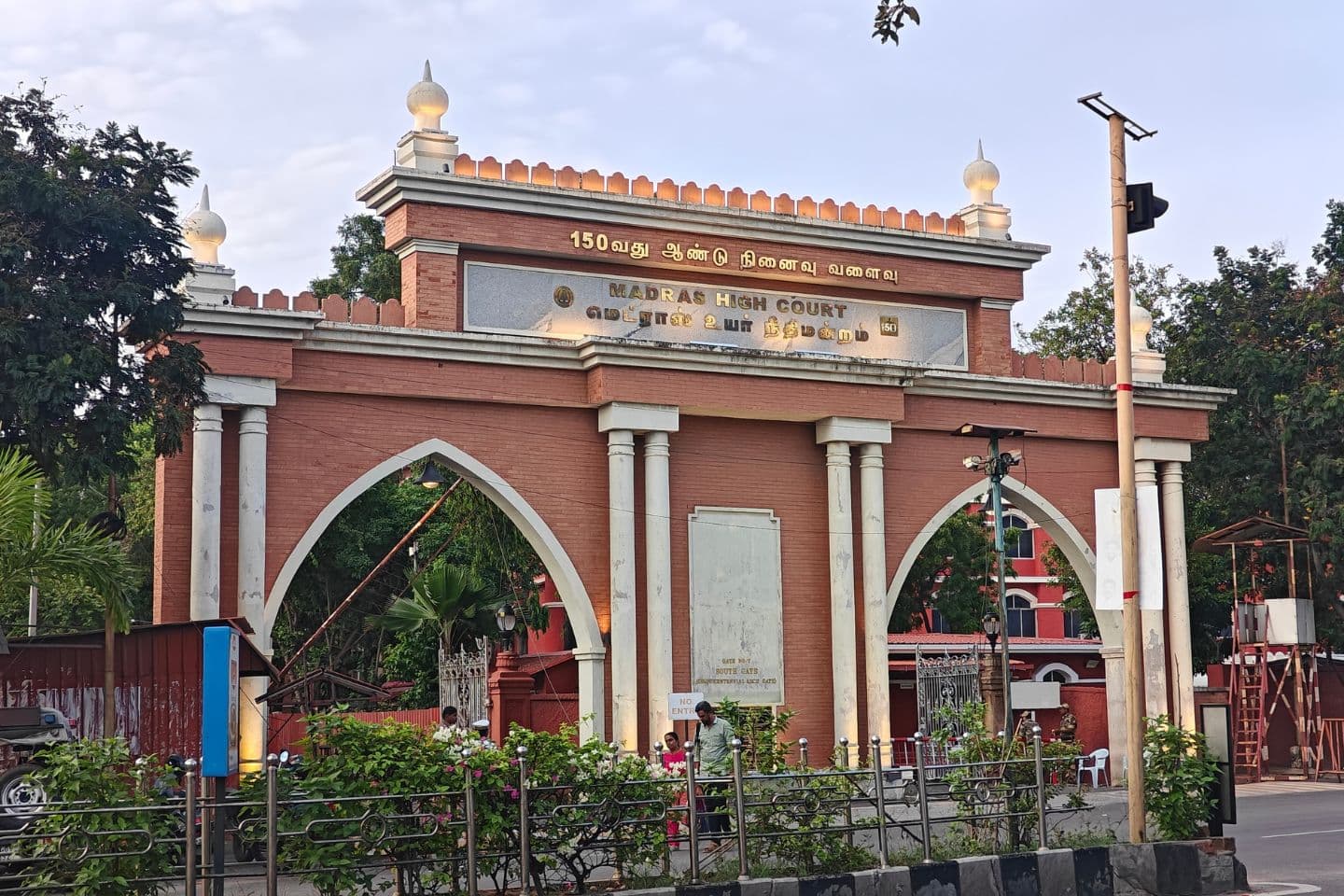
The Madras High Court, presided over by Justice Ilanthiraiyan, heard the anticipatory bail application filed by Senthil Balaji and his brother Ashok Kumar in connection with a case alleging an offer of ₹35 crore to a TVK MLA to secure his vote for the Assembly Speaker. After considering the submissions of counsel for the petitioners and the State, the court directed that anticipatory bail be granted to both applicants, subject to specific conditions.
The court ordered that the petitioners shall appear before the investigating officer on a daily basis until further orders and shall cooperate fully with the ongoing investigation. The bench emphasized that the liberty granted is interim and contingent upon adherence to these conditions.
Senior Advocate NR Elango, appearing for Senthil Balaji, submitted that the complaint was lodged two days after the alleged telephone conversation and that no audio recording of the call exists; only call detail records are available. He contended that the allegations against his client are presumptive, including the claim of an attempt to topple the government. Justice Ilanthiraiyan, during the hearing, questioned the role of the petitioner as reflected in the FIR, stating, “What's your role? As per FIR, there's nothing.” Elango responded that the prosecution’s case rests primarily on the fact that Balaji was present in Erode on the same day as the prime accused, and he referenced media reports suggesting that the State seeks to implicate the petitioner to hinder his duties ahead of the Karur by‑election.
Senior Advocate P Kumaresan, representing Ashok Kumar, argued that his client is being implicated solely because of his familial relationship with Senthil Balaji and that the police are attempting to expand the scope of the case without sufficient basis.
Public Prosecutor John Sathyan, representing the State, submitted that there is material indicating a conspiracy to book rooms in Chennai, that one of the accused has fled to Singapore and allegedly deleted relevant footage, and that efforts are underway to retrieve the same. He asserted that the case is not about intra‑party politics but about an alleged attempt to destabilise the government at a critical juncture. The prosecutor noted that Ashok Kumar is named in the FIR and that there is material linking both brothers to the alleged offence, including indications of hawala transactions, which the prosecution claims to have strong evidence to support.
The complainant, Elaiyaraja, had approached the Triplicane Police Station on 26 June, stating that he received a call from a person identifying himself as Thirunavukkarassu, who informed him that a major political party intended to move a resolution against the Speaker in the Assembly and urged him to vote in favour. Elaiyaraja alleged that he was offered ₹35 crore for compliance and threatened with dire consequences should he refuse. On 1 July, three individuals were arrested in connection with the allegation. The police subsequently informed the court that, according to their investigation, Elaiyaraja was contacted at the behest of Senthil Balaji and his brother Ashok Kumar.
In his bail plea, Senthil Balaji emphasized that he is not named as an accused in the FIR and contended that his inclusion stems from a later political elaboration of the original complaint rather than any factual basis. He argued that there is no material showing that he contacted Elaiyaraja, sent any message, authorised the caller, met the complainant, deputed any person, arranged or handled money, issued threats, or participated in any conspiracy. Balaji further submitted that the timing of the case coincides with the forthcoming Karur by‑election and referenced a statement by Sports Minister Aadhav Arjuna regarding “scores to settle” in connection with the Karur tragedy, suggesting a political motive behind the prosecution.
Balaji also asserted that persons already in custody are being pressured to implicate him and his brother through allegations of corruption and horse trading, and that claims of coercive investigation have been brought to the notice of the Sessions Judge at the remand stage. He urged the court to treat any custodial statements made by the accused as unreliable unless corroborated by independent, objective, and legally permissible evidence.
After weighing the rival submissions, the Madras High Court concluded that the petitioners are entitled to the protection of anticipatory bail, subject to the imposed conditions, to ensure their availability for investigation while safeguarding their personal liberty during the preliminary stage of the proceedings.