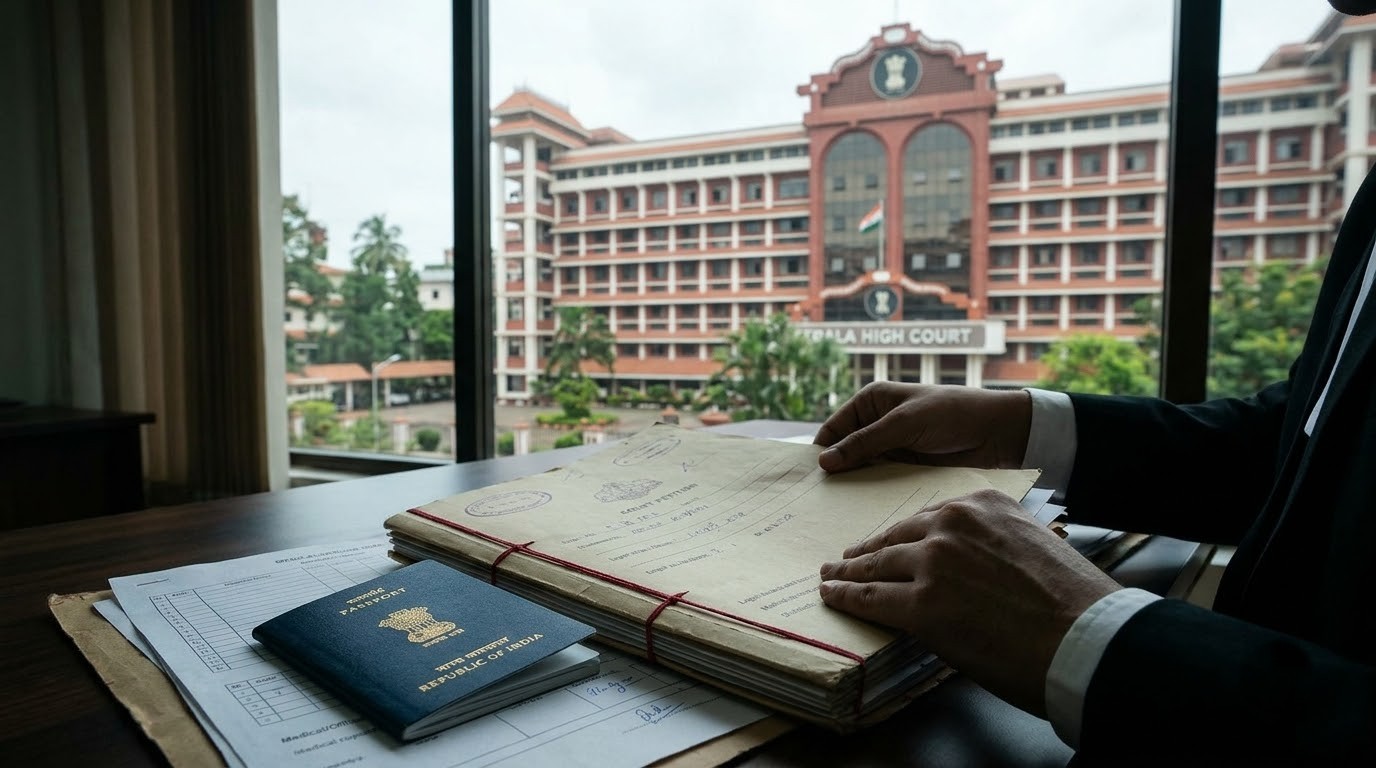
The Kerala High Court on Monday directed the superintendent of the prison where former Director General of Police Tomin J. Thachankary was lodged to submit a detailed report on his medical history during incarceration. The direction came while the court was hearing an application filed by Thachankary seeking modification of his bail conditions to permit overseas travel for employment purposes.
Justice A. Badharudeen, presiding over the matter, took serious note of the contradictory positions adopted by the applicant. The court observed that Thachankary had represented to the prison authorities that he was unwell at the time of his imprisonment. However, after securing suspension of sentence and release on bail, he approached the court asserting fitness to travel abroad for work. The bench characterised these claims as mutually exclusive and directed the jail authorities to furnish records specifying the nature of illnesses suffered and the exact number of days spent in the prison hospital.
Why did the Kerala High Court seek Tomin Thachankary's prison medical records?
The court sought the records because Thachankary claimed illness during imprisonment but subsequently sought permission to travel abroad for work after release on bail, which the bench found to be contradictory positions requiring verification through official prison hospitalisation data.
During the hearing, Justice Badharudeen made strong oral observations in Malayalam, remarking that accepting such contradictory assertions would lead the public to question the intelligence of the judiciary. The judge stated that when individuals go to jail they claim sickness, but upon release they seek to travel abroad, questioning how such a position can be countenanced. The court emphasised that judicial orders must withstand public scrutiny and cannot be based on inconsistent claims.
The background of the matter traces back to a conviction by a vigilance court in a disproportionate assets case. The trial court had sentenced Thachankary to four years of rigorous imprisonment and imposed a fine of Rs 30.84 lakh. On October 15, the High Court suspended the sentence pending appeal. In his appeal against the conviction and sentence, Thachankary contended that the investigating agency had not produced the collected documents before the trial court. He further argued that the conviction was unsustainable and illegal, alleging serious errors in the assessment of evidence and reliance on incorrect calculations by investigating officers.
The present application for overseas travel was filed subsequent to the suspension of sentence. The court, however, declined to entertain the request without first verifying the factual basis of the medical claims made during the period of incarceration. The matter has been posted for further hearing on November 6, by which time the jail superintendent is expected to submit the requisite medical and hospitalisation records.
Key Timeline of Proceedings
Date | Event |
|---|---|
Earlier | Vigilance court convicts Thachankary in disproportionate assets case; imposes four-year rigorous imprisonment and Rs 30.84 lakh fine. |
October 15 | Kerala High Court suspends sentence pending appeal. |
November 2 | High Court hears application to modify bail conditions for overseas travel; directs prison superintendent to submit medical records. |
November 6 | Matter posted for further hearing upon receipt of prison medical records. |
The court's insistence on verifying prison medical records before adjudicating on a bail modification plea underscores the principle that relief predicated on factual assertions must be supported by contemporaneous documentary evidence. The bench made it clear that the administration of justice cannot accommodate shifting narratives tailored to suit the immediate convenience of a litigant. The outcome of the travel application will depend on the contents of the report to be filed by the jail authorities on the next date of hearing.