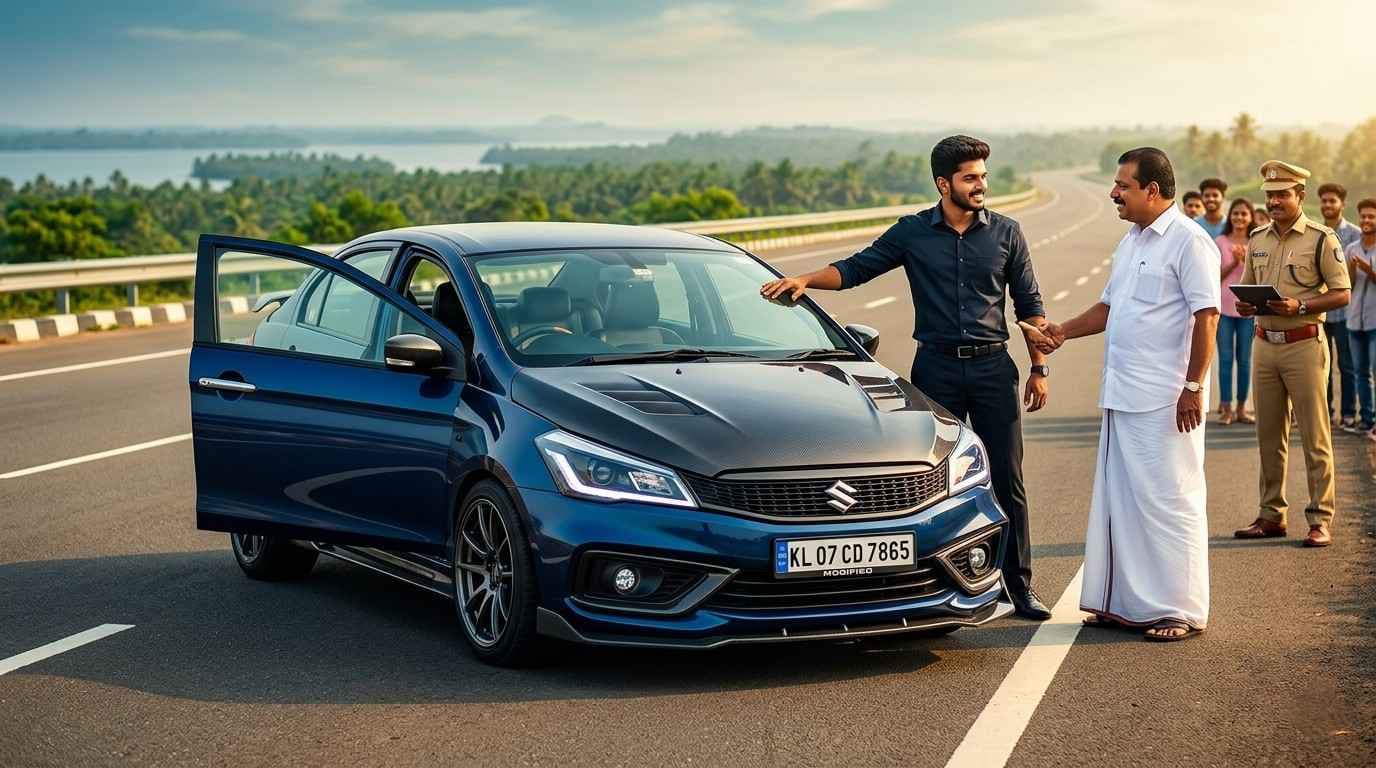
For years, Kerala has maintained a highly polarized relationship with its vibrant automotive subculture. While the state boasts one of the most passionate, aesthetically driven auto-tuning communities in the country, its vehicle owners have simultaneously faced some of the strictest enforcement actions from the Motor Vehicles Department. Tasteful aesthetic changes, suspension tweaks, and vinyl wraps have routinely been treated as severe statutory violations, resulting in steep fines and vehicle detentions. However, the regulatory landscape has shifted completely following a definitive declaration from the state's newly sworn-in Chief Minister, V.D. Satheesan, who confirmed that his administration will honor its campaign promise to legalize safe vehicle modifications.
The path toward this regulatory policy began during the high-octane campaign leading up to the state assembly elections. Recognizing the deep frustration within a restless, youth-led automotive demographic, the United Democratic Front integrated a unique, car-culture-centric pitch into its operational manifesto. Under the banner "UDF for auto-enthusiasts," the coalition explicitly promised to dismantle the aggressive, blanket penalties levied against minor modifications if voted into power. Now, having successfully formed the government, the Chief Minister has made it clear that campaign rhetoric must transform into administrative reality, assuring enthusiasts that if a structural promise was made, it will be executed.
However, this policy shift does not signal an unmonitored, chaotic free-for-all on the state's highways. The Chief Minister explicitly qualified the administration's vision by clarifying that the upcoming legal framework will center strictly around non-hazardous, safe alterations. The objective is to establish a clear, guideline-based system that cleanly separates harmless styling preferences from dangerous structural modifications. Modifications that compromise core road safety, elevate noise pollution beyond permissible levels, or violate emission standards will remain strictly prohibited, ensuring that the passion of the tuning community does not conflict with broader public safety.
The proposed policy addresses a long-standing legal grey area regarding state intervention in motor vehicle rules. While Section 52 of the Central Motor Vehicles Act, 1988, places a strict nationwide restriction on major structural or technical alterations without prior manufacturing approval, individual states hold legislative leverage. Under Entry 35 of the Concurrent List of the Indian Constitution, state governments maintain the authority to revise and implement localized motor vehicle regulations. By introducing a structured, state-level approval mechanism, the new administration aims to provide a lawful, transparent pipeline where modifiers can validate their designs within clear legal boundaries.
For the local automotive industry and independent garage owners, this legal pivot represents a massive economic opportunity. The long-standing, aggressive crackdowns by enforcement agencies had driven much of Kerala's premium modification sector into financial uncertainty, forcing businesses to operate under constant legal anxiety. By legalizing and regulating aesthetic tweaks, premium paint finishes, high-end wheel upgrades, and compliant lighting installations, the state is poised to formalize a multi-crore ancillary sector. This formalization will not only safeguard local investments but also generate specialized technical employment for the state's youth.
The transition from a punitive enforcement model to a regulated framework will require substantial administrative coordination. The state's transport ministry must now collaborate with engineering experts and transport officials to draft an exhaustive catalog of permissible modifications. Modifiers are already calling for specific clarity on popular upgrades—such as suspension kits, upgraded body panels, performance lighting, and engine remaps—so that consumers can invest in upgrades with total confidence, free from the fear of arbitrary roadside inspections.
Ultimately, this executive commitment marks a historic victory for Kerala's automotive fraternity. It represents a rare and progressive acknowledgment by a state government that a citizen's passion for automotive customization can coexist responsibly with strict public safety standards. By replacing a legacy of blanket bans with a modern, regulatory approach, Chief Minister Satheesan is not just fulfilling a key electoral promise; he is establishing a new national benchmark for how modern governments can engage with, validate, and regulate contemporary youth cultures.