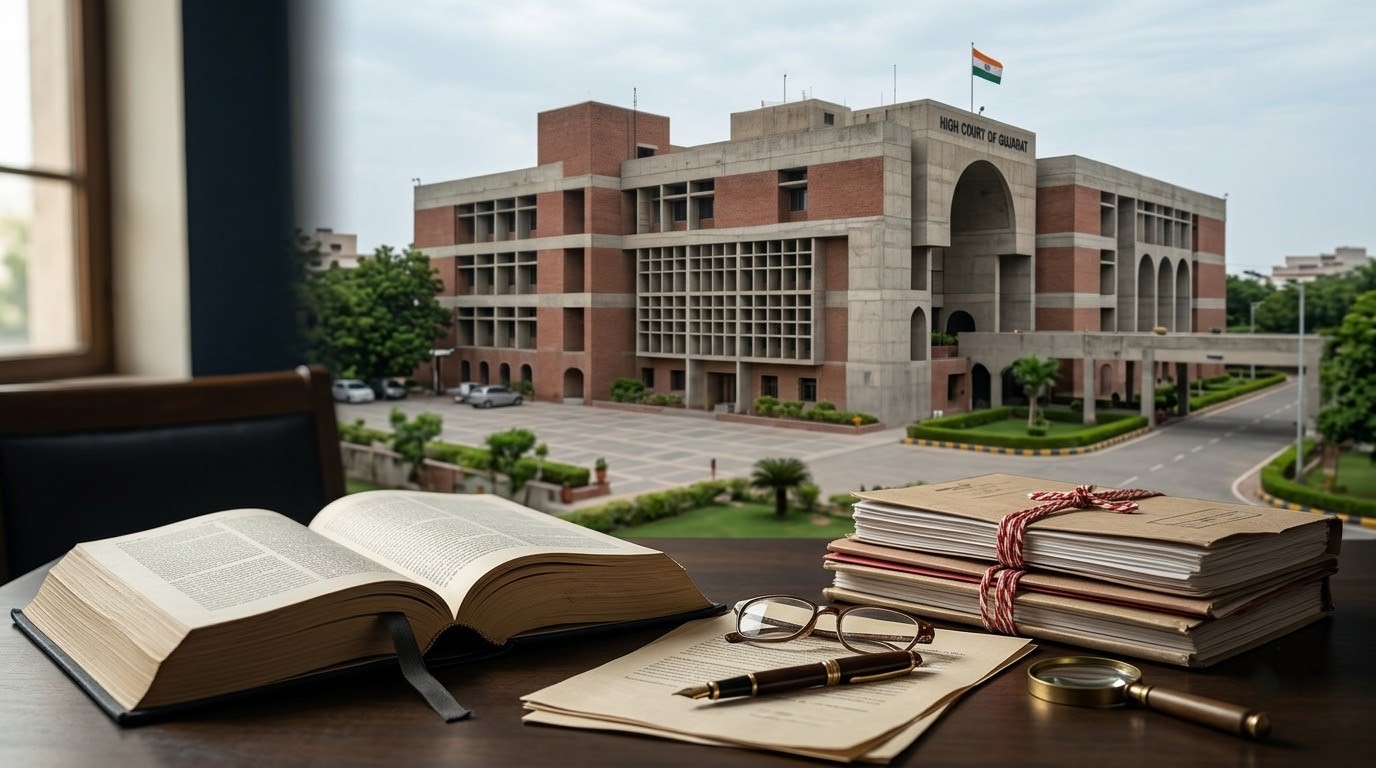
The Gujarat High Court has upheld the dismissal of a judicial officer, ruling that association with a practicing advocate and acceptance of a mobile phone from her constituted improper conduct warranting removal from service. In a separate ruling, the court held that income tax returns filed posthumously can be considered for determining the income of a deceased person in motor accident compensation claims. The court also granted bail to an accused in the Re-NEET examination paper leak case, noting the filing of the chargesheet.
Judicial Officer Dismissal Upheld For Improper Conduct
In Amratlal Narendrabhai Vizoda v. State of Gujarat & Anr. (R/Special Civil Application No. 5211 of 2017), the High Court examined the disciplinary proceedings against a judicial officer who was found to be in communication with a practicing advocate. The officer had accepted a mobile phone from the advocate and utilised it. The court held that such conduct—associating and communicating with a member of the bar and accepting a gift in the form of a phone—fell squarely within the definition of improper conduct for a member of the judiciary. The bench concluded that the charges were substantiated and the penalty of dismissal was proportionate, thereby upholding the order of removal from service. The citation for the judgment is 2026 LiveLaw (Guj) 268.
Posthumous Tax Returns Admissible For Accident Compensation
In Heenaben & Ors. v. Sarosh Jahangirji Dumasiya & Anr. (R/First Appeal No. 537 of 2016), the court addressed the admissibility of income tax returns filed after the death of an accident victim. The Motor Accident Claims Tribunal had awarded compensation of Rs 6,01,400 with interest at 9 per cent per annum, disregarding the posthumous returns. The High Court set aside this restrictive approach, observing that there is no absolute bar against considering such returns while computing the deceased's income. The court enhanced the compensation by Rs 6,16,342, directing the revised amount to be paid to the family of the deceased. The decision is cited as 2026 LiveLaw (Guj) 269.
Can Posthumously Filed Income Tax Returns Be Used To Calculate Deceased's Income For Motor Accident Compensation?
Yes. The Gujarat High Court held that no hard and fast rule prevents courts from considering income tax returns filed after a person's death when assessing their income for motor accident compensation. Such returns are admissible evidence for determining the multiplier and the just compensation payable to legal heirs.
Bail Granted In Re-NEET Paper Leak Case
In Sumersing Bharatlal Meena v. State of Gujarat (R/Criminal Misc. Application No. 21167 of 2026), the High Court granted regular bail to an accused alleged to have advertised access to Re-NEET examination papers on Telegram channels. The court noted that the investigation had culminated in the filing of a chargesheet and the prosecution failed to demonstrate specific circumstances necessitating continued incarceration. With the probe effectively complete, the court found no justification to prolong pre-trial detention. The order is reported at 2026 LiveLaw (Guj) 270.
Case Title | Citation | Core Holding |
|---|---|---|
Amratlal Narendrabhai Vizoda v. State of Gujarat & Anr. | 2026 LiveLaw (Guj) 268 | Judicial officer's dismissal upheld for communicating with practicing advocate and accepting phone; constitutes improper conduct. |
Heenaben & Ors. v. Sarosh Jahangirji Dumasiya & Anr. | 2026 LiveLaw (Guj) 269 | Posthumous income tax returns admissible for computing deceased's income; compensation enhanced by Rs 6,16,342. |
Sumersing Bharatlal Meena v. State of Gujarat | 2026 LiveLaw (Guj) 270 | Bail granted in Re-NEET paper leak case; chargesheet filed, no grounds for continued detention. |
The October 2026 digest of the Gujarat High Court further includes judgments on diverse subjects such as anticipatory bail conditions, maintenance under Section 125 CrPC, waqf property disputes, and insurance liability. These rulings collectively illustrate the court's application of procedural safeguards, evidentiary standards, and disciplinary norms across civil, criminal, and service jurisprudence.