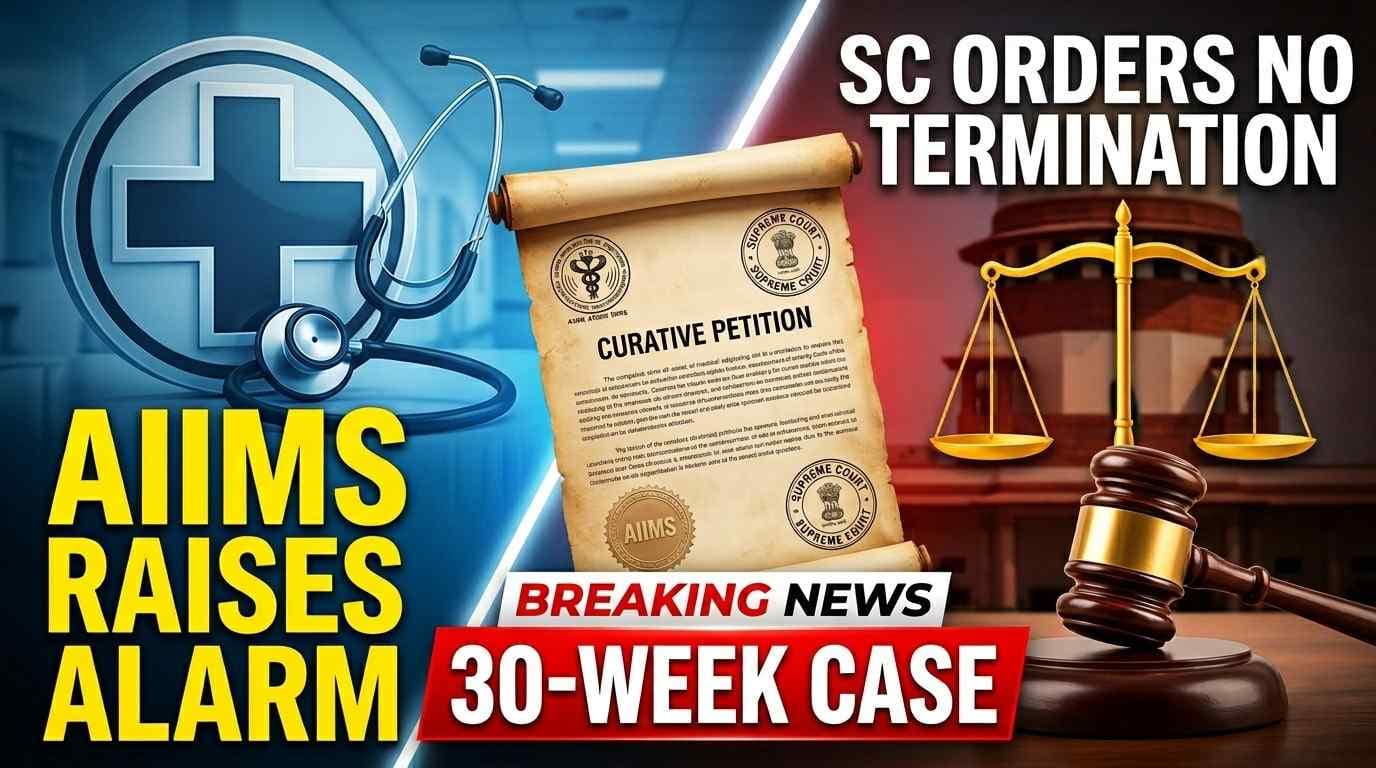
In a case that brings the complexities of reproductive rights and medical safety to the forefront, the All India Institute of Medical Sciences (AIIMS) has moved a curative petition in the Supreme Court. The premier medical institute is challenging an earlier judicial order that permitted a 15-year-old girl to terminate her pregnancy, which has now reached the 30-week mark. AIIMS’s intervention highlights a critical medical concern: at such an advanced stage, the procedure may pose severe lifelong risks to the young minor.
The Supreme Court had initially granted permission for the termination, considering the age and vulnerability of the minor. However, a team of doctors at AIIMS, after evaluating the patient, raised alarms regarding the potential for physical and psychological complications. They argued that ending a pregnancy at 30 weeks is significantly different from earlier stages and could lead to long-term health issues for the 15-year-old, whose body and mind may not be equipped to handle the trauma of the procedure.
Taking note of these medical warnings, the Supreme Court has asked AIIMS to provide comprehensive counseling to the girl’s parents. The objective is to ensure they fully grasp the medical and emotional implications of either continuing with or terminating the pregnancy at this stage. This directive underscores the delicate balance the judiciary must maintain between upholding an individual’s choice and ensuring their safety under medical advice.
The case also touches upon the legal boundaries of the Medical Termination of Pregnancy (MTP) Act. While recent amendments have expanded the window for termination under specific circumstances, the 30-week threshold remains a high-risk zone. AIIMS’s petition serves as a professional advisory that, in some instances, "legal permission" may collide with "medical best interests," requiring a nuanced re-evaluation of the facts.
Crucially, the Supreme Court emphasized that the final decision should rest with the person concerned—in this case, the minor girl. By highlighting the necessity of "informed consent," the Court is ensuring that the minor and her guardians are not just aware of the legal right to terminate, but also the physical reality of the medical consequences described by the AIIMS specialists.
This legal battle is not just about a single procedure; it is about how the law navigates the intersection of age, consent, and advanced medical science. As the curative plea is heard, it raises vital questions about the point at which medical risk might outweigh the initial legal grounds for termination.
For medical professionals and legal experts alike, the outcome will provide much-needed clarity on the role of specialized medical opinions in constitutional matters. It reminds us that behind every legal landmark are real individuals facing life-altering decisions where the "right" answer is rarely simple.
As AIIMS proceeds with the directed counseling, the focus remains on the well-being of the 15-year-old. The Supreme Court’s eventual decision will likely set a major precedent for how similar high-stakes medical cases involving minors are handled in the future, prioritizing safety and informed agency above all else.