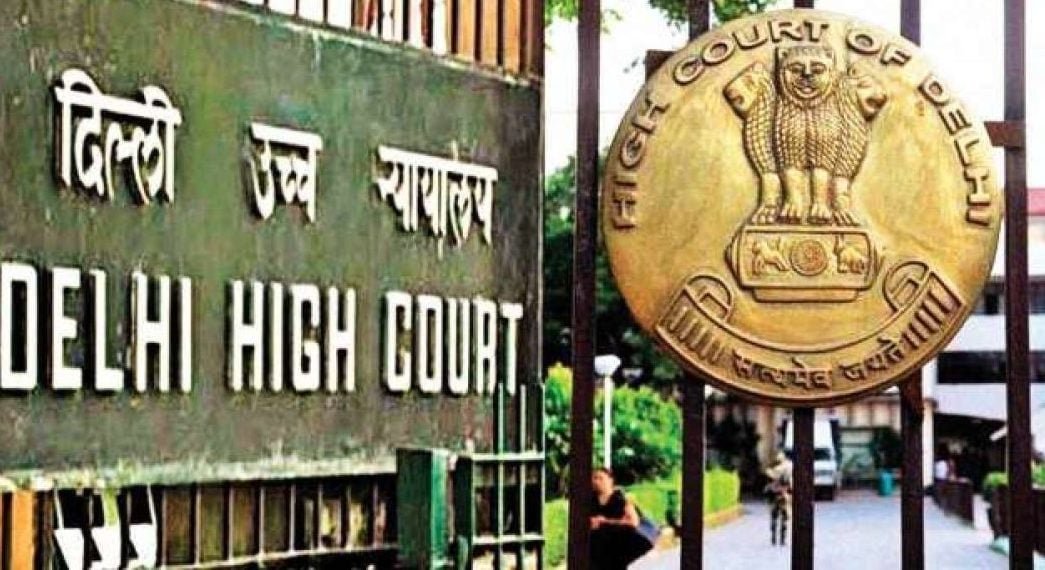
The Delhi High Court recently considered a petition challenging the decision of a private school to detain a minor student belonging to the Economically Weaker Section (EWS) category in Class V after he failed to clear both the annual examination and a subsequent re‑examination. The petition, filed by the student’s grandmother, contended that the school’s action violated Section 16 of the Right of Children to Free and Compulsory Education Act, 2009 (RTE Act). Justice Jasmeet Singh, presiding over the matter, examined the statutory provision and the factual matrix presented by the parties.
According to the school’s submissions, the student had consistently secured poor marks in earlier classes. He obtained only twelve percent in the Class III examinations and seven percent in Class IV, yet was promoted to the next grade. In Class V, he scored seven percent in the final examination and eight percent in the re‑examination. The school principal, appearing via video conference, stated that the student was offered two additional chances to sit for fresh examinations. He did not avail the first opportunity and secured twelve percent in the second attempt. Furthermore, the student failed to attend remedial classes arranged by the school for his improvement.
The petitioner argued that Section 16 of the RTE Act mandates automatic promotion up to Class VIII and therefore prohibits detention. The Court, however, observed that the provision must be read in a meaningful manner. Justice Jasmeet Singh noted that the legislative intent behind Section 16 is to afford a larger latitude to children from economically weaker backgrounds so that they can progress in their academic careers, but this latitude does not extend to promoting a child who has not grasped the fundamentals of the prescribed subjects.
The Court emphasized that the student had been given sufficient opportunities to improve his performance. It stated, “To my mind, in the factual matrix of the present case, the petitioner has been afforded enough opportunities to improve and secure adequate marks to be promoted. However, the petitioner somehow has not been able to overcome the hurdles and qualify the same.” The judgment clarified that the student was not being expelled or removed from the institution; he was merely being asked to repeat Class V to enable him to understand and comprehend basic subjects such as Mathematics, English, Environmental Studies and Hindi.
Taking into account the student’s academic record, the opportunities provided, and his inability to meet the required standards despite those opportunities, the Court held that there was no violation of the RTE Act. It directed that the petitioner would continue his education in the same school, repeat Class V, and retain all entitlements available to him under the EWS category. The order affirmed that the student’s academic career would not be disrupted, as he would remain enrolled in the institution while receiving another chance to attain the necessary competence.
The decision underscores the judiciary’s approach to balancing the protective intent of the RTE Act with the requirement that students achieve minimum learning outcomes. By insisting that Section 16 be interpreted meaningfully rather than mechanically, the Court reinforced the view that the right to education includes a qualitative dimension, particularly for disadvantaged learners who need adequate grasp of core concepts before advancement. The ruling also clarifies that schools may detain EWS students when objective evidence shows repeated failure to meet academic benchmarks, provided that the student has been afforded reasonable remedial opportunities and continues to receive the benefits of the EWS quota.
Appearances in the matter were made by Mr. Khagesh B Jha, Ms. Shikha Shrama Bagga and Ms. Shivani for the petitioner, and by Mr. Dhruv Rohatgi, Panel Counsel for the Government of NCT of Delhi, along with Ms. Chandrika Sachdeva, Mr. Dhruv Kumar and Ms. Punita, the school principal appearing via video conference, for the respondent school.