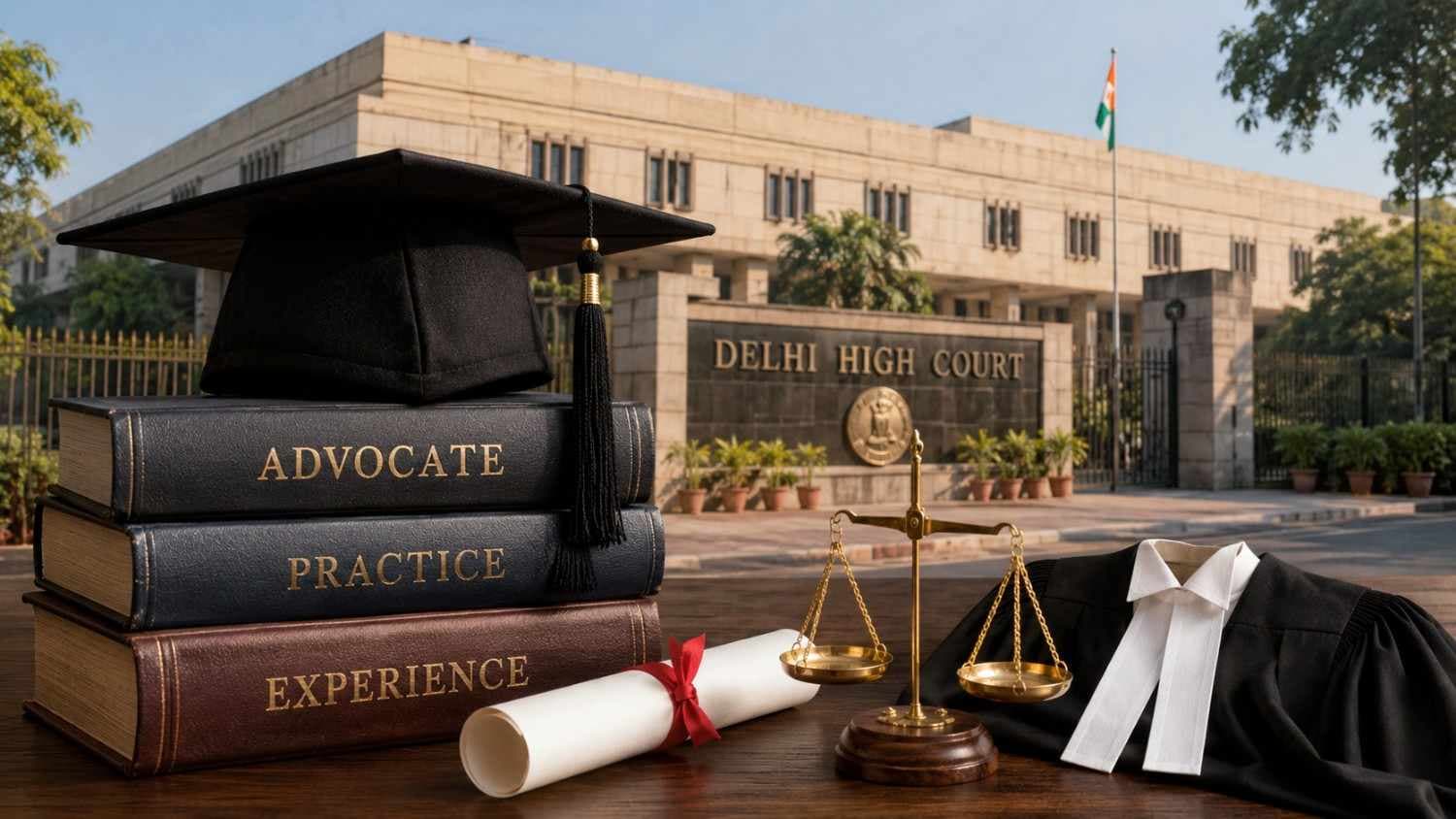
The Delhi High Court has permitted a lawyer enrolled in the three-year LL.M. course at the Faculty of Law, University of Delhi, to appear for the second semester examination after he was previously barred due to insufficient attendance. The petitioner, Aditya Singh, had an attendance of 43.5% against the required 67.5%, attributing the shortfall to his professional engagements as a practicing lawyer during court hours, particularly noting that classes are scheduled at 12 noon, a peak time for judicial proceedings.
The court, presided over by Justice Jasmeet Singh, observed that the classes for the LL.M. three-year course are conducted at 12 noon and that students pursuing the course are not required to suspend their Bar licence during the programme. The bench stated that the very purpose of the three-year LL.M. course is to enable students to continue practice before the courts while simultaneously pursuing their Masters programme.
The petitioner’s counsel submitted that the lawyer was willing to execute a bond, affidavit, and undertaking to complete the attendance shortfall in subsequent semesters and to clear any arrears of fees, if payable. The court found this proposal fair and permitted the petitioner to continue with his LL.M. course, subject to fulfilling these undertakings.
The court clarified that the order is being passed in the peculiar facts and circumstances of the present case and should not be construed as a general precedent for relaxing attendance requirements. With respect to other petitioners in the matter, the court noted that since no one was representing them, the petition was dismissed as regards those individuals. The plea was disposed of accordingly.
The case, titled ADITYA SINGH & ORS. v/s UNIVERSITY OF DELHI & ORS. W.P.(C) 9643/2024 & CM APPL. 23421/2026, arose from a plea seeking to prohibit Delhi University from conducting the second semester examination of the three-year LL.M. course (2023-2026 batch) without compliance with the mandatory 90 hours of classes per subject, and to quash the list of students detained from sitting in the exams.
The bench emphasized that the permission granted was specific to the petitioner’s situation, taking into account his professional obligations as an advocate and his willingness to remedy the deficiency. The court did not interfere with the university’s attendance policy in general but allowed flexibility in an exceptional case where the course’s design aligns with the continuation of legal practice.
The order underscores the legislative and academic intent behind the three-year LL.M. programme, which is structured to accommodate working legal professionals seeking advanced qualifications without abandoning their practice. The court’s reasoning highlights the importance of harmonizing academic requirements with the realities of professional legal employment, particularly when class timings coincide with peak court hours.
The court did not express any opinion on the validity of the attendance requirement itself but focused on enabling the petitioner to proceed with his studies under conditions that ensure future compliance. The undertaking to complete attendance shortfalls and pay any dues was treated as a sufficient safeguard by the court.
The disposal of the plea as regards other petitioners, due to lack of representation, was noted without further elaboration. The court’s observations were confined to the case before it and did not extend to a broader critique or endorsement of the university’s examination or attendance policies.
The judgment reflects a pragmatic approach to balancing academic rigor with professional realities, affirming that the three-year LL.M. course is intended to permit advocates to pursue higher education while continuing to appear before courts.