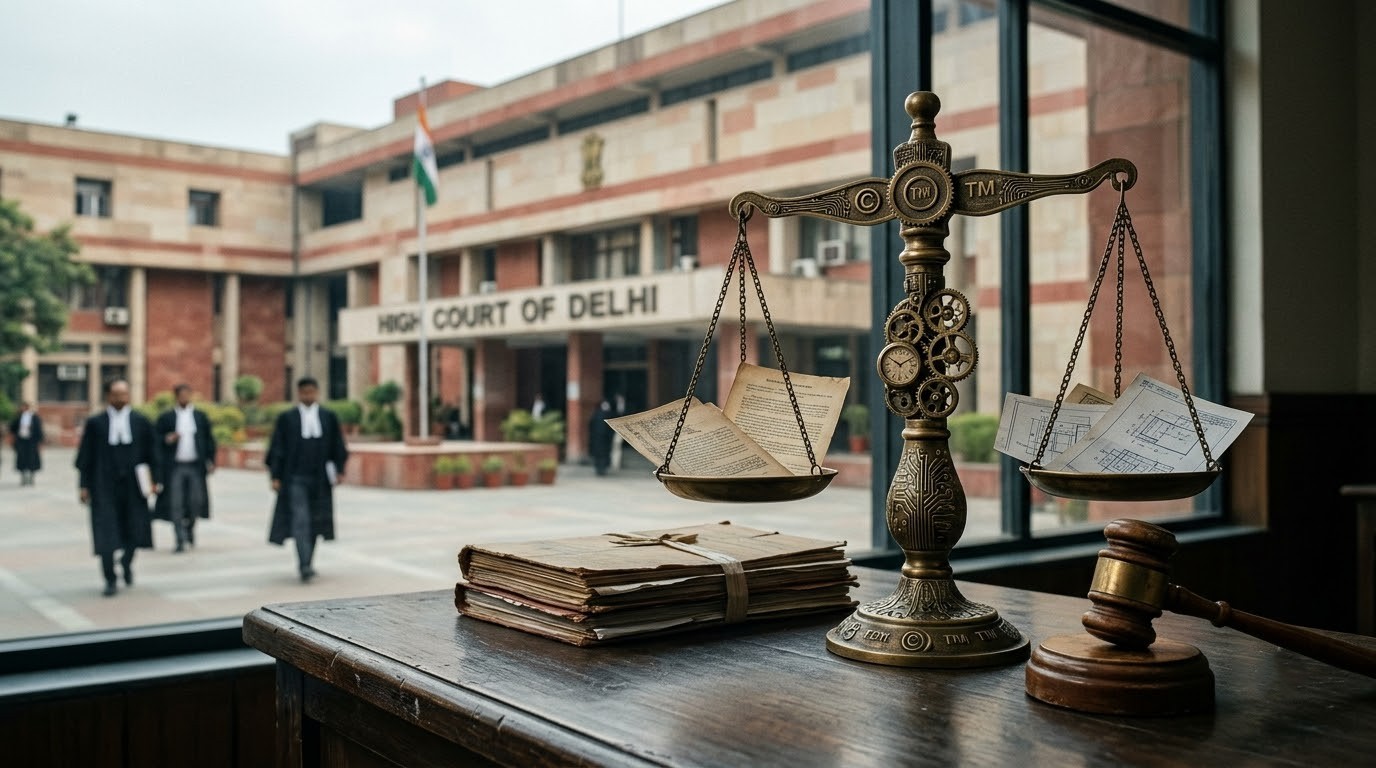
Delhi High Court Justice Prathiba M. Singh has underscored the necessity of establishing dedicated intellectual property (IP) courts across India to ensure uniform adjudication and consistent jurisprudence. Speaking at a discussion on Shaping the Legal Architecture of Viksit Bharat 2047, organised by the University of Chicago Center in Delhi, the Nani Palkhivala Foundation, and the General Counsels' Association of India (GCAI), Justice Singh advocated for amending the Commercial Courts Act to create specialised IP courts at both the district and High Court levels.
Why does Justice Singh advocate for dedicated IP courts in India?
Justice Singh stated that dedicated IP courts are essential to facilitate focused judicial training and the development of uniform jurisprudence across the country. She emphasised that the current framework lacks consistency, and specialised courts would address this gap by building expertise in complex IP matters.
Justice Singh highlighted three key developments responsible for India's progress in IP enforcement: innovative judicial remedies, the enactment of the Commercial Courts Act, and the establishment of Intellectual Property Divisions in High Courts. She clarified that while the judiciary cannot innovate laws or regulations, it can innovate remedies within the existing legal architecture to address evolving techno-economic challenges. As examples, she cited remedies involving well-known trademarks, trans-border reputation, and online infringement, specifically mentioning Dynamic injunctions and Dynamic+ injunctions as judicial innovations.
Proposal for a National Judicial Stack
Addressing the broader issue of judicial efficiency, Justice Singh proposed the creation of a national Judicial Stack, modelled on the India Stack digital infrastructure. She noted that providing Application Programming Interface (API) access to judicial data could enable technological innovation, facilitate research, and support data-driven judicial reforms. Justice Singh pointed out that the current pendency of five crore cases in courts does not account for backlogs in tribunals and revenue authorities, making technological intervention critical.
Justice Singh, who chairs the World Intellectual Property Organization (WIPO) Advisory Board of Judges, referenced the ninth WIPO Intellectual Property Judges Forum held in Geneva on October 14 and 15. The forum saw registrations from over 970 judges worldwide, with 167 participating in person. Discussions focused on the use of Artificial Intelligence in judiciaries. Justice Singh revealed that in response to a questionnaire at the forum, 52 percent of judges expressed interest in using AI to draft judgments.
Trade Secrets Legislation and Civil Procedure Reforms
Justice Singh called for a dedicated law to protect trade secrets, aligning with recommendations made by the Law Commission of India. She stressed the growing importance of such protection in the age of Artificial Intelligence, where data holds significant commercial value. She also referred to the Supreme Court's 2013 Novartis judgment as a landmark development in pharmaceutical patent jurisprudence.
On civil litigation reforms, Justice Singh suggested extending the procedural innovations introduced by the Commercial Courts Act to ordinary civil suits. She argued that the efficiencies achieved in commercial disputes, such as strict timelines and case management, should benefit the wider civil justice system.
Regarding the Goods and Services Tax (GST) regime, Justice Singh acknowledged the increase in GST collections but flagged the need for quicker resolution of GST refund disputes. She observed that the large volume of writ petitions filed seeking refunds indicates systemic delays that require urgent attention.
Area | Current Status / Observation | Justice Singh's Recommendation |
|---|---|---|
IP Adjudication | IP Divisions exist in some High Courts; no uniform district-level mechanism | Amend Commercial Courts Act to establish dedicated IP courts at district and High Court levels |
Judicial Infrastructure | Five crore cases pending in courts (excl. tribunals/revenue authorities) | Create national Judicial Stack with API access for data-driven reforms and AI integration |
Trade Secrets Protection | No dedicated statute; Law Commission recommended legislation | Enact standalone trade secrets law to address data protection in AI era |
Civil Procedure | Commercial Courts Act innovations limited to commercial disputes | Extend procedural reforms (timelines, case management) to all civil cases |
GST Refunds | High volume of writ petitions due to delayed refunds | Expedite refund resolution mechanism to reduce litigation burden |
Justice Singh's remarks collectively underscore the imperative for the judiciary and legislature to keep pace with emerging technologies while strengthening the enforcement architecture for intellectual property rights and enhancing the overall efficiency of the justice delivery system.