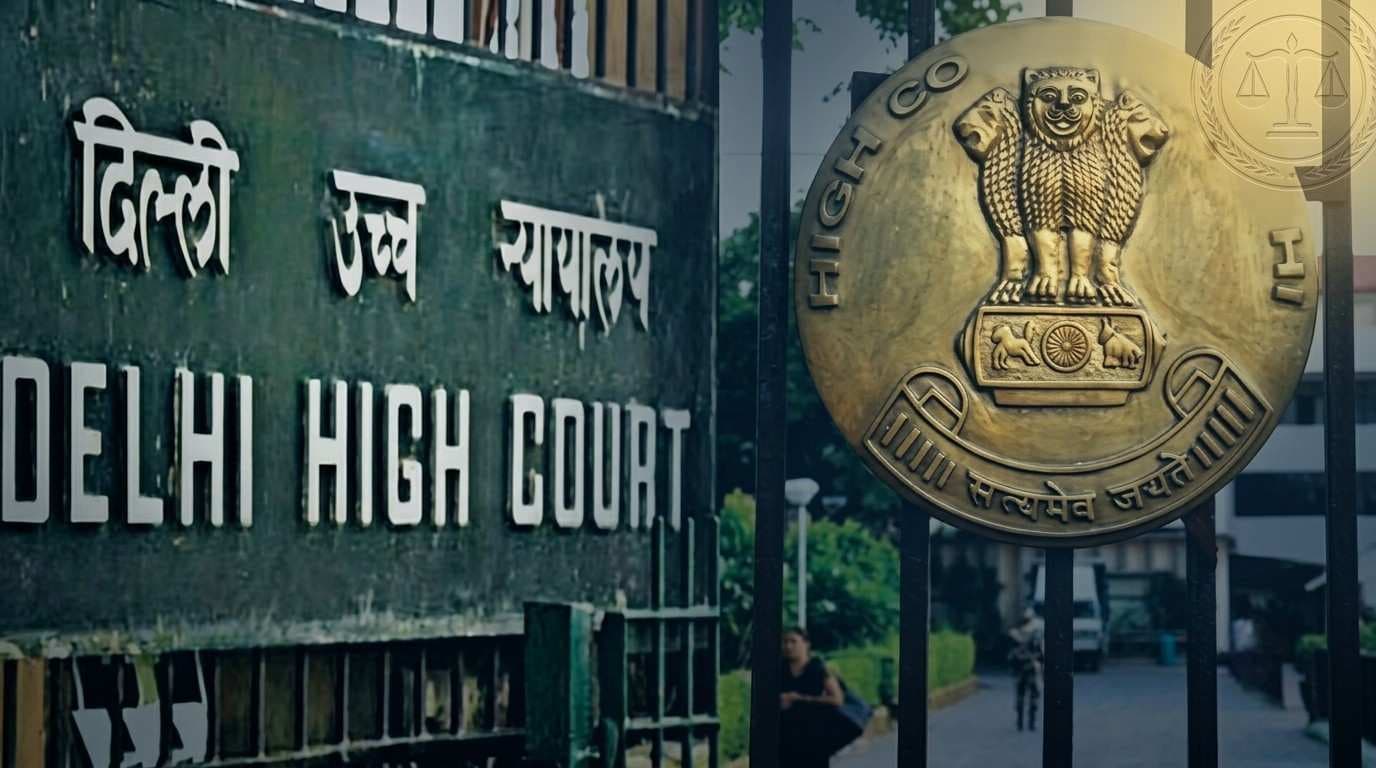
The Delhi High Court, sitting as a Division Bench of Justices C. Hari Shankar and Om Prakash Shukla, has held that an employee cannot claim the salary and emoluments of a higher post merely because she allegedly performed duties associated with that post in the absence of a formal appointment. The Court was adjudicating a writ petition filed by the National Institute of Public Cooperation and Child Development (NIPCCD) challenging an order of the Central Administrative Tribunal (CAT) that had directed payment of the salary and other benefits attached to the post of Deputy Director to an employee who had served as a Research Assistant.
The respondent‑employee contended that during her tenure as a Research Assistant she had discharged supervisory functions equivalent to those of a Deputy Director and was therefore entitled to the pay and benefits attached to that post. Rejecting this contention, the Bench observed that service jurisprudence recognises no principle entitling a person to the pay scale‑appointed employee to the higher pay scale solely on the ground that she or he was discharging the duties of the said post.
The Court quoted its own observation: “even if a person holding a particular post is made, by her or his employer, to do the work of a higher post, that by itself does not ipso facto entitle the person to the pay of the higher post, in the absence of any formal order.” It further clarified that the doctrine of “equal pay for equal work” cannot be invoked in such circumstances to direct a person substantively appointed to a particular post in a particular pay scale to be granted the scale of a higher post.
The Bench elaborated on the limited situations in which the law does entitle a substantively appointed employee to higher pay. According to the Court, the only circumstances where such entitlement arises are where a person is formally appointed to hold charge of the duties of a higher post, or where there is a substantive promotion effected through a duly issued order, or where the employee is placed on deputation or assigned to a higher post under a specific directive. In the present case, the Court noted that no order had ever been issued appointing the respondent as Deputy Director or even directing her to hold charge of that post.
Consequently, the Division Bench quashed the CAT order directing payment of Deputy Director’s salary and benefits. In addition to setting aside the tribunal’s direction, the Court directed the respondent to refund the amount of ₹20 lakh that had already been paid to her, to be repaid in ten bi‑monthly instalments.
The appearance for the petitioners was led by Dr. Monika Arora, Central Government Standing Counsel, assisted by Mr. Subhradeep Saha, Ms. Anamika Thakur and Mr. Abhinav Verma, Advocates. The respondent appeared in person. The case is recorded as National Institute Of Public Co‑Operation & Child Development And Anr v. Tejinder Kaur, W.P.(C) 2330/2014.
The judgment reinforces the principle that substantive appointment and formal orders are prerequisites for claiming higher remuneration, and that mere performance of higher‑level duties, without the corresponding procedural formalities, does not create a legal entitlement to the higher pay scale.