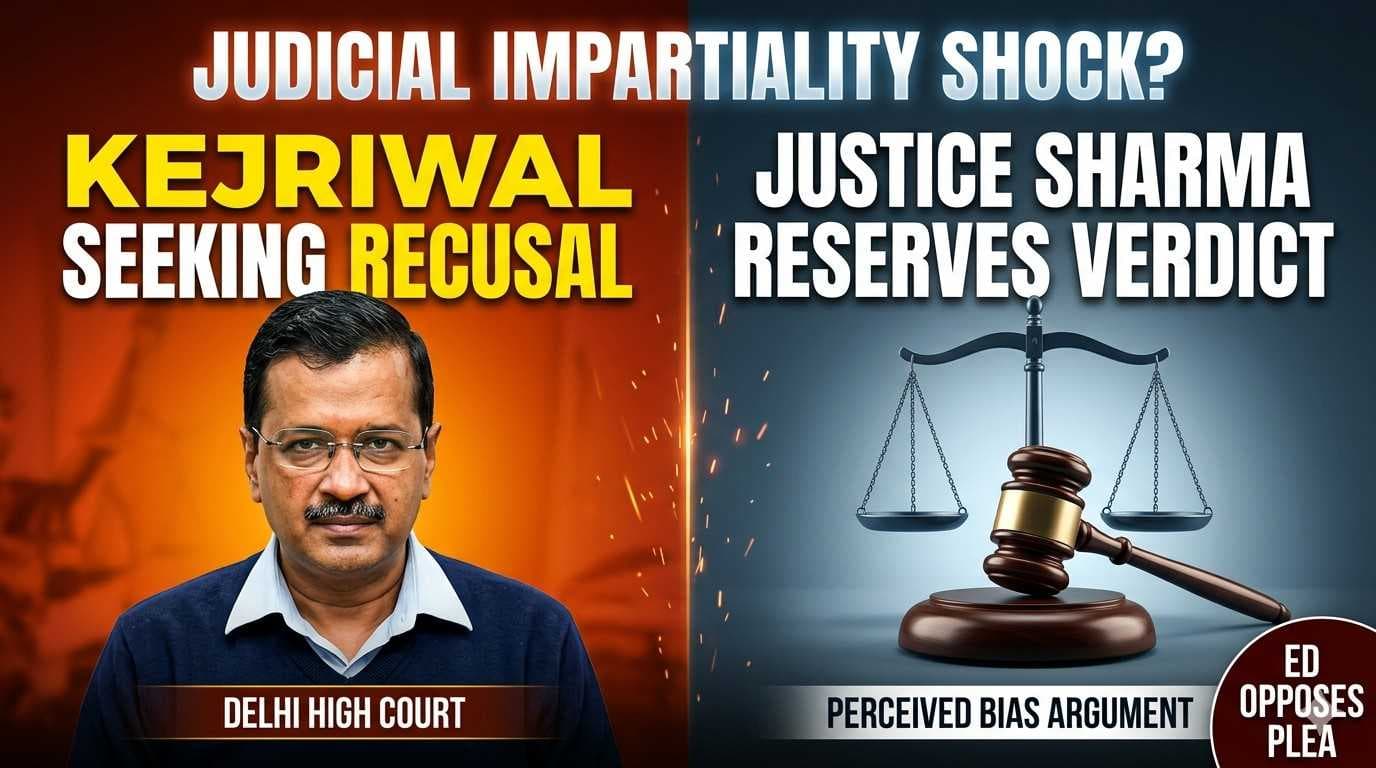
Justice Swarana Kanta Sharma of the Delhi High Court has reserved her verdict on an application filed by Arvind Kejriwal seeking her recusal from hearing his petitions. The challenge arises from a specific legal argument regarding judicial impartiality in cases where a judge’s family members may be associated with a litigant or the subject matter of the dispute.
During the proceedings, the petitioner’s counsel raised concerns regarding the potential for perceived bias, suggesting that the "lived experience" and professional associations of a judge's children could inadvertently influence the perception of neutrality. The application argued that for the sake of maintaining absolute public confidence in the judiciary, especially in high-stakes political matters, a judge should step away if there is any remote connection that could be questioned by a reasonable observer.
Justice Sharma, however, questioned the basis of the plea, observing that the mere professional independence or career choices of a judge's adult children should not automatically serve as grounds for recusal. She noted that judges are bound by their constitutional oath to remain unbiased and that accepting such "unsubstantiated" apprehensions could set a problematic precedent, allowing litigants to "judge-shop" by citing the personal lives of a judge's family members.
The Enforcement Directorate (ED) strongly opposed the recusal plea, labeling it a "dilatory tactic" designed to delay the core proceedings. The federal agency argued that the petitioner had failed to show any direct conflict of interest and that the high standards for recusal—typically involving a personal financial stake or a direct prior involvement in the case—were not met in this instance.
The court has now concluded hearing arguments from both sides and is expected to deliver its formal order on the recusal application shortly. The outcome is highly anticipated as it will clarify the boundaries of "perceived bias" concerning the families of presiding officers in the Indian higher judiciary.