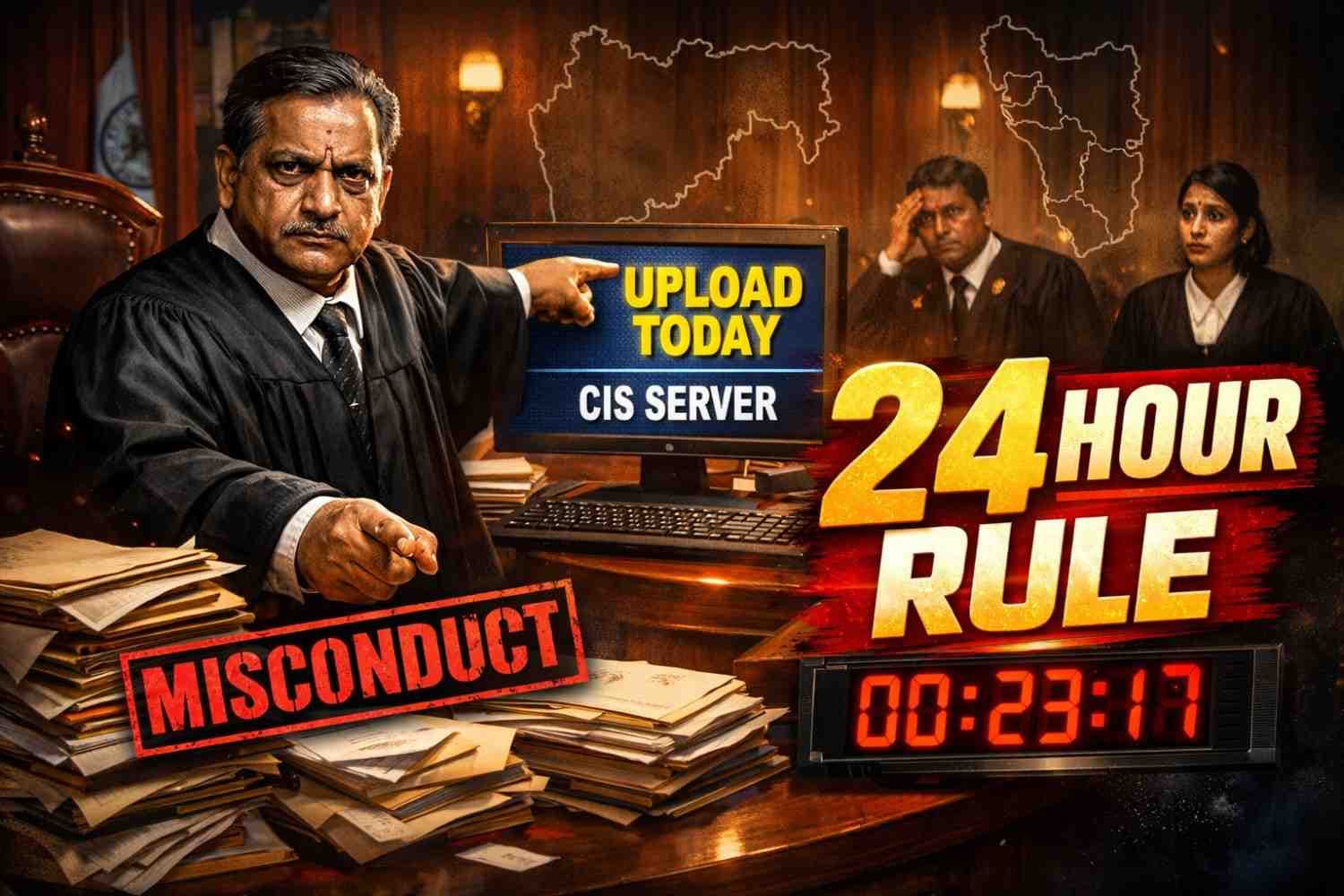
In a significant move to enhance transparency and accountability within the legal system, the Bombay High Court has issued a strict mandate to judicial officers across Maharashtra and Goa. The directive requires all judges to upload their orders and judgments to the Case Information System (CIS) server on the very same day they are pronounced. This initiative aims to modernize the judicial process, ensuring that litigants and the public have immediate access to court decisions, thereby reducing delays and administrative gaps.
The High Court has made it clear that non-compliance will carry heavy consequences. Any judicial officer who fails to upload a judgment within the 24-hour window must provide a detailed explanation for the delay. More severely, the circular warns that persistent failure to meet these timelines will be classified as "misconduct touching to the integrity of the judicial officer." To ensure strict adherence, officers are now required to submit monthly certificates confirming timely uploads, with any discrepancies potentially leading to immediate suspension and departmental inquiries.
This directive stems from a series of inspections that revealed various irregularities in subordinate courts, including inconsistent court timings and the practice of reserving judgments for unnecessarily long periods. By formalizing the digital upload process, the High Court seeks to eliminate the habit of retaining case files long after a matter has been disposed of. The move is designed to streamline case management and ensure that the recording of evidence and delivery of justice follow a predictable and professional schedule.
Ultimately, these guidelines represent a firm stance on judicial discipline and the integration of technology in the courtroom. By placing the responsibility directly on the judicial officers and requiring oversight from Principal District and Sessions Judges, the Bombay High Court is pushing for a more efficient legal framework. This shift not only prioritizes the rights of the litigants but also reinforces the integrity of the judiciary by making the delivery of justice a more prompt and transparent digital reality.