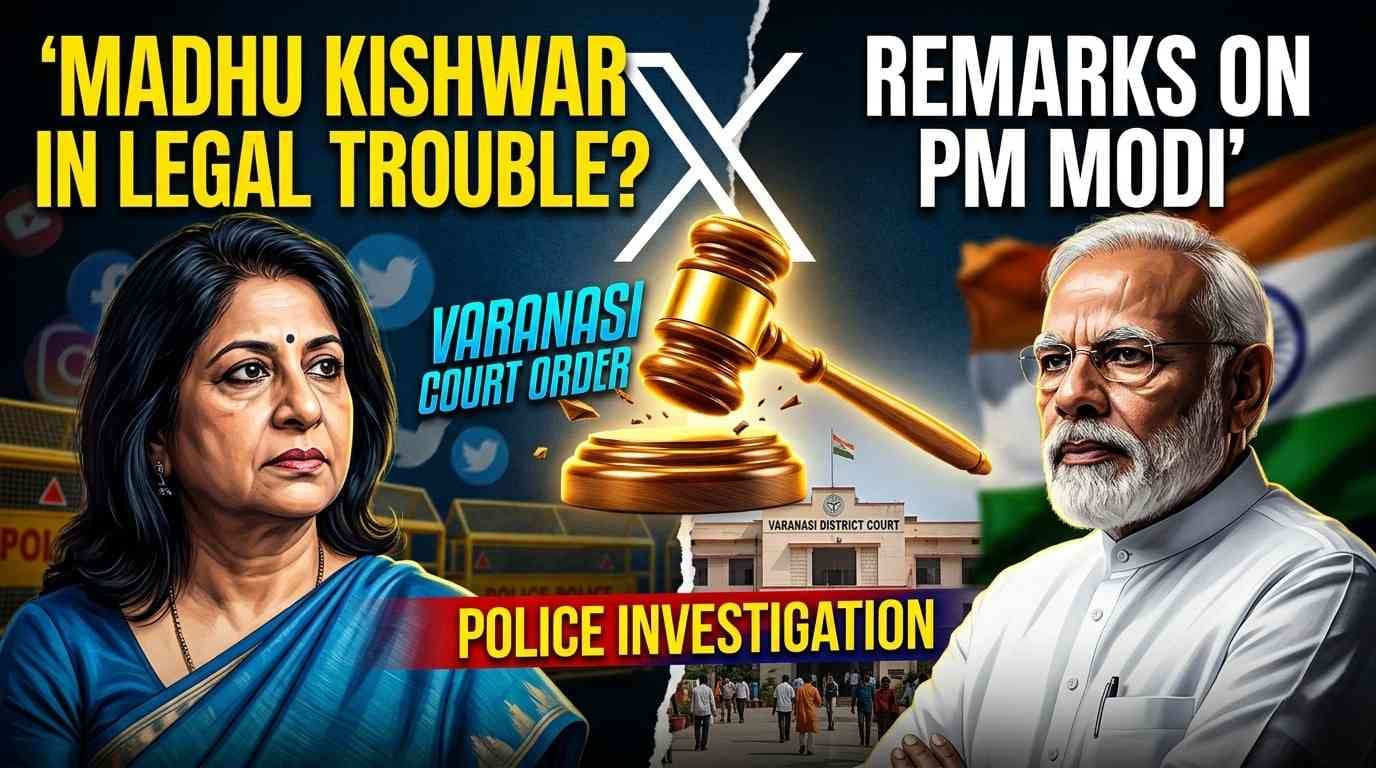
A Varanasi court has directed the local police to submit a factual report regarding a criminal complaint filed against academic and activist Madhu Purnima Kishwar. The complaint centers on a post shared by Kishwar on the social media platform X (formerly Twitter), which allegedly contained derogatory or misleading remarks concerning Prime Minister Narendra Modi.
The matter was brought before the court by a local advocate or concerned citizen (depending on the specific complainant's filing), who argued that the social media post was intended to incite public disharmony and tarnish the image of the Prime Minister. The petitioner sought the registration of an FIR under relevant sections of the Bharatiya Nyaya Sanhita (BNS) and the Information Technology Act, claiming that such statements by a high-profile public figure could lead to a breach of peace.
In its order, the court did not immediately direct the registration of an FIR but instead opted for a more measured approach by invoking its powers to seek a police report. This report will require the concerned police station to investigate the authenticity of the post and determine whether a cognizable offense is made out. This step is a standard procedural safeguard to prevent the immediate weaponization of criminal law in matters involving social media speech.
Madhu Kishwar has faced similar legal challenges in the past regarding her social media activity, often being accused of sharing unverified or inflammatory content. Her defense has typically centered on the right to free speech and the critique of political figures. However, the Varanasi court’s current directive indicates that the judiciary is taking a serious look at the potential legal boundaries of such digital expressions, especially when they target high-ranking constitutional authorities.
The police have been given a specific timeframe to conduct their preliminary inquiry and submit their findings to the court. Once the report is filed, the court will decide whether there are sufficient grounds to proceed with a formal criminal trial or if the complaint should be dismissed. This development highlights the increasing judicial scrutiny over political discourse on social media and the role of local courts in regulating digital conduct.
Ultimately, the outcome of this case will hinge on the interpretation of "fair criticism" versus "criminal defamation" or "incitement." As the Varanasi police begin their investigation, the case remains a significant point of interest for legal observers tracking the intersection of political activism, social media regulations, and the Indian penal system.