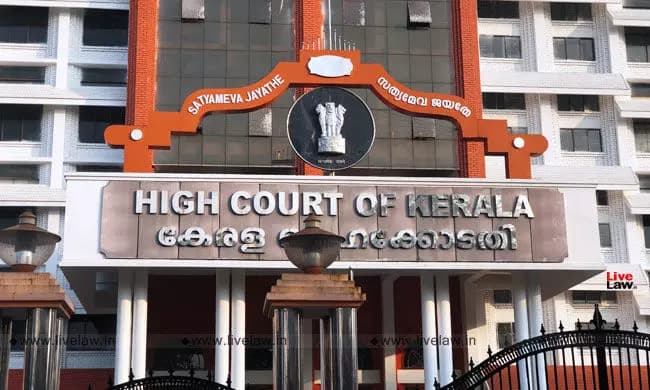
The Kerala High Court on Wednesday, 8 July 2026, issued notice to the State government seeking its response to four public interest litigations that challenge the constitution of the State Waqf Board. The matter was heard by a Division Bench comprising Chief Justice Soumen Sen and Justice Syam Kumar V.M. After hearing the submissions, the Bench granted the State a period of seven days to file a detailed counter affidavit. The Court clarified that, at present, no interim order has been passed restraining the Waqf Board from continuing its activities or passing orders.
Advocate Lakshmi Sreedhar, representing one of the petitioners, informed the Court that despite allegations of improper constitution, the Board continues to function and issue decisions, which may have adverse consequences for affected communities. In response, Justice Sen observed orally that the Court would examine the issue and, if it is found that the Board is acting without jurisdiction, its actions would be liable to be annulled.
The petitions collectively contend that the Waqf Board, as presently constituted, violates the mandatory provision for inclusion of non‑Muslim members introduced by the Waqf (Amendment) Act, 2025. Section 14(1) of the amended Act requires that the Board include persons from non‑Muslim communities. The petitioners argue that the current nomination process has omitted such representation, thereby rendering the Board’s composition unlawful.
One of the petitions, filed by the Assembly of Christian Trust Services (ACTS), raises several specific grounds. ACTS challenges the exclusion of Shia, Bohra and Aghakhani communities from the Board, asserting that the law mandates their inclusion. The organisation further contends that the Board’s inclusion of a CPI(M) politician and former MLA, Kunhammed Kutty Master, is problematic and seeks clarification on the basis of his nomination. ACTS has prayed for a direction to the State government to issue a fresh notification nominating new members to the Board in strict conformity with the statutory requirements, within a timeframe to be fixed by the Court.
In the same petition, ACTS also challenges the Board’s act of uploading details of the disputed Munambam land onto the Centre’s UMEED Portal (Unified Waqf Management, Empowerment, Efficiency and Development Portal). The petition asserts that, under the Waqf Act, only the muttawali of a waqf property is authorised to file such particulars on the portal. Consequently, the Board’s action is alleged to be ultra vires and potentially prejudicial to the Hindu and Christian communities residing in the Munambam area.
A separate public interest litigation initiated by BJP leader Shone George seeks two principal reliefs. First, it requests the Court to direct the State government to nominate the two required non‑Muslim members to the Waqf Board without delay. Second, it asks for a declaration that the present functioning of the Waqf Board constitutes a violation of Section 14(1) of the Waqf (Amendment) Act, 2025. The petitioner contends that, until the statutory composition is achieved, any order passed by the Board lacks legal validity.
Another petition, which mirrors the arguments raised in the earlier filings, additionally highlights the inclusion of Kunhammed Kutty Master in the Board as a point of contention. The petitioner submits that his appointment does not satisfy the statutory criteria for non‑Muslim representation and therefore contributes to the alleged illegality of the Board’s constitution.
The Court had previously called for the State’s response and had directed the filing of an affidavit. The latest order reiterates that direction and fixes a one‑week window for compliance. The Bench made clear that it has not granted any interim stay on the Board’s operations, leaving the existing status quo undisturbed pending the State’s reply and further consideration of the matter.
The proceedings underscore the tension between the statutory mandate for communal representation in the Waqf Board and the actual composition as notified by the State. The Court’s forthcoming examination will focus on whether the Board’s actions, particularly the uploading of waqf property details on the UMEED Portal, are within its jurisdiction, and whether the omission of prescribed non‑Muslim members renders the Board’s constitution invalid under the amended Waqf Act.