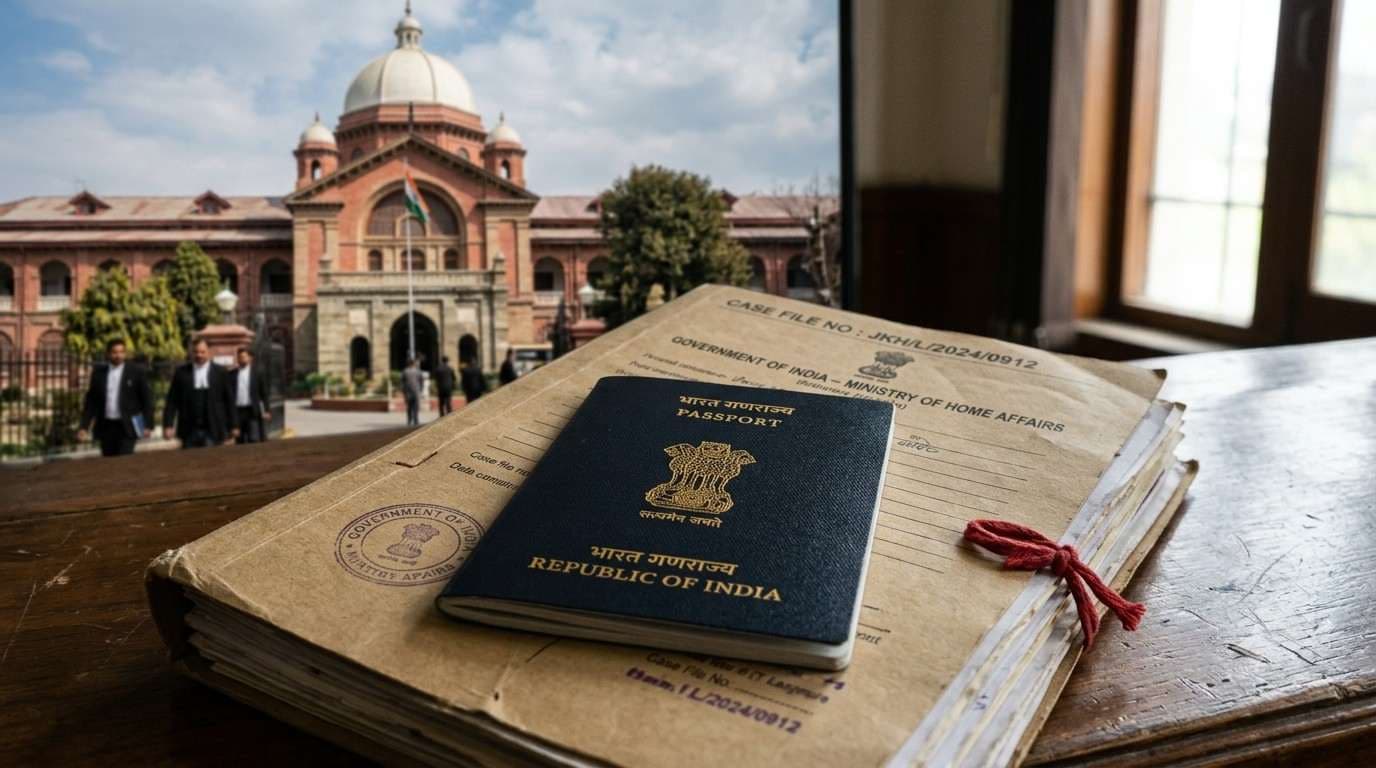
The High Court of Jammu & Kashmir and Ladakh has made a prima facie observation that a communication issued by the Regional Passport Officer (RPO), Srinagar, to PDP leader Naeem Akhtar Andrabi, requiring him to furnish an explanation regarding adverse police verification reports without disclosing the contents of these reports, does not align with the principles of fair administrative action. Justice Rahul Bharti, presiding over a single bench, directed the RPO, Srinagar, to appear in person before the Court and produce the entire file pertaining to Mr. Andrabi's passport application.
Mr. Andrabi had approached the High Court through a writ petition, expressing grievance over the non-issuance of his Indian passport despite completing all necessary formalities. His petition specifically challenged the communication from the Regional Passport Officer, Srinagar, which demanded an explanation along with supporting documents within thirty days. The communication stipulated that failure to comply would result in the closure of his passport file without further notice.
The petitioner contended that while he was asked to explain his position concerning certain adverse police verification reports, the contents of these reports were not provided to him. Consequently, Mr. Andrabi argued that he was unable to comprehend the specific material requiring an explanation, rendering him incapable of submitting an effective response.
The Court meticulously examined whether the opportunity afforded to Mr. Andrabi to explain his position satisfied the fundamental requirements of a fair administrative process. Justice Bharti observed that a citizen of India is presumed innocent until proven guilty in accordance with the law. Therefore, it is unreasonable to expect an individual to provide an effective explanation regarding their credentials and antecedents without being informed of the material intended to be used against them.
The Court further noted that the impugned communication from the Regional Passport Officer did not include any provision for the disclosure of the contents of the adverse reports, even if Mr. Andrabi were to attend the office within the stipulated period. This omission, the Court stated, meant that the petitioner was not granted a proper opportunity to respond to the material sought to be relied upon against him.
In its assessment, the High Court held that the communication prima facie failed to embody the very essence of a fair administrative course of action or decision under the rule of law. Justice Bharti emphasised that the rule of law is synonymous with the rule of reason, a principle which the Court found to be conspicuously absent in the impugned communication.
During the proceedings, the respondents submitted that if the Court were to direct Mr. Andrabi to appear before the Regional Passport Officer for submitting an explanation after the disclosure of information, the passport file might already have been closed and potentially unavailable for revival. Responding to this, the Court clarified that such a hypothetical situation could not impede the consideration of the petitioner's application in accordance with the law.
The Court's directive for the RPO's personal appearance and the production of the file indicates a procedural focus, with the observation that the writ petition could potentially be disposed of without a full adjudication on its merits, suggesting a resolution based on rectifying the procedural deficiencies identified.