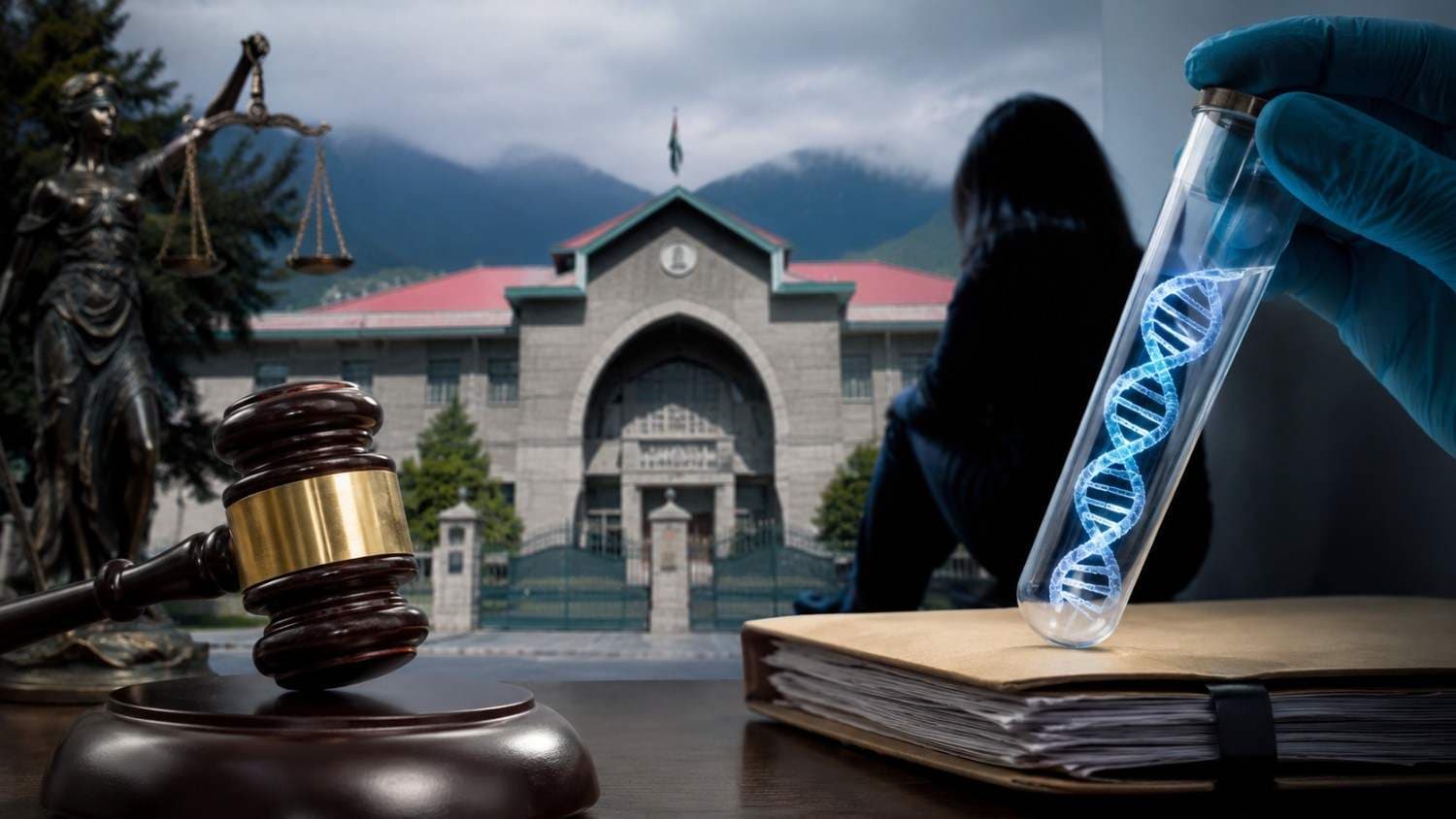
The High Court of Jammu & Kashmir and Ladakh has granted bail to an accused facing trial under the Protection of Children from Sexual Offences Act, 2012 and the Bharatiya Nyaya Sanhita, 2023, clarifying that DNA evidence, while significant, cannot by itself establish the absence of consent, an essential ingredient of the offence.
The court was hearing a bail application arising from an FIR registered in April 2015 after the brother of the prosecutrix reported that she had experienced back pain and was subsequently found to be pregnant. During investigation, DNA samples were collected from the child born to the prosecutrix and several accused persons. The DNA profiling report matched the sample of the petitioner with that of the child, while samples of other accused did not.
The prosecution case evolved during investigation. In her initial statement under Section 183 of the Bharatiya Nyaya Sanhita, the prosecutrix named one Arshad Manhas as the person with whom she had sexual intercourse. However, in a statement recorded on May 2, 2025, she named the present petitioner and three others, leading to the petitioner being charge-sheeted along with co-accused.
At trial, the prosecutrix turned hostile. She denied that any of the accused had sexually assaulted her, stated she did not know the accused, and claimed her earlier statements to the Magistrate were made under police pressure and were not voluntary. The complainant, her brother, also turned hostile during proceedings.
The trial court had rejected the bail application, primarily relying on the DNA report that linked the petitioner to the biological material from the child. The High Court, however, observed that while the DNA evidence constituted strong incriminating scientific proof of biological sexual contact, it could not, by itself, establish that the act was without consent.
Justice Sanjay Dhar, delivering the observation, stated: “The DNA evidence may, prima facie, establish a biological sexual contact, but it, by itself does not establish the absence of consent, which is an essential element of offence alleged.” The court emphasized that the evidentiary value of the DNA report must be assessed alongside the testimony of the prosecutrix and other evidence on record, which is ultimately a matter for appreciation at trial.
The High Court further considered the statutory presumptions under Sections 29 and 30 of the POCSO Act. It noted that while these provisions create a rebuttable presumption against the accused once foundational facts are established, the accused retains the right to challenge the establishment of such facts or to present evidence rebutting the presumption during trial.
The court observed: “It is open to an accused to bring to the notice of the Court the material or lack of it to show that the foundational facts giving rise to the presumption are prima facie not established in the case or that evidence led during the trial of the case rebuts the presumption operating against him.”
In the present case, the prosecutrix’s denial of any sexual assault, her claim that her earlier statements were not voluntary, and the hostility of the complainant collectively raised doubts about the foundation of the prosecution case. The High Court held that these circumstances warranted consideration in the bail determination, especially given that the DNA evidence alone could not resolve the question of consent.
Accordingly, the court set aside the trial court’s order rejecting bail and granted bail to the petitioner, subject to the usual conditions, emphasizing that the appreciation of evidence, particularly regarding consent, must await trial.