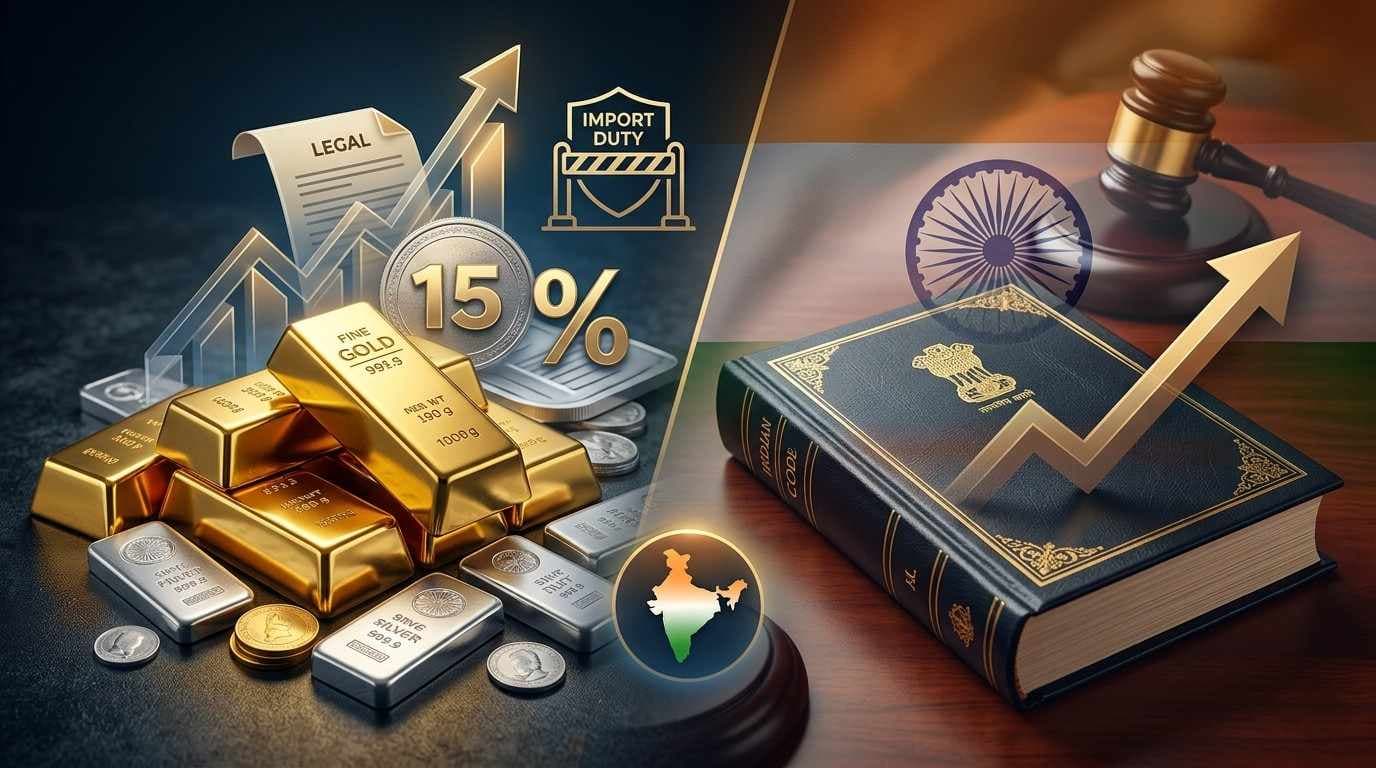
In a significant move to safeguard the nation’s macroeconomic stability, the Indian government has sharply increased the import duty on gold and silver from 6% to 15%, effective May 13, 2026. This decision comes as a proactive response to the ongoing West Asia crisis, which has put immense pressure on global crude oil prices and disrupted international shipping routes. By raising the cost of non-essential imports, policymakers aim to conserve precious foreign exchange reserves and prevent a widening of the Current Account Deficit (CAD) during a period of heightened global volatility.
The new tax structure is a combination of a 10% Basic Customs Duty (BCD) and a 5% Agriculture Infrastructure and Development Cess (AIDC). This 15% effective tax rate essentially reverses the duty cuts introduced in the 2024-25 Union Budget, which had lowered the rates to 6% to stimulate the domestic jewellery sector. The sudden hike reflects a shift in priority, where the state is now focusing on ensuring that dollar outflows are directed toward essential commodities like fuel, fertilizers, and defense equipment rather than investment-driven precious metals.
Just days before the notification, Prime Minister Narendra Modi made a rare and direct appeal to the citizens, urging households to postpone gold purchases for at least a year. This "austerity measure" is intended to reduce India’s massive import bill—gold currently stands as the second-largest import item after crude oil. The government’s stance is clear: while gold is culturally significant, the current geopolitical climate necessitates national economic discipline to protect the value of the Rupee, which recently touched record lows against the US Dollar.
The immediate impact on the domestic market has been a surge in gold and silver prices, as the higher tax is passed on to consumers. Jewellery stocks faced short-term pressure on the bourses, and industry experts predict a 10–15% dip in purchase volumes. However, for the common consumer, this means that wedding season budgets may need significant adjustments. The "thirst" for gold, which saw imports hit a record $71.98 billion in the last fiscal year, is now being met with a deliberate legal and financial deterrent.
Beyond the numbers, the move has reignited concerns regarding gold smuggling. History has shown that whenever import duties cross the 10% threshold, illegal "grey market" channels become more lucrative. Bullion dealers have warned that while official imports may decline, the incentive for smuggling could rise significantly, potentially undermining the government's revenue goals. The challenge for law enforcement will be to ensure that the hike in duty does not lead to a parallel economy that operates outside the legal framework.
From a judicial perspective, the state’s power to regulate trade in the interest of the national economy is well-established. Much like the right to clean water or dignity is protected under the law, the "economic health" of the nation is seen as a collective right that justifies such interventions. By prioritizing the "essential" over the "discretionary," the government is attempting to build a shield against external shocks that could otherwise lead to runaway inflation and a devalued currency, affecting the quality of life for all citizens.
For investors, the hike changes the math for Gold ETFs and physical bullion. With the added tax burden, domestic gold becomes more expensive relative to international prices, potentially making it a less attractive short-term hedge if the global rally cools down. However, for those holding existing gold, the price appreciation resulting from the duty hike has provided an overnight boost to their portfolio value. It is a classic example of how a stroke of a pen in the Finance Ministry can redefine the wealth of millions.
In conclusion, India’s decision to hike gold and silver duties to 15% is a "calibrated and proportionate" response to an extraordinary global crisis. It marks a return to a more conservative trade policy where the preservation of foreign exchange takes precedence over consumer demand. As the nation navigates the ripples of the West Asia conflict, this move stands as a testament to the government's willingness to take tough, unpopular decisions to ensure long-term economic resilience and a stable future for the Indian Rupee.